
PPATK Vows to Prevent Indonesia from Being Blacklisted by FATF Again Over Money Laundering
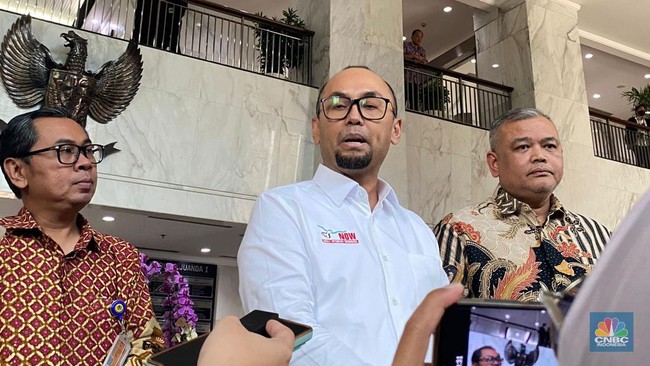
The Financial Transaction Reports and Analysis Centre (PPATK) has assured it will continue to synergise with all ministries and agencies to guarantee that all national policies remain aligned with the standards of the Financial Action Task Force (FATF). This commitment will be continuously strengthened by ensuring the Anti-Money Laundering, Counter-Terrorism Financing, and Counter-Proliferation Financing of Weapons of Mass Destruction (AML/CFT/CPF) regime is embedded in every nationally issued policy. PPATK Chairman Ivan Yustiavandana made this assertion while responding to public sentiment that the risk of money laundering crimes has increased following the issuance of Article 50A of the Financial Sector Development and Strengthening Law (UU P2SK). The article is considered to potentially perpetuate money laundering because it contains a provision stating the state guarantees and protects the purchase of special debt instruments for Danantara, such as patriot bonds and merah putih bonds, from general and special criminal prosecution, including tax crimes and civil lawsuits. Furthermore, paragraph 6 of the article states that data and information from the purchase of debt instruments issued by BPI Danantara cannot be used as a basis for tax imposition and cannot be used as legal evidence in court. Nevertheless, Ivan stressed that PPATK does not interpret Article 50A as weakening the enforcement capability of Indonesia’s Anti-Money Laundering regime, ‘or increasing the risk of money laundering in Indonesia,’ he told CNBC Indonesia on Friday. Ivan emphasised that this is because Indonesia’s commitment to enforcing the anti-money laundering regime will continue to be upheld. Before becoming a full member of the FATF in October 2023, Indonesia was once placed on the FATF blacklist, known as the Non-Cooperative Countries and Territories (NCCT) list. The NCCT is a list of countries deemed by the FATF to be uncooperative in the global effort to eradicate money laundering and terrorism financing. Fortunately, in October 2023, Indonesia managed to exit the blacklist and become a permanent FATF member. ‘Indonesia was once on the NCCT list or blacklist, an experience we must avoid happening again, and Alhamdulillah, Indonesia’s full membership in the FATF provides the highest honour and demonstrates the FATF’s and international recognition of the commitment and integrity of Indonesia’s financial system, which is on par with countries in the FATF,’ Ivan said. He noted that the struggle to become a full FATF member was very long, with PPATK striving for over 15 years to achieve it, finally secured by acclamation from the 39 permanent FATF member countries. ‘In this regard, Indonesia officially became the 40th permanent member of the FATF in October 2023. A long effort to improve the standards of Indonesia’s AML/CFT regime, where all requirements, procedures, and detailed matters were continuously improved,’ he explained. Ivan therefore asserted that the issuance of Article 50A of the P2SK Law cannot simply be interpreted as an increase in money laundering risk in Indonesia. This is because Article 50A paragraph (3) of the P2SK Law still mandates that its implementation must be carried out with good governance principles and adequate risk control, managed to meet the principles of professionalism, accountability, and sound business judgement. ‘This is in line with the AML/CFT provisions in Indonesia and the FATF standards,’ Ivan stressed. He also emphasised that the provisions in Article 50A of the P2SK Law do not legalise or remove the status of funds originating from criminal acts. The origin of the funds remains attached as proceeds of crime if proven to be so. According to him, Article 50A only regulates legal protection within a certain scope and stage, not granting legitimacy to the proceeds of crime. In addition, Article 50A does not eliminate the obligation of Reporting Parties to apply the Know Your Customer principle or to submit Suspicious Transaction Reports to PPATK. ‘PPATK continues to carry out all financial intelligence functions in accordance with the TPPU Law. PPATK can still obtain data, conduct analysis, compile analysis results, and submit them to law enforcement officials,’ Ivan said.