
PPATK Releases Money Laundering Risk Assessment, New Threat List Identified
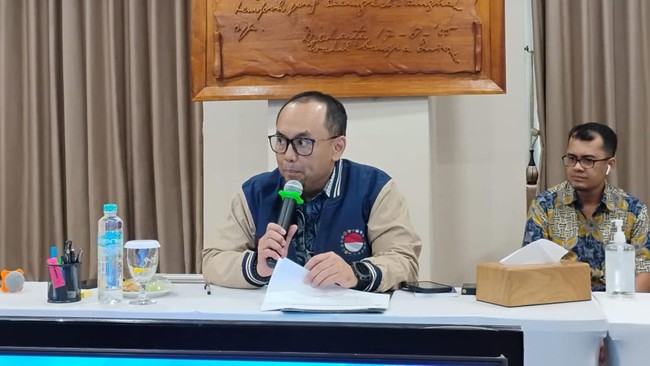
The Financial Transaction Reports and Analysis Centre (PPATK) has launched three 2026 National Risk Assessments (NRA) covering money laundering (TPPU), terrorist financing (TPPT), and the prevention of proliferation financing of weapons of mass destruction (PPSPM).
The NRA is a fundamental document in meeting Financial Action Task Force (FATF) standards. Through the NRA, each country must be able to identify, assess, and understand the money laundering, terrorist financing, and proliferation financing risks it faces.
This risk understanding then forms the basis for policy, supervision, reporting, law enforcement, and risk-based resource allocation within the anti-money laundering, counter-terrorist financing, and counter-proliferation financing (APU PPT PPSPM) regime.
“The NRA is the foundation for the entire APU PPT PPSPM regime to function. It is from this risk understanding that policy, supervision, reporting, law enforcement, and resource priorities are directed,” said PPATK Head Ivan Yustiavandana, quoted on Friday (28/8/2026).
For PPATK, the publication of the 2026 NRA is an important foundation for Indonesia to maintain its full FATF membership achieved in 2023, while preparing for the Mutual Evaluation Review (MER) in 2029.
If the high APU PPT PPSPM standards are not maintained through the 2026 NRA, the country could be placed on the list of high-risk jurisdictions, commonly known as the black list, with consequences including increased caution and even retaliatory measures in international financial relations.
Such conditions could have wide-ranging impacts on confidence, investment, cross-border transactions, and access to the global financial system.
According to Ivan, Indonesia’s success in facing the FATF evaluation requires comprehensive collaboration. Synergy among ministries and agencies, law enforcement, supervisory and regulatory bodies, reporting parties, and all stakeholders must produce tangible evidence that Indonesia’s APU PPT PPSPM regime works effectively.
The three NRAs provide a comprehensive picture of the risks Indonesia currently faces. For TPPU, corruption, narcotics and psychotropic substances, and information technology-based fraud or scams are in the high-risk category domestically.
For TPPT, the misuse of non-profit organisations, public fundraising through digital platforms, and self-funding are the highest-risk fund-raising patterns.
Meanwhile for PPSPM, the risk after accounting for available controls is in the medium category, with direct threats to Indonesia relatively low. The NRA can be understood as a national risk map.
This map helps the government, law enforcement, supervisory and regulatory bodies, reporting parties, and all stakeholders determine where attention and resources need to be prioritised.
High-Risk List
The 2026 TPPU NRA is the fourth update since the first assessment in 2015. The assessment uses the latest 2025 FATF methodology and takes into account international practices from the IMF, World Bank, and Wolfsberg.
Risks are assessed through elements of threat, vulnerability, impact, mitigation, risk before controls, and residual risk after controls. The results cover predicate offences, profiles of individuals and corporations, sectors, regions, typologies and new threats, as well as the direction of money laundering movements.
Since the 2021 NRA, the TPPU risk landscape has shifted along with the acceleration of the digital economy, rising cyber threats, geopolitical dynamics, developments in financial technology, and changes in transnational organised crime patterns.
For domestic risk, corruption, narcotics and psychotropic substances, and scams are in the high category. For proceeds of foreign predicate crimes flowing into Indonesia, or foreign predicate crime (FPC), high risk comes from narcotics and psychotropic substances, scams, corruption, and gambling.
For proceeds of Indonesian crimes laundered abroad, or laundering offshore (LO), high risk comes from corruption, narcotics and psychotropic substances, scams, and gambling. In terms of individual profiles, state officials, entrepreneurs, and private employees are in the high-risk category.
On the corporate side, limited liability companies, including state-owned enterprises (BUMN), regional-owned enterprises (BUMD), and private companies, are also high risk. Sectors requiring stronger supervision include non-bank foreign exchange business activities, commercial banks, property companies or agents, notaries, and land deed officials (PPAT).
Regions mapped as high risk are the Special Capital Region of Jakarta, Riau Islands, Bali, North Sumatra, West Java, and East Java. In the cross-border dimension, the Asian region has high cross-border TPPU risk (FPC and LO).
The high-risk category does not mean every person, business entity, profession, sector, region, or country mentioned is involved in money laundering. The category indicates the presence of threats and vulnerabilities that require stronger compliance, supervision, coordination, and mitigation.
New Threats
The 2026 TPPU NRA identifies three groups of new threats. The first group includes decentralised finance (DeFi), asset transfers across blockchain networks or chain hopping, direct peer-to-peer transactions, and digital financial asset innovations.
The second group includes deepfakes, identity forgery, artificial intelligence-based agents, and the Machine Payments Protocol (MPP).
The third group is virtual currencies and goods in games that can become a means of transferring value. These findings do not mean such technologies are always used for crime.
Risk arises when speed, anonymity, automation, or cross-platform transfers are misused to conceal identity, the origin of funds, and transaction trails.
Source: jawawa.id (https://jawawa.id/newsitem/ppatk-releases-money-laundering-risk-assessment-new-threat-list-identified-1787878247)
Originally published by CNBC Indonesia (https://www.cnbcindonesia.com/news/20260828060847-4-762957/ppatk-rilis-penilaian-risiko-pencucian-uang-ada-daftar-ancaman-baru), translated from Indonesian