
PPATK Records 527,000 Suspicious Transactions Since 2023, Linked to Corruption and Narcotics
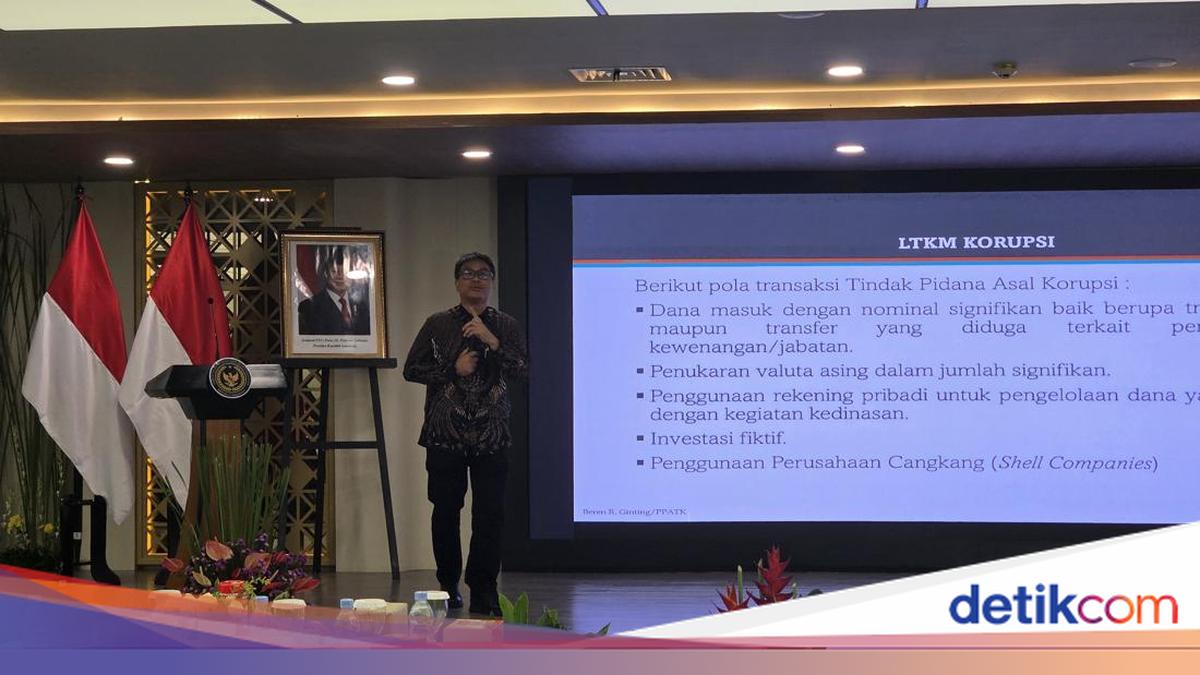
The Financial Transaction Reports and Analysis Centre (PPATK) has recorded more than 500,000 Suspicious Financial Transaction Reports (LTKM). The figure covers the period from 2023 through to June 2026.
“So these are the reports received throughout 2023 — we have received 527,000 reports. If we look at it now, that amounts to thousands of reports received every minute,” said Beren Rukur Ginting, PPATK’s Director of Analysis and Examination, during a Socialisation on Gratification Control at the office of the Ministry of Immigration and Corrections (Imipas) in South Jakarta on Tuesday (21/7/2026).
Beren said that many of the reports relate to criminal offences ranging from corruption to embezzlement. PPATK receives reports from banks, financial service providers, financial service providers in financing such as venture capital, as well as goods and services providers.
“What suspected criminal offences are these related to? The suspected offences fall under Article 2 point 1 — corruption, banking, fraud, embezzlement, narcotics and the like,” he said.
Beren explained that PPATK relies on Article 1 paragraph 5 of Law No. 8 of 2010 on the Prevention and Eradication of Money Laundering (TPPU). According to him, this is used to identify deviations from transaction profiles.
“So what is the profile? We already have a picture that if the profile is like mine, the transactions would look like this. If the profile is like yours, sir or madam, the transactions would look roughly like this. So every profile has what is called a normal transaction pattern,” he said.
He further stated that reporting parties are obliged to identify indications of the underlying predicate offence. This is grounded in the suspicious transaction provisions set out in Article 2 paragraph (1) of the TPPU Law.