
Powerful Earthquake Like an Atomic Bomb Strikes Padang, Witness Buried Up to His Neck
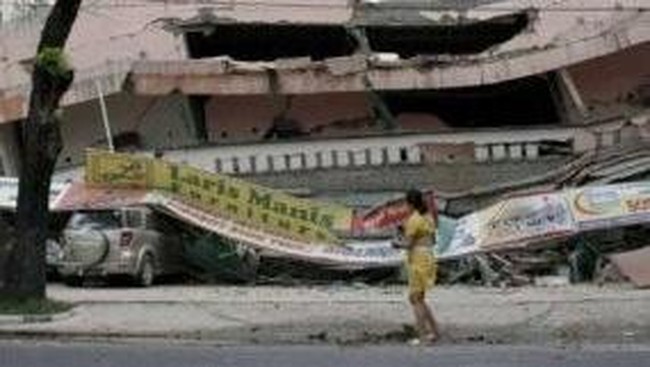
As dusk approached, disaster struck West Sumatra on 30 September 2009. A magnitude 7.6 earthquake shook Padang and Pariaman, killing at least 1,117 people.
That afternoon, residents did not expect the sudden tremors to turn into a catastrophe. Within moments, buildings were damaged, landslides occurred and people struggled to escape the rubble.
Ismael was one of those who experienced the disaster first-hand. When the earthquake struck, he initially thought it was an ordinary tremor. But the situation changed when a landslide buried his home.
“At 5.13pm, the ground shook violently. I thought it was just an earthquake. It turned out there was a landslide, so I ran to the back of the house. When I was at the kitchen door, my house had already been buried by the landslide, and so had I,” Ismael told a local news website, according to a report cited on Saturday (10 October 2026).
Ismael did not manage to escape completely. Landslide material and building debris buried him up to his neck, while his legs were trapped. Unable to move, he shouted for help, frightened and hoping someone would come to rescue him.
“My body was buried up to my neck, and my legs were trapped under building debris. I shouted for help in fear and hoped someone would come to save me,” he said.
Ismael’s experience illustrates the scale of the earthquake’s impact on Padang and Pariaman. The disaster is regarded as the most devastating to hit West Sumatra.
According to the 2021 study “Collective Memory of the Community in the 2009 Earthquake in Padang City”, the earthquake occurred at 5.15pm and measured magnitude 7.6. The shaking was felt as far away as Singapore and the Malay Peninsula. The energy released was greater than that of an atomic bomb.
“Judging by the scale of its explosive power, the earthquake had an energy equivalent of around 160 million tonnes, many times greater than that of an atomic bomb, and was therefore capable of causing serious damage,” the research team said.
After the earthquake, activity across the city ground to a halt. Electricity failed, communications were cut off and a number of public facilities were damaged. A total of 442 government office buildings were affected, thousands of classrooms were damaged, and around 60 per cent of the water supply from the regional water company, PDAM, was disrupted.
The Padang–Pariaman earthquake also had distinctive geological characteristics. Daryono, an expert with the Indonesian Disaster Experts Association (IABI), described the 30 September 2009 event as one of the largest intermediate-depth intraslab earthquakes in the world. He said its mechanism was similar to that of a magnitude Mw 7.4 earthquake in Colombia some time ago.
“The main similarity with the Mw 7.4 Colombia earthquake lies in the location of the energy source: it did not rupture the contact area between the plates (the megathrust), but instead resulted from a fault within the body of the Indo-Australian Oceanic Plate, which is rigidly subducting beneath the Eurasian Plate at a depth of around 80 to 90 kilometres,” Daryono said in a written statement to CNBC Indonesia, cited on Saturday (10 October 2026).
Unlike a megathrust earthquake, which occurs at the boundary between two plates, the Padang–Pariaman quake originated from a fault within the oceanic plate subducting beneath another plate. Daryono said the process was linked to the downward pull of the plate, known as slab pull, and bending stress.
The strength of the shaking was also affected by the characteristics of the rock within the plate. Dense, homogeneous and rigid oceanic rock can transmit seismic waves efficiently. As a result, Daryono said, high-frequency waves reached the surface with relatively little attenuation, making the shaking extremely powerful.
Although the earthquake originated at an intermediate depth and did not trigger a tsunami, its effects at the surface were highly destructive. In Padang, soft alluvial deposits amplified the shaking, while landslides worsened the damage in the hills of Pariaman.
The combination of the fault mechanism, powerful seismic waves, ground conditions and landslides made the Padang–Pariaman earthquake a major disaster that claimed many lives in West Sumatra.
Source: jawawa.id (https://jawawa.id/newsitem/powerful-earthquake-like-an-atomic-bomb-strikes-padang-witness-buried-up-to-his-neck-1791629443)
Originally published by CNBC Indonesia (https://www.cnbcindonesia.com/news/20261010102507-4-774913/gempa-dahsyat-bak-bom-atom-hantam-padang-saksi-mata-tertimbun-seleher), translated from Indonesian