
Power Shortages Prompt Data Centres to Use Retired Boeing Jet Engines
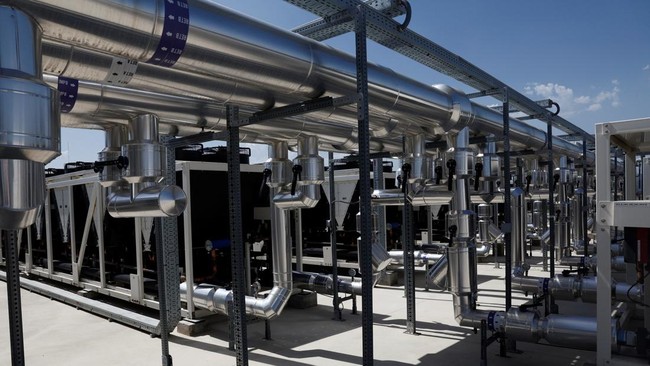
A limited supply of electricity to support AI data centres is prompting technology companies to seek alternative energy sources. One option is to use retired aircraft jet engines that have been modified to run on natural gas and generate electricity for data centres.
The engines come from aircraft that have been taken out of service. Companies rebuild them so they can burn natural gas and produce electricity to meet AI data centres’ needs.
Although they are not a permanent power-generation solution, the use of retired jet engines illustrates how electricity supply is lagging behind the rapid construction of AI infrastructure. Queues for grid connections and new turbines can last for years.
Speed is the main reason companies choose modified jet engines. They can be brought into operation far sooner than conventional grid connections.
“It’s all about getting power as quickly as possible,” Rystad Energy analyst Audun Martinsen told The New York Times, as quoted by TechCrunch on Friday (6 November 2026).
Using jet-engine-based generating units, companies can bring data centres into operation within 24 months.
By comparison, the International Energy Agency estimates that connecting 100 megawatts of capacity to the grid in Northern Virginia takes about seven years.
An executive at Mitsubishi Power, one of the world’s largest power-generation equipment manufacturers, told Bloomberg last week that most new electricity capacity is not expected to become available until 2031. Slow power supply is already beginning to affect data-centre operators’ businesses.
Last month, Microsoft withdrew as the primary customer for Nscale’s data-centre project in Loughton, England. The decision came after the local utility said it could not supply sufficient electricity until the early or mid-2030s.
One company already using retired jet engines is Elon Musk’s xAI. It installed eight turbines made from modified jet engines in Mississippi to help supply power to its Colossus 2 data centre in Memphis.
The information is based on a New York Times report citing state permitting documents and satellite images.
The generating units are supplied by ProEnergy, which rebuilds GE engines commonly used in Boeing aircraft.
In 2025, OpenAI followed Musk’s lead by using gas turbines at the first site of its Stargate project in Abilene, Texas.
Denver-based start-up Crusoe, which builds AI data centres, is developing the complex. In April, it ordered 13 modified jet-engine units from ProEnergy.
However, Crusoe cancelled a US$1.25 billion deal in September to buy 29 natural-gas turbines from Boom Supersonic.
Boom Supersonic is a start-up developing supersonic passenger aircraft. It has also begun selling versions of its aircraft engines for use as power generators at data centres.
A Crusoe spokesperson told TechCrunch at the time that the company still planned to use turbines as an energy source.
Meanwhile, the administration of President Donald Trump has added pressure by urging data-centre operators to generate their own electricity to meet operational needs.
Despite their speed, retired jet engines have several drawbacks. According to The New York Times, they are less energy-efficient and produce more pollution than turbines specifically designed for conventional gas-fired power generation.
Companies also need more jet engines to generate the same amount of electricity.
This means retired jet engines may prove to be only a short-term solution. Some experts say energy efficiency and environmental concerns could become increasingly important considerations over the next one to two years.
Source: jawawa.id (https://jawawa.id/newsitem/power-shortages-prompt-data-centres-to-use-retired-boeing-jet-engines-1793937033)
Originally published by CNBC Indonesia (https://www.cnbcindonesia.com/tech/20261106092817-37-782852/susah-dapat-listrik-data-center-pakai-mesin-jet-bekas-boeing), translated from Indonesian