
Power Plays in the Arctic: The European Union Seeks a New Strategy
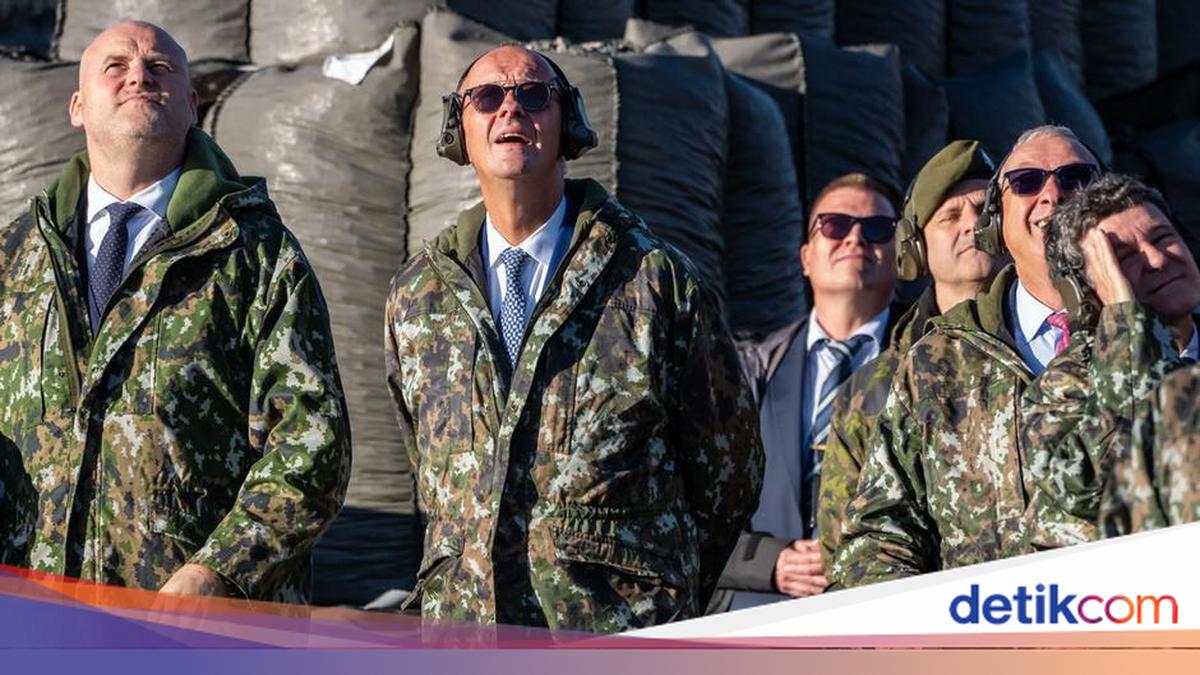
Known as the “Gateway to the Arctic,” the Finnish city of Rovaniemi sits right on the Arctic Circle. Its forests were ablaze with autumn colours as European leaders gathered at the invitation of Finnish Prime Minister Petteri Orpo to discuss a new European Union strategy for the Arctic region. Climate change and Russia’s war against Ukraine have pushed the far north to the centre of European attention.
“There is a very great need for concrete action from the European Union in the Arctic,” said Orpo. “Our security environment has changed fundamentally. The Arctic has emerged as a primary arena of great-power competition.”
Prime Minister Orpo added that the Arctic’s natural wealth is “attracting interest” from many quarters.
The changing security environment in the far north
The changing security environment was the dominant theme throughout the summit. The EU’s High Representative for Foreign Affairs, Kaja Kallas, warned that Russia is reopening Soviet military bases in the region and conducting missile exercises in the Arctic.
“We are also seeing that China is increasingly interested in this region, so we must remain vigilant,” said Kallas.
The leaders gathered at Finland’s northernmost air base, gazing up at a cloudless blue sky as Finnish fighter jets took to the air in a demonstration. Security issues were placed at the heart of the discussions by Prime Minister Orpo. From Rovaniemi, the Finnish Air Force monitors the skies along Europe’s Arctic border with Russia, 24 hours a day, seven days a week.
German Chancellor Friedrich Merz, who attended despite facing considerable political pressure at home, described the region as an increasingly important point for European security. “This region has become a geopolitical hotspot. Russia is building up its military capabilities here and… using its presence for hybrid activities every day.”
Merz added that the Arctic is not only about security, but also offers major economic opportunities, particularly relating to critical raw materials.
Confrontation replaces cooperation
“Since the Putin era, Russia has developed its military capacity everywhere, and that includes the Arctic,” said Timo Koivurova of the Arctic Centre at the University of Lapland.
For years, Western countries continued to cooperate with Moscow on scientific research and climate issues. Russia’s full-scale invasion of Ukraine brought that era to an end. Finland and Sweden joined NATO as a direct consequence of the war. Finland’s 1,340-kilometre border with Russia is now also a NATO border, fundamentally altering the security landscape in northern Europe.
The European Commission plans to update its 2021 Arctic Strategy at the earliest by October 2026. The summit’s joint declaration called for greater investment in military mobility, cross-border connectivity and critical infrastructure in the EU’s northernmost regions, including transport networks, digital networks and satellite technology.
Koivurova said Russia’s current focus on Ukraine is absorbing its military capacity.
“However, it is clear that when the war ends — and one day it will end — there will be heavy investment from Russia, most likely also in the northern region, because that region is extremely important for its overall security,” Koivurova told DW.
The United States keeps up the pressure
The Arctic is also affected by tensions among Western partners, according to Koivurova. He argued that US President Donald Trump’s proposals regarding Canada and Greenland have strained cooperation among Arctic allies.
“Trump’s proposal to make Canada the 51st US state, or to purchase Greenland — these are genuinely major problems for cooperative relations among Western countries in the Arctic,” said Koivurova. “It is a kind of additional complicating factor for Arctic governance cooperation.”
Senior Arctic observer Markku Heikkila believes the region is becoming increasingly fragmented.
“In my view, the Arctic is now slowly dividing into three parts,” Heikkila told DW.
He said Russia forms one bloc, while countries such as EU member states, Norway, Iceland and Canada continue to defend the rules-based international order, climate action and the rights of indigenous peoples.
“Officially, the US position is now very different from before,” said Heikkila.
Climate change reshapes the Arctic
At the same time, climate change is transforming the Arctic faster than any other region on Earth. Scientists estimate that the central Arctic Ocean will be almost entirely ice-free during the summer months between 2040 and 2050.
As sea ice shrinks, the region is gaining ever greater strategic value. The emergence of new shipping routes is significantly shortening distances between the world’s major trading centres, creating new economic and geopolitical opportunities, according to Koivurova.
Climate policy, however, has become another source of friction between the United States and many of its Arctic partners.
“Climate change is of course an extremely important matter in the Arctic. The region is warming four times faster than the global average. So everything we do in the Arctic today relates, in one way or another, to climate change,” said Koivurova.
He added that the Trump administration’s approach has had a significant impact on international cooperation, including within the Arctic Council: “The US is currently blocking any mention of climate change. That is, of course, a very, very big change.”
Orpo: “We must strengthen Arctic resilience”
At the close of the summit, Prime Minister Orpo called for greater investment to strengthen the region’s resilience.
“We must strengthen Arctic resilience through strategic investment in Arctic infrastructure, multipurpose transport networks, critical raw materials, icebreakers and technological innovation,” said Orpo.
Rovaniemi is known around the world as the home of Santa Claus. Not far from the “Arktikum” museum and science centre where the leaders met lies Santa Claus Village, home to the official Santa Claus Post Office, which stays open all year round. Visitors can even meet Santa Claus in person. Whether any of the summit participants stopped by there — and if so, what they wished for — remains a mystery.
Source: jawawa.id (https://jawawa.id/newsitem/power-plays-in-the-arctic-the-european-union-seeks-a-new-strategy-1789458918)
Originally published by detikcom (https://news.detik.com/dw/d-8663622/manuver-kekuatan-di-arktik-uni-eropa-cari-strategi-baru), translated from Indonesian