
Power Outages Must Be a Momentum for National Electricity System Reform: HKI
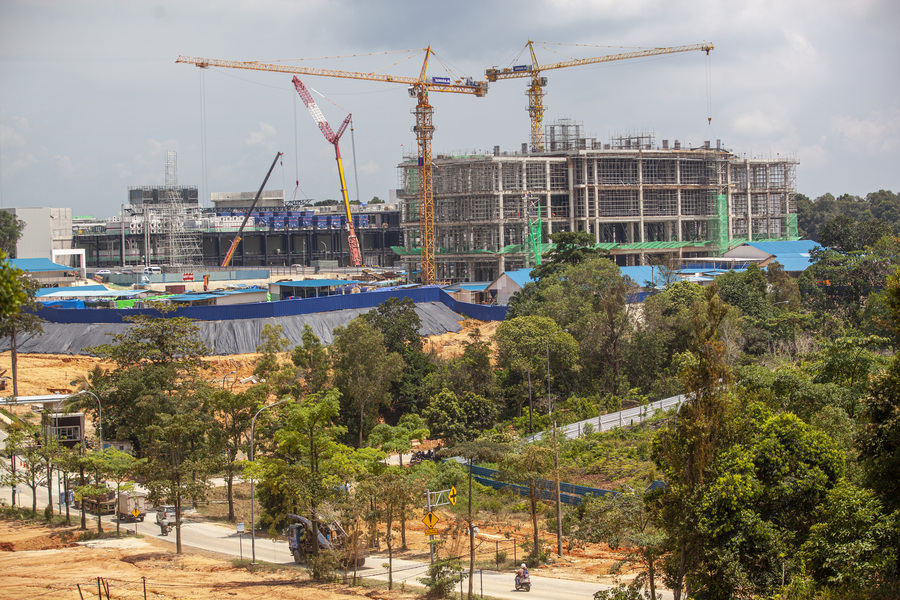
The Indonesian Industrial Estates Association (HKI) believes the recent electricity supply disruptions in several regions must serve as a momentum for more fundamental improvements to the national electricity system. Amid Indonesia’s ambition to become an advanced industrial nation, a downstream processing hub, a regional manufacturing base, and a global investment destination, electricity reliability is no longer just a matter of public service but has become the primary foundation of national economic competitiveness. HKI, which currently oversees more than 170 industrial estates spread across various regions of Indonesia, from Sumatra, Java, Kalimantan, Sulawesi to eastern Indonesia, feels directly how vital electricity supply is for the continuity of industrial activities. These estates are home to thousands of national and multinational companies operating in the manufacturing, petrochemical, logistics, food and beverage, electronics, automotive, mineral, data centre, and high-tech industries. HKI Indonesia Chairman Akhmad Ma’ruf Maulana stated that every power disruption, even if it lasts only a few minutes, can cause a far greater economic impact than is visible on the surface. In certain industries such as petrochemicals, steel, semiconductors, data centres, pharmaceuticals, and continuous process-based industries, power disruptions can even cause enormous losses because they require a long time to restore operations to normal conditions. Ma’ruf assessed that these challenges will grow larger with the influx of new investments requiring very high levels of electricity reliability. Indonesia is currently pushing for mineral downstream processing, electric vehicle development, data centre construction, artificial intelligence (AI) industries, basic chemical industries, and high-tech manufacturing, all of which require a stable, layered energy supply with international reliability standards. Therefore, HKI is of the view that the national electricity system needs to enter a new, more adaptive and collaborative phase. “The recent blackout events must be seen as an important alarm that the national electricity system requires stronger layers of security. National energy resilience cannot rely solely on one centralised system. More reliability points are needed that can support each other when disruptions occur,” said Ma’ruf, quoted from a press release received on Monday (22/6). HKI considers one of the strategic steps that needs to be immediately encouraged is to provide ease for industrial estates to obtain Electricity Business Areas (WILUS) and build their own power plants according to the needs of each estate. Ma’ruf observed that many industrial estates in Indonesia actually have the financial capability, technical readiness, and real needs to develop independent electricity systems integrated with the national grid. However, in practice, the licensing and regulatory processes still do not provide sufficient space for the development of such models. “We hope the government provides ease for industrial estates that wish to have their own Electricity Business Areas. Industry needs certainty. When investment has entered, factories have been built, and thousands of workers depend on production activities, the energy supply must have an equivalent level of certainty,” he explained. He stressed that this proposal is not intended to reduce the role of PLN. On the contrary, HKI views that PLN remains the backbone of the national electricity system, which has a very strategic role in maintaining the stability of the national energy supply. What is needed is a paradigm shift from a fully centralised system to a more collaborative system. In this model, PLN remains the backbone of the national network, while industrial estates can act as strategic partners through the development of independent power plants, industrial microgrids, captive power, battery storage systems, and renewable energy that are connected and integrated with the national system. HKI also urges the government to accelerate the implementation of policies that enable cooperation between WILUS holders, expand electricity wheeling schemes, strengthen industrial microgrid development, and provide flexibility for industrial estates to develop natural gas-based power plants, renewable energy, and energy storage technology. According to HKI, this approach is in line with the direction of national industrial development, which is currently moving towards green industry, digital industry, and the development of sustainability-based industrial estates. Ma’ruf also expressed appreciation for the various steps taken by the government, particularly the Ministry of Energy and Mineral Resources (ESDM), in opening discussion spaces regarding the strengthening of the national electricity system and increasing private sector participation in energy provision. HKI hopes these steps can be followed up through more progressive policies so that industrial estates have the flexibility to strengthen their own energy resilience without abandoning the principle of integration with the national system. “Indonesia is racing to attract global investment. Investors do not only look at labour wages, fiscal incentives, or land availability. They also look at energy reliability. In many cases, investment decisions are determined by how certain electricity is available 24 hours without interruption. Therefore, strengthening the electricity system is a strategic necessity that cannot be delayed any longer,” Ma’ruf concluded.