
Power, Legitimacy and the Limits of the Law in the Gibran Vice-Presidency Case
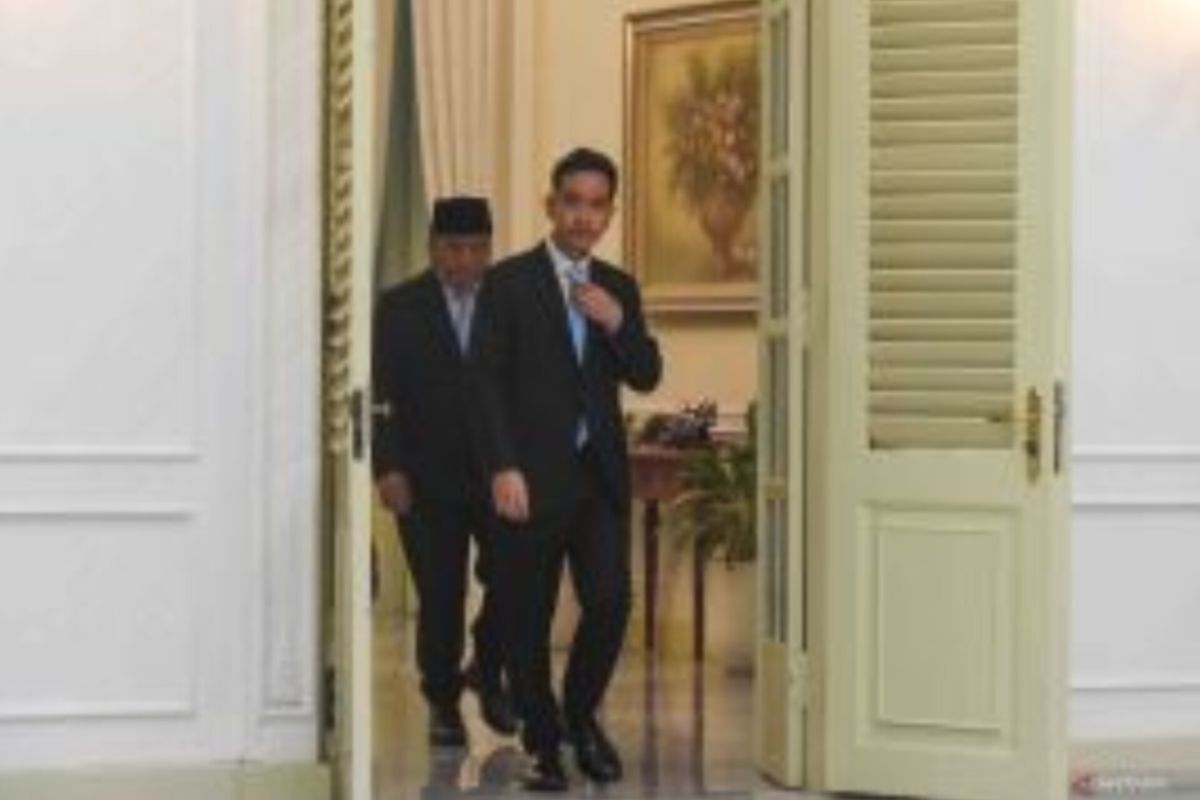
Resignation is not defeat, but the highest form of obedience to the constitution. It recognises that public office is a conditional trust, not personal property to be defended at all costs.
Jakarta (ANTARA) — This week we have witnessed something unprecedented since the Reformasi era: a directly elected vice-president has expressed an intention to resign, not because of illness or an inability to perform his duties, but because the basis for his candidacy has collapsed in two courts.
On Tuesday (10 November), Gibran Rakabuming Raka met President Prabowo Subianto for around two and a half hours and orally conveyed his intention. State Secretary Prasetyo Hadi confirmed the meeting. The following day, Projo chairman Budi Arie Setiadi said a resignation letter had been handed to the President at Halim Perdanakusuma Air Base.
However, as this article was being written, neither the Palace nor the People’s Consultative Assembly (MPR) had officially announced that the vice-presidential office was vacant. In the space between “intention” and “validity”, the public is debating whether he should resign or stay, be impeached or forgiven.
This essay does not seek to add to the clamour, but to consider the events through three lenses — theories of power, political science and law — in order to answer one central question: when the legal legitimacy of an office has fallen away, what remains of its power, and where does the constitution direct us?
Pressure on Gibran has come from several directions. He is at the intersection of a number of forces pulling at once.
The first is the court rulings. On 6 October 2026, the Constitutional Court, in case PHPU No. 01/PHPU.PRES-XXIV/2026, said it had found no convincing evidence that Gibran held a foreign qualification that could serve as the basis for its equivalence to an Indonesian senior secondary school certificate. The court did not disqualify him because it found that the petitioners lacked legal standing.
On 30 October, the Supreme Court granted an appeal against the Ministry of Primary and Secondary Education, ruling that Gibran’s senior-secondary equivalency certificate was invalid and void, and ordering its withdrawal. That certificate had been used to meet the requirements for registering in the 2024 presidential election.
The second is the weakening of political support. On 9 November, three senior Indonesian Solidarity Party (PSI) figures serving in the Cabinet — Raja Juli Antoni, Giring Ganesha and Isyana Bagoes Oka — announced that they were leaving the party. Giring said there were things that “no longer aligned” with his struggle. PSI chairman Kaesang Pangarep, Gibran’s younger brother, accepted their resignations.
The third is Parliament. House of Representatives (DPR) Speaker Puan Maharani announced that the House leadership had received a proposal for an Inquiry Motion. Reports differ on the number of legislators backing it, ranging from dozens to around 120 members from various factions. The proposal was scheduled to be brought before a plenary session on Thursday (12 November).
The fourth is public memory. Constitutional Court ruling No. 90/PUU-XXI/2023, which paved the way for Gibran’s candidacy, has been brought back into focus. The ruling was issued when the court was led by Anwar Usman, Gibran’s uncle, who was later found by the Constitutional Court’s Ethics Council to have committed a serious ethics violation and was removed as chief justice in November 2023. The history of Gibran’s candidacy for mayor of Solo has also come under scrutiny, as has the alleged fake-diploma case involving his father, Indonesia’s seventh president, Joko Widodo, which remains before the courts.
The fifth pressure came from an unexpected direction. On 3 November 2026, the National Police’s Criminal Investigation Agency named three senior officers as suspects in the alleged wiretapping of the President, including former National Police chief Listyo Sigit Prabowo.
Social media quickly linked the case to what it called the “Solo Gang”. DPR Commission III chairman Habiburokhman responded coolly to the speculation: “Whether it’s the Solo Gang or the Oslo Gang, the law is the law.” The connection has not been proven in court, but politically it has strengthened the perception that an old power network is coming apart.
Amid all this, the Palace itself has given conflicting accounts. Gibran said the President had advised him to “keep fighting at the Administrative Court”. Head of the Presidential Communications Agency Syahganda Nainggolan denied this: “It is impossible that the President would advise Gibran to continue his legal fight.” Coordinating Minister for Law, Human Rights, Immigration and Corrections Yusril Ihza Mahendra said the Constitutional Court’s ruling was final and binding, the Supreme Court’s ruling had permanent legal force, and no party could seek a judicial review.
Source: jawawa.id (https://jawawa.id/newsitem/power-legitimacy-and-the-limits-of-the-law-in-the-gibran-vice-presidency-case-1794452042)
Originally published by Antara (Indonesian) (https://www.antaranews.com/berita/5848239/kekuasaan-legitimasi-dan-batas-hukum-dalam-kasus-wapres-gibran), translated from Indonesian