
Power Cuts and the Coal Issue: Here Are the 10 Largest Producers
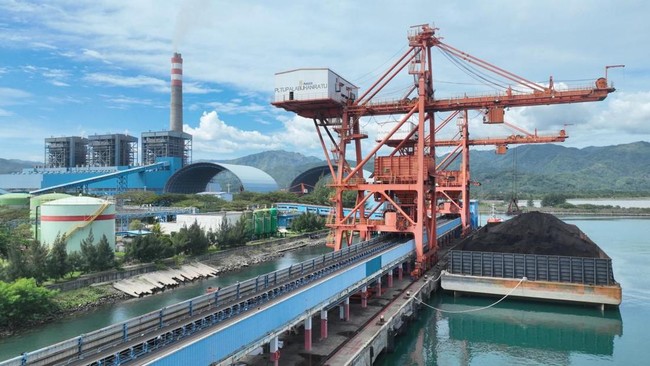
Jakarta, CNBC Indonesia - A number of regions in Indonesia have recently been facing a wave of rolling blackouts that have drawn widespread public complaints. This phenomenon has triggered speculation among the public about potential disruptions or scarcity of coal fuel supply upstream at power plants, especially after the government announced a policy tightening the national production quota. However, what is the actual correlation between the current electricity conditions, the realisation of the Work Plan and Budget (RKAB) quota, and the readiness of major mining issuers in maintaining domestic energy security?
Minister of Energy and Mineral Resources (ESDM) firmly denied the assumption that the blackouts occurred due to a lack of coal supply for the domestic electricity sector. The government confirmed that the total coal requirement for PT PLN (Persero) is 154 million tonnes. As an anticipatory measure, the Directorate General of Minerals and Coal (Minerba) has assigned supply obligations to national coal companies amounting to 180 to 190 million tonnes, of which 134 million tonnes have already been officially contracted. Thus, the government stated that the obstacles are purely technical and operational, falling under the internal logistics management control of PLN. The process of distributing and managing the commodity until it reaches each power plant is entirely the operator’s authority, not caused by a scarcity of supply from upstream producers.
Amid the supply disruption issue, the role of large-capitalisation coal issuers is crucial as the main providers of national energy. In addition to being required to fulfil the Domestic Market Obligation (DMO) to secure domestic electricity needs, these giant issuers are also faced with new regulations regarding export procedures. Based on 2025 operational reports, the top ten issuers recorded massive production volumes, making them the main backbone for both fulfilling PLN’s supply and as the largest contributors to the single-door export chain via DSI. The production capacity map shows that major issuers such as BUMI, AADI, and BYAN have fundamentally sufficient commodity availability to secure domestic energy needs if absorbed optimally according to government assignments.
Public concern over energy supply was also linked to the Ministry of Energy and Mineral Resources’ move to cut the national coal production target for 2026 to around 600 million tonnes. This figure represents a decrease of approximately 190 million tonnes compared to the 2025 production realisation of 790 million tonnes. The quota cut was deliberately implemented by the government to control the supply and demand balance in order to encourage an improvement in global coal prices that had fallen, while simultaneously securing reserves for the long term. The RKAB quota approval process for mining companies has now entered its final stage and is approaching the 600 million tonne figure. Although national production volume is being lowered, the Ministry of Energy and Mineral Resources has ensured that this quota restriction will not sacrifice domestic interests. A specific allocation for PLN’s power plants is prioritised and confirmed to be in a secure position before the remaining quota is allocated to the export market.