
Poverty Stops at School
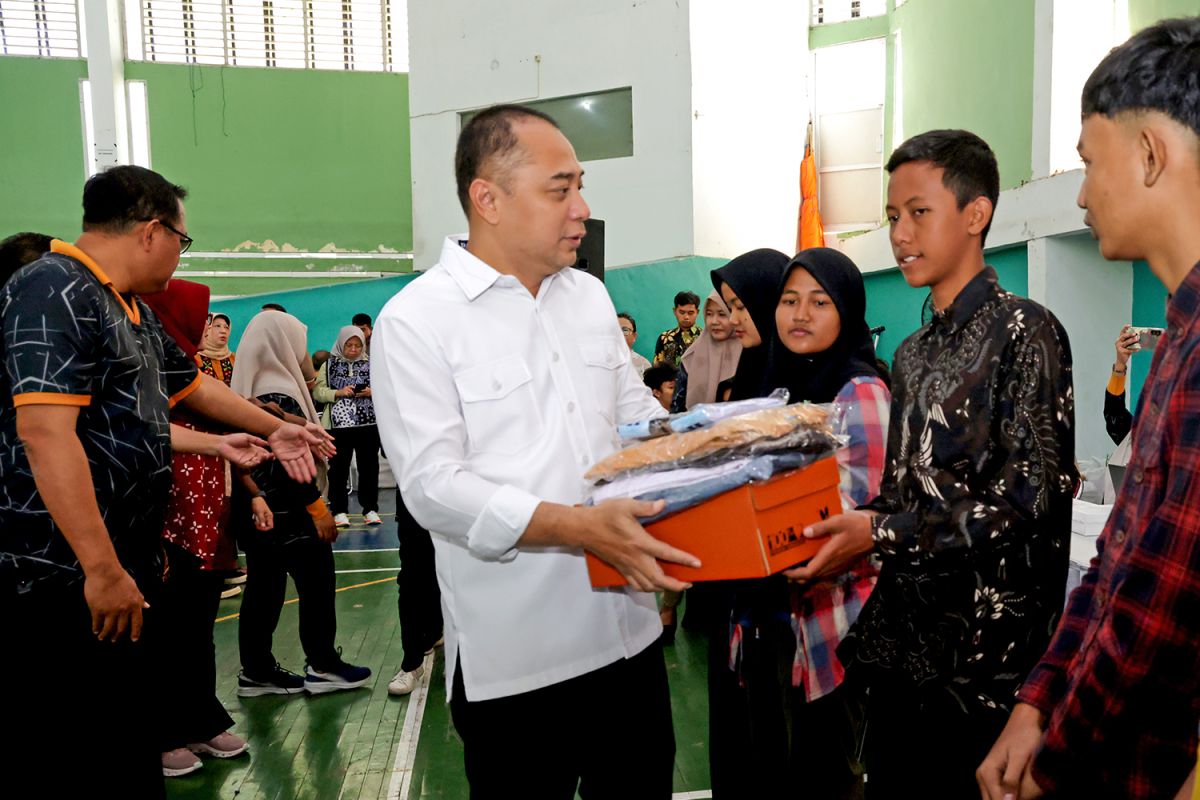
Education has always been the most peaceful path to breaking the chain of poverty. The assistance given today may only take the form of uniforms, shoes or school fees, but behind it lies a far greater opportunity.
Surabaya (ANTARA) - Not all children start from the same line. Some set off for school with new equipment and without a thought for monthly costs, but many others must weigh every family expense before continuing their education.
Amid various economic challenges, school costs remain one of the reasons children are vulnerable to dropping out of education, especially upon entering senior secondary school.
In Surabaya, East Java, this problem is being answered through the strengthening of an educational assistance programme for students from poor and near-poor families. The 2026/2027 academic year marks an important milestone, as the Surabaya City Government disburses assistance to 7,380 students of senior high schools (SMA), vocational schools (SMK) and equivalent Madrasah Aliyah.
The assistance covers not only uniforms and school equipment, but also educational fees of Rp350,000 per month for private school students from families in the first to fifth income deciles.
The policy reflects a shift in the way educational assistance is viewed. Whereas previously such aid was largely understood as an annual social programme, it is now directed as an instrument to prevent intergenerational poverty. Education is no longer positioned merely as a public service, but as an investment in human development.
The move also aligns with national challenges. Statistics Indonesia (BPS) records that the average years of schooling among Indonesians continues to rise, but gaps in access to education remain unfinished business, especially for low-income families. Among vulnerable groups, the decision to stay in school is often determined not by academic ability, but by economic capacity.
That is why educational assistance carries far greater meaning than the nominal amount received. It keeps a student in the classroom when the family’s economic circumstances are under pressure.
What is interesting about Surabaya’s policy is not only the size of the assistance, but the change in its disbursement mechanism. The educational assistance funds are no longer transferred directly to students, but are channelled through schools. This step emerged from an evaluation of previous implementation, which found that some assistance had not been used to pay for educational needs.
The change demonstrates that policy effectiveness is determined not only by the size of the budget, but also by governance. Well-targeted assistance concerns not only who receives it, but also how the funds are genuinely used for their intended purpose.
The Surabaya City Government also applies verification based on social welfare data covering the first to fifth decile groups. This data-driven approach is important so that assistance does not become a populist programme that loses sight of its targets. In the context of regional financial management, every rupiah must deliver a real impact on improving people’s quality of life.