
Poverty and Unemployment Rates in West Java Decline in 2025
The West Java Provincial Government (Pemprov Jabar) has recorded a performance achievement in implementing regional development in 2025, with a score of 3.6672 based on the decision of the Minister of Home Affairs. Some impacts of this achievement include a decline in the poverty rate and open unemployment in West Java.
According to data from the Central Statistics Agency (BPS), the percentage of poor people in West Java in 2025 is 6.78%, or 3.55 million people. This figure is down from the previous year at 7.08%.
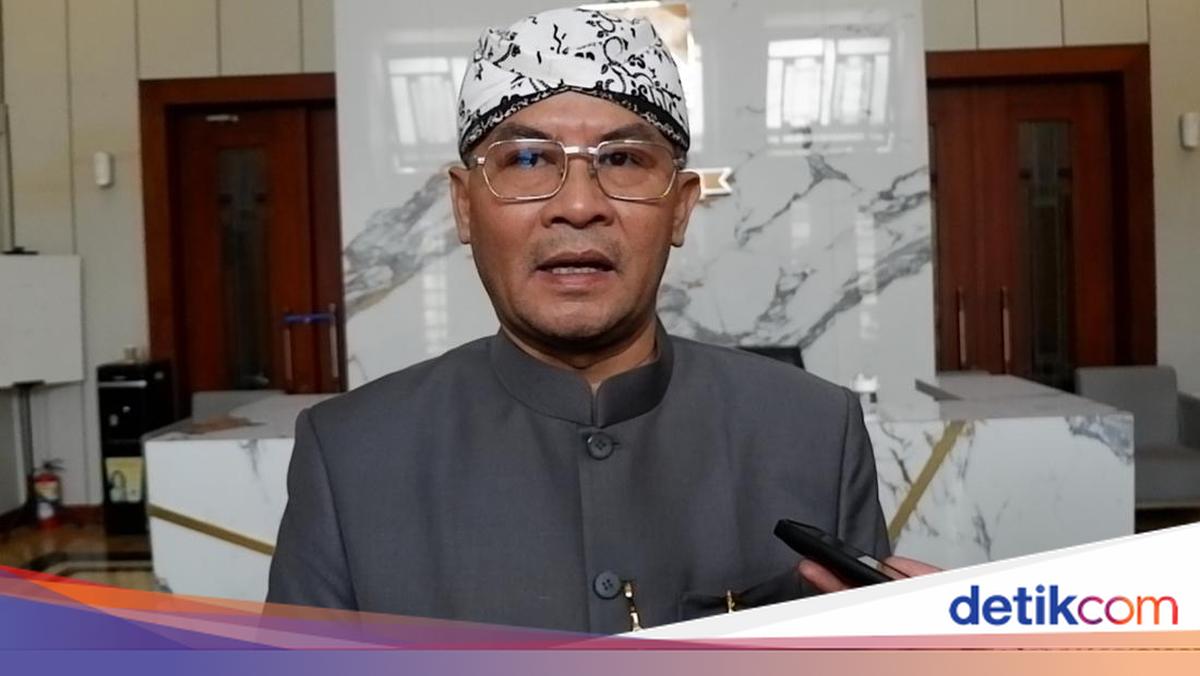
West Java Deputy Governor Erwan Setiawan stated that several efforts to reduce the poverty rate have been carried out by the Provincial Regional Government, starting from reducing poverty pockets, reducing expenditure burdens, and increasing the income of the poor.
He added that to lower the poverty rate, his side has also implemented several measures such as monitoring vulnerable food insecurity areas, compiling vulnerability maps, and food security.
Meanwhile, to curb public expenditure, the West Java Provincial Government in 2025 carried out the Affordable Food Movement 1,874 times in 27 regencies/cities and the Subsidised Market Operation. In these activities, the public can obtain food commodities at affordable prices.
Efforts to curb the expenditure of the poor were also carried out through the health sector to energy and mineral resources.
“The Provincial Regional Government of West Java funds health insurance premiums for the poor so that it can reduce the expenditure of the poor,” said Erwan in a written statement on Monday (13/4/2026).
In the energy and mineral resources sector, efforts to reduce the expenditure burden of the poor were carried out by increasing the provision of electricity networks.
The West Java Provincial Government has identified data on underprivileged communities receiving electricity connections, amounting to 76,123 connection units in 1,367 villages/sub-districts.
The final effort is to increase the income of the poor. This effort is carried out by organising training for Indonesian migrant workers.
“We also channel business capital assistance to joint business groups (KUBE) totaling 57 KUBEs to increase the income of the poor,” said Erwan.
Unemployment Declines
In addition to poverty, open unemployment in West Java was also reduced in 2025 to 6.66%. Compared to 2024 at 6.75%, the open unemployment rate in 2025 fell by 0.09%. This means that out of 100 people in the labour force, six to seven are still unemployed.
The realisation of the decline in the open unemployment rate in 2025 exceeded the set target of 6.99%. This figure is based on the results of the national labour force survey in November 2025.
Erwan said that the driving factors for the decline in the open unemployment rate in West Java in 2025 were the absorption of labour in all business fields.
“There was an increase in labour absorption in the agriculture, forestry, and fisheries sector (0.10 million people), the education sector (0.05 million people), and the provision of accommodation and food and drink (0.04 million people),” he said.
Conversely, the field of work that experienced a decline in labour absorption was the mining and quarrying sector (0.04 million people).
“Meanwhile, the sectors that contributed the most to absorbing labour are repair and maintenance of motor vehicles and motorcycles (22.44%), manufacturing industry (18.61%), and agriculture, forestry, and fisheries (15.43%),” he concluded.