
Posyandu Digitalisation Brings New Hope for Families in Stunting Prevention Efforts
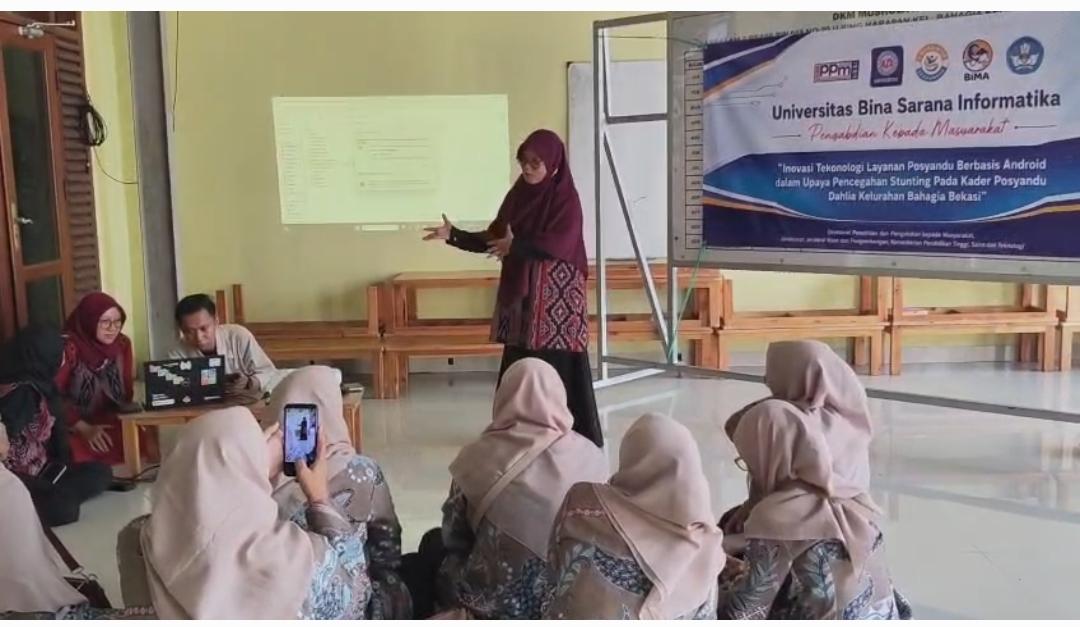
Digital transformation is increasingly penetrating community health services at the grassroots level. Efforts to prevent stunting, which have traditionally relied on manual recording, are beginning to shift towards technology-based systems through the use of Android applications for Posyleandu services.
This innovation was introduced during a community service programme titled ‘Digital Transformation of Posyandu Services through Android Applications in Supporting Stunting Prevention’ in Kelurahan Bahagia, Bekasi. The programme is a collaboration between lecturers and students from Universitas Bina Sarana Informatika (UBSI) and Universitas Nusa Mandiri (UNM).
Supported by funding from the Ministry of Research, Technology, and Higher Education (Kemenristek Dikti) for the 2026 fiscal year, this initiative is part of an effort to encourage the use of digital technology to improve the quality of public services, particularly in the community health sector.
Team leader Nurul Aisyah stated that through the Android-based Posyandu application, the process of recording toddler health data, which was previously done manually, can now be performed digitally. “This system allows Posyandu volunteers to monitor child growth and development more quickly, accurately, and in an integrated manner,” she said on Monday (22/06/2026).
Nurul noted that the digitalisation of Posyandu is a vital step in increasing the effectiveness of basic health services while strengthening the early detection system for stunting risks. “With this application, the process of early detection, recording, and reporting of toddler nutritional status can be carried out more effectively, efficiently, and sustainably. Digitally documented data also facilitates the monitoring and evaluation process,” she added.
She further noted that digital transformation does not only provide administrative convenience but also assists Posyandu volunteers in making data-driven decisions to support child health. Eneng Iviq echoed this sentiment, assessing that digital technology could serve as a solution to accelerate stunting prevention interventions at the community level.
“Posyandu volunteers now have a tool that makes it easier for them to monitor child growth and development in real-time. Information is available more quickly, so potential nutritional problems can be addressed immediately,” she said.
The introduction of the application received a positive response from Posyandu volunteers in Kelurahan Bahagia. They noted that the digitalisation of services could reduce administrative burdens, minimise the risk of recording errors, and accelerate the reporting process to relevant authorities.
Ani Yoraeni added that, besides increasing the efficiency of volunteers’ work, the implementation of digital technology in Posyandu is considered a strategic step in building a data-based health ecosystem at the community level. “With data stored systematically, monitoring the health conditions of toddlers can be conducted sustainably and more measurably,” she said.
Through this programme, she hopes that Kelurahan Bahagia can serve as a model for the implementation of digital transformation in community health services that can be replicated in other regions. “This step also demonstrates that the use of technology is not only relevant in the industrial and business sectors but also plays a vital role in supporting health development and accelerating the reduction of stunting rates in Indonesia,” she concluded.
Source: jawawa.id (https://jawawa.id/newsitem/posyandu-digitalisation-brings-new-hope-for-families-in-stunting-prevention-efforts-1782215475)
Originally published by Media Indonesia (https://mediaindonesia.com/humaniora/903504/digitalisasi-posyandu-hadirkan-harapan-baru-bagi-keluarga-dalam-upaya-cegah-stunting), translated from Indonesian