
Post Road: Daendels Spent 30,000 Ringgit, While Many Workers Suffered
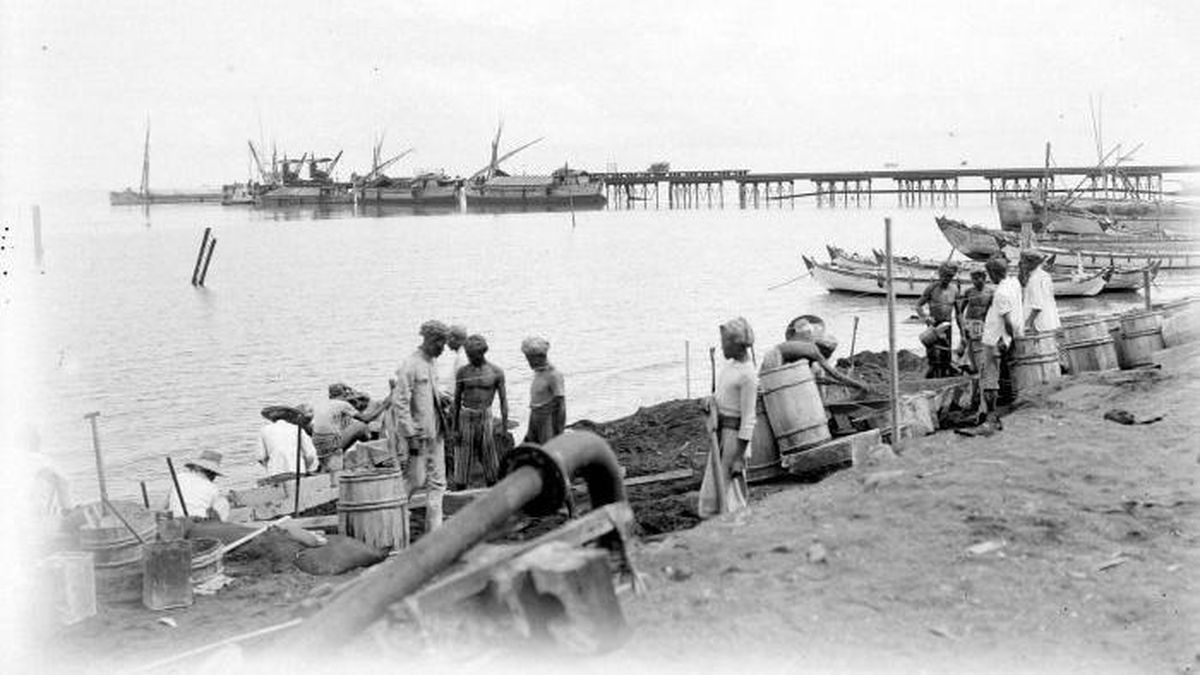
Historian and University of Indonesia professor Djoko Marihandono said the Dutch East Indies colonial government under Governor-General Herman Willem Daendels (1808–1811) spent 30,000 ringgit on the first phase of the Anyer–Panarukan Road, also known as the Post Road.
Djoko explained that construction of the Post Road was divided into two phases.
“The first ran from Buitenzorg, or more precisely Cisarua, to Cirebon. And that was paid for. The workers were paid,” Djoko said at the kick-off event for Anyer–Panarukan 3R: Road, Route, Roots on Sunday (11 October).
He said workers received not only money from the 30,000-ringgit budget, but also rice and salt.
The workers building the stretch in what is now West Java were not local residents. They came from Central Java, Yogyakarta and other areas.
An estimated 400 workers were assigned to build the section from Cisarua to Cirebon, while hundreds more worked on the remaining sections.
“That makes a total of 1,100 workers,” he said.
They were paid according to the demands of the work. The more difficult the terrain, the higher the pay.
“From Rajamandala to Bandung, it was six ringgit because of Cipatat, where the road was difficult. Then from Bandung to Parakan Muncang, where the road was flat, it was just one ringgit per person,” Djoko said.
Construction then proceeded to the second phase, from Cirebon to Surabaya and onwards to Panarukan.
Daendels’ administration summoned 34 regents from East and Central Java to continue building the road.
However, because the government had no money at the time, it decided that the work would be carried out through communal labour under the regents’ direction.
The regents were paid and appointed by the government and served under the residents. They were also tasked with providing workers.
“That is where the problem arose, because it was the people under the regents themselves who ended up suffering,” Djoko explained.
Despite the lack of funds, construction continued from Surabaya to Panarukan for economic reasons. The area from Surabaya to Panarukan was known for its teak forests.
“Teak was in great demand for what? For building ships used by the government itself, because all the government’s ships had been wiped out by the British,” he said.
Teak was also needed for other purposes, including house-building.
This history is an important part of the story of the Anyer–Panarukan region. Its historical significance is being brought back into focus through the Anyer–Panarukan 3R: Road, Route, Roots kick-off event.
The programme is being run by the Serang Regency Government and the Situbondo Regency Government.
Through the programme, the historic Anyer–Panarukan route will be considered from three main perspectives: Road, as connectivity and development; Route, as a journey and the development of destinations; and Roots, as the historical and cultural foundations and identity of local communities.
By revisiting and studying the history of Anyer–Panarukan, the organisers hope it will be more than a memory of the past, and will serve as a source of inspiration for a productive, inclusive and sustainable future.