
Post-Harvest Technology Strengthened, Kintamani Coffee Farmers Reduce Fermentation Failure Risk
Arabica coffee farmers in Belantih Village, Kintamani District, Bangli Regency, Bali, are strengthening their post-harvest processes with appropriate technology. The use of this technology is aimed at reducing the risk of fermentation failure while improving consistency in quality and flavour.
The post-harvest technology was distributed by a collaborative team from the Community Service Programme, Regional Empowerment Scheme (PDB) of Universitas Pendidikan Ganesha (Undiksha) and Universitas Warmadewa to two coffee business units in Belantih Village.
PDB Team Leader I Wayan Lasmawan said quality control is one of the challenges faced by coffee farmers at the upstream and midstream levels. Inconsistent processing standards can affect the quality of the final product.
“The technology provided must not merely become a ceremonial display, but must be truly operationally effective. We want to ensure farmers have precise tools so that every coffee grind produced has a stable quality standard and is competitive in the market,” said Lasmawan in Belantih Village on Wednesday (19/8/2026).
Belantih Coffee Farm received four Kegland FermZilla Gen3 Tri-Conical fermentation tanks with a total capacity of 220 litres. The equipment is equipped with visual monitoring features, a dump valve, and Tri-Clover connections to help the fermentation process take place more hygienically and measurably.
Belantih Coffee Farm manager I Wayan Tunas Wijaya said the technology helps overcome processing constraints that previously relied on conventional containers.
“So far we have fermented using makeshift containers, so the temperature and acidity levels were difficult to predict. Sometimes the results were good, sometimes the coffee flavour plummeted due to uncontrolled fermentation,” said Tunas.
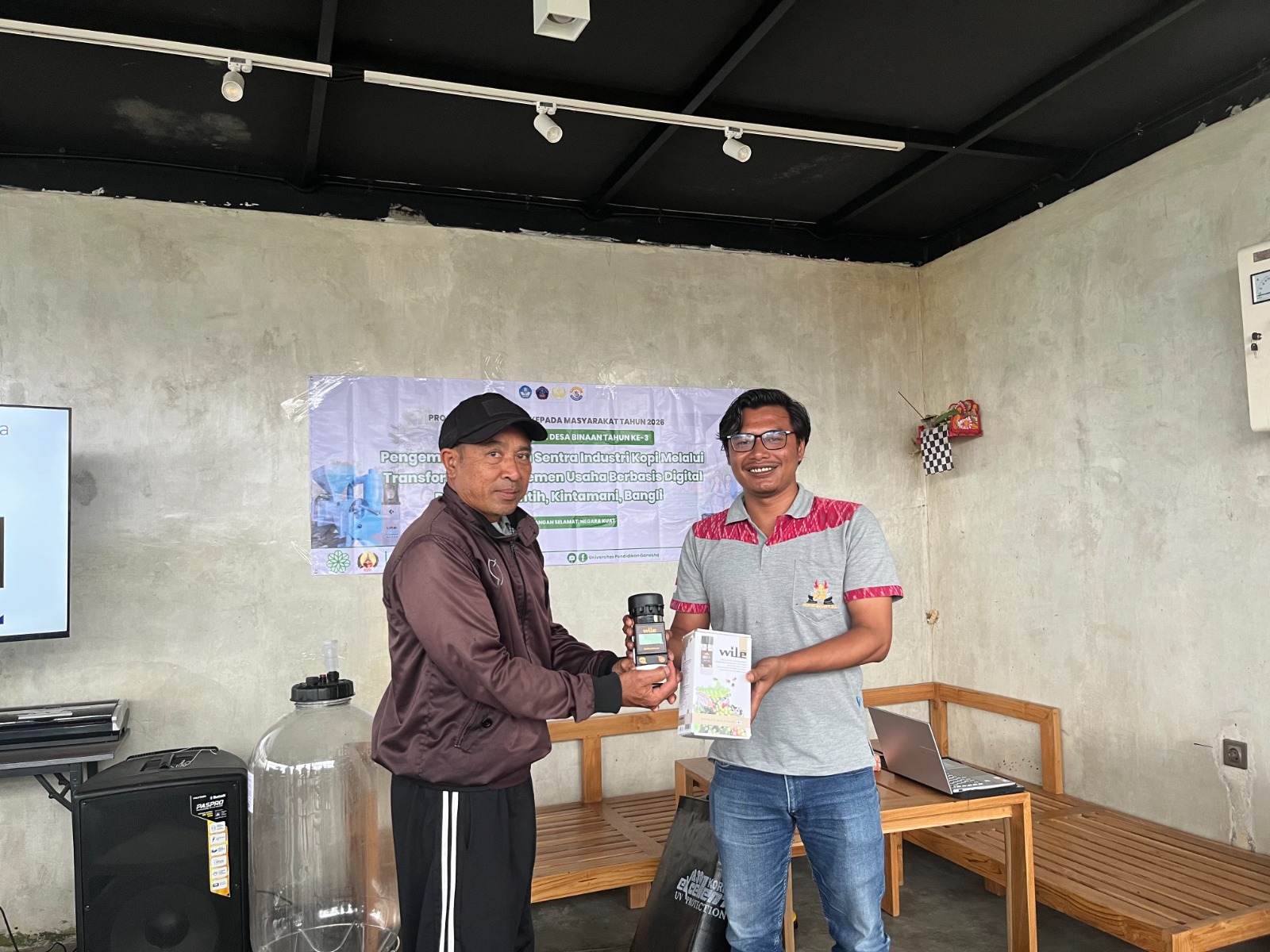
In addition to fermentation, the programme also targets measuring the moisture content of coffee beans, or green beans. The Dharma Kriya Farmers Group received one Wile Coffee & Cocoa Moisture Meter with a measurement range of 6-27 percent.
Dharma Kriya Farmers Group Chairman I Wayan Selamat said the tool helps farmers determine drying time more accurately. Previously, farmers relied more on visual observation and intuition.
“Previously we thought coffee was dry just from its colour or by biting it. In fact, if the moisture content is not yet at 12 percent, the coffee is prone to mould when stored in the warehouse,” said Selamat.
With the digital measuring device, farmers can determine the moisture content of the beans more precisely before the coffee is packaged and marketed. Moisture control is also expected to maintain bean quality during storage.
The PDB team stated that the entire series of post-harvest technology handover and assistance has been 100 percent realised. The programme was funded by the Directorate of Research and Community Service of the Ministry of Higher Education, Science, and Technology as part of efforts to encourage digital-based business management transformation in Bali’s coffee industry centres.