
Post-Eid, KTP Transfers Out of DKI Outnumber New Incomers
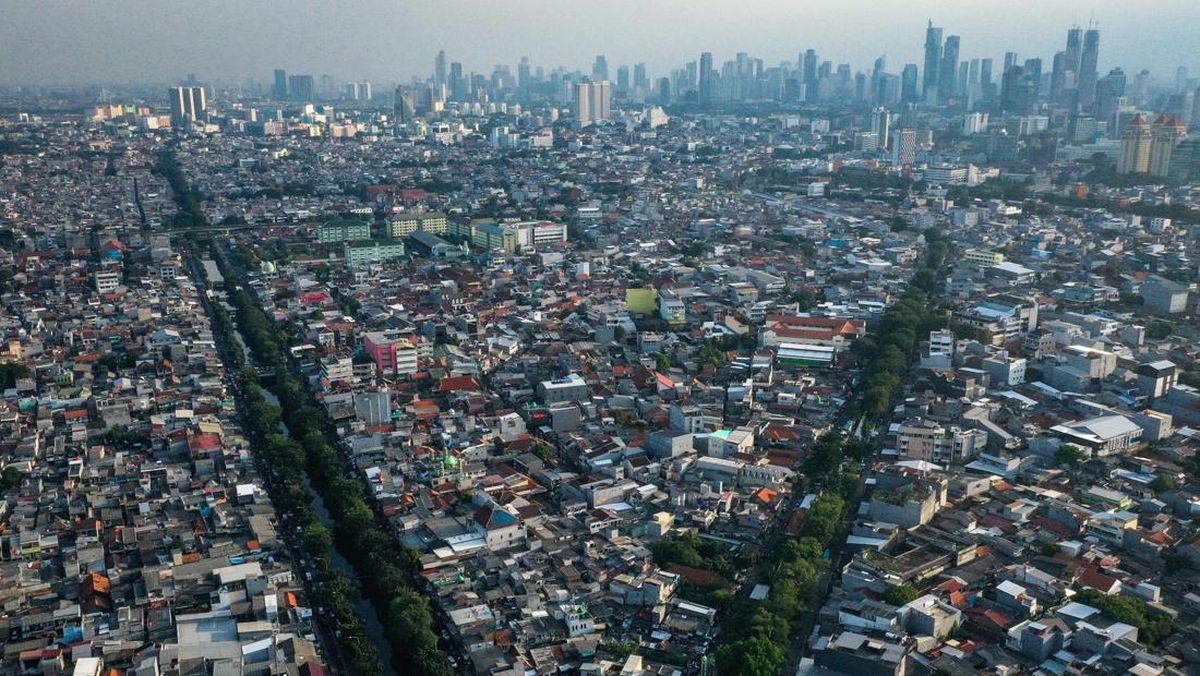
The Civil Registry and Population Affairs Office (Dukcapil) of DKI Jakarta Province recorded 22,617 people moving out of Jakarta, nearly double the number of new arrivals post-Eid in 2026.
Head of the Dukcapil Office of DKI Jakarta Province, Denny Wahyu Haryanto, stated that this situation does not mean Jakarta is losing its appeal, but rather a shift in housing patterns and economic activities. His office assesses that one factor influencing this condition is the public’s response to the Residency Document Arrangement and Enforcement Programme in Line with Domicile.
“Many residents who have lived for years in buffer areas such as Bogor, Depok, Tangerang, and Bekasi still use Jakarta KTPs. Through this programme, they are adjusting their population administration to match their actual domicile,” he said in his statement, Jakarta, Tuesday (5/5), quoted from Antara.
Another factor driving this phenomenon is the increasingly high cost of living in Jakarta, leading many residents to shift to buffer cities along with the emergence of new industrial and economic centres outside Jakarta.
Quality of life issues related to air pollution, traffic congestion, and flood risks are pushing residents to seek alternative housing in areas considered greener, yet still connected via public transport access such as the Integrated Toll Road (LRT), Integrated Mass Rapid Transit (MRT), and Electric Rail Train (KRL).
This is reflected in the majority profile of Jakarta residents moving out being productive age (71.57 percent) with the assumption of low income (64.53 percent), and the most common reason being housing (33.92 percent).
Number of new arrivals
Meanwhile, the number of new arrivals post-Eid refers to data collection from 25 March to 30 April 2026, namely 12,766 people. Denny said this figure has declined over the past two years.
“From 2021 to 2023, the number of post-Eid arrivals was above 20,000 people. This number decreased in 2024 and 2025 to 16,000 people,” said Denny.
The residency document arrangement and enforcement programme in line with domicile has been regulated in Law No. 2 of 2024 as an effort to address the classic problem in Jakarta, namely the difference between de jure population (according to KTP) and de facto (those living on the ground).
The Dukcapil Office of DKI Jakarta is also conducting data collection on non-permanent residents, namely those with KTPs from areas outside DKI Jakarta, but for certain purposes are required to live temporarily in Jakarta.
“Currently, the number of residents registered as non-permanent is 5,499 people,” said Denny.
Based on Law No. 2 of 2024 on the Special Capital Region of Jakarta Province (DKJ) Jakarta, it is positioned as the national economic centre and global city.
Population policies are directed towards improving the quality of human resources focusing on high-skilled labour populations.