
Post-Earthquake Recovery in NTT: Road Access Restored, Clean Water Becomes Top Priority
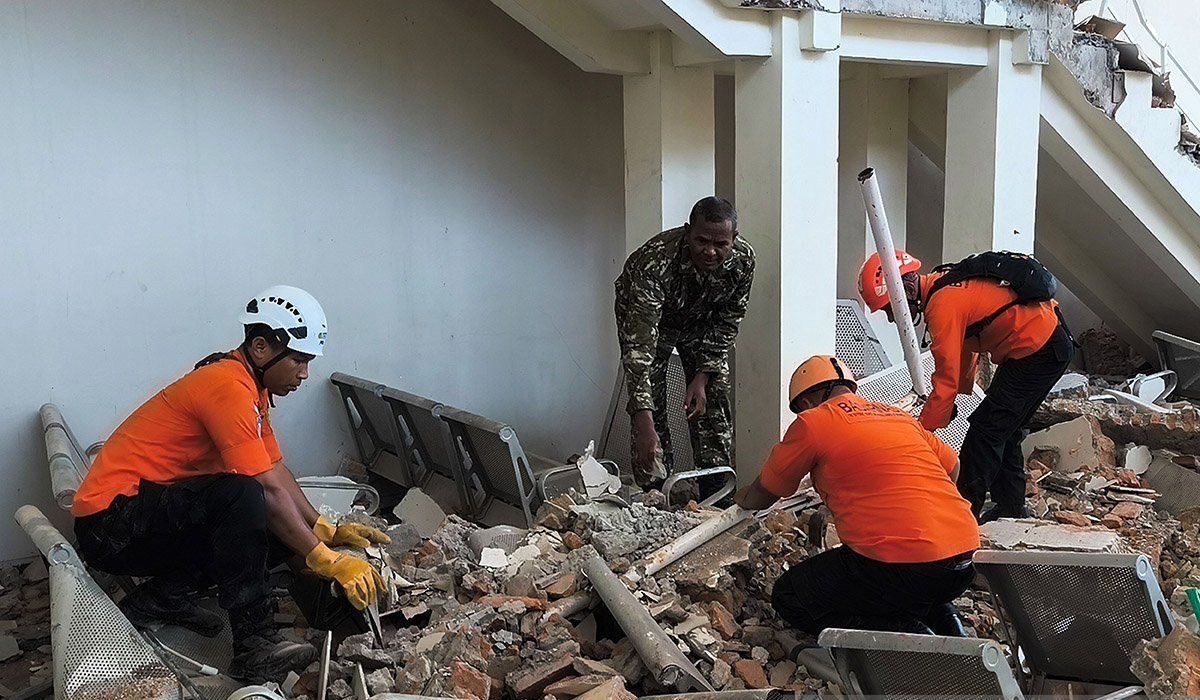
The government continues to accelerate the recovery of various facilities and infrastructure affected by the earthquake in Nusa Tenggara Timur (NTT). In addition to ensuring roads and bridges are functioning again, the government is now prioritising the restoration of clean water services for communities in the earthquake-affected areas of NTT.
Minister of Public Works Dody Hanggodo conveyed this progress while reporting on infrastructure handling to President Prabowo Subianto. The report was delivered during an earthquake response meeting at the Earthquake Handling Command Post, Battalion Yonif TP 834/WM, Nagekeo Regency, NTT, on Wednesday (26/8/2026).
Dody explained that transport access handling began on the first day of the disaster. The government moved immediately to clear and reopen national road sections affected by landslides to maintain inter-regional connectivity.
“So from the first day, that Saturday, in accordance with the guidance of the Head of BNPB, we opened all national roads, Sir,” said Dody.
The effort produced positive results. National road sections and bridges previously disrupted by landslides have now returned to normal operation. The reopening of this access is key to facilitating the mobilisation of aid and the distribution of basic necessities to affected areas.
Although main access has recovered, the government remains alert to the potential for new landslides. Dody noted that several locations identified as vulnerable points continue to be closely monitored, given that aftershock activity is still ongoing.
As a precautionary measure, heavy equipment such as excavators has been placed on standby at several strategic locations. “Indeed, because tremors are still occurring, there have been 143 aftershocks. So the points we have marked as landslide-prone, we continue to station excavators there. As soon as a landslide occurs, the material is immediately pushed aside so that community mobility is not disrupted,” he explained.
Bridge restoration is also a serious concern, particularly to ensure the supply of fuel oil (BBM) continues to flow. Dody mentioned that a bridge which had experienced disruption has been usable on a limited basis since the second day after the disaster.
His ministry has even carried out load testing to ensure structural safety. “We have tested it, up to 20 tonnes of BBM, thank God it is still able to withstand and the bridge no longer shakes,” he added.
Beyond transport infrastructure, the Ministry of Public Works is now beginning to focus on addressing the community’s basic needs, namely the availability of drinking water. Data collection and inspection at several points are being carried out to determine the necessary steps for repairing water supply facilities.
Dody stressed that restoration will be carried out in stages, taking into account the specific conditions in each area. The government is committed to ensuring clean water needs are met as an integral part of post-disaster handling.
“In addition to roads which we have long preserved, the fundamental need for water will be our priority in accordance with the President’s direction. Wherever our people are, we must not leave a single task unfinished,” concluded Dody.