
Post-Disaster Recovery in Aceh Continues to Show Progress, Says Task Force
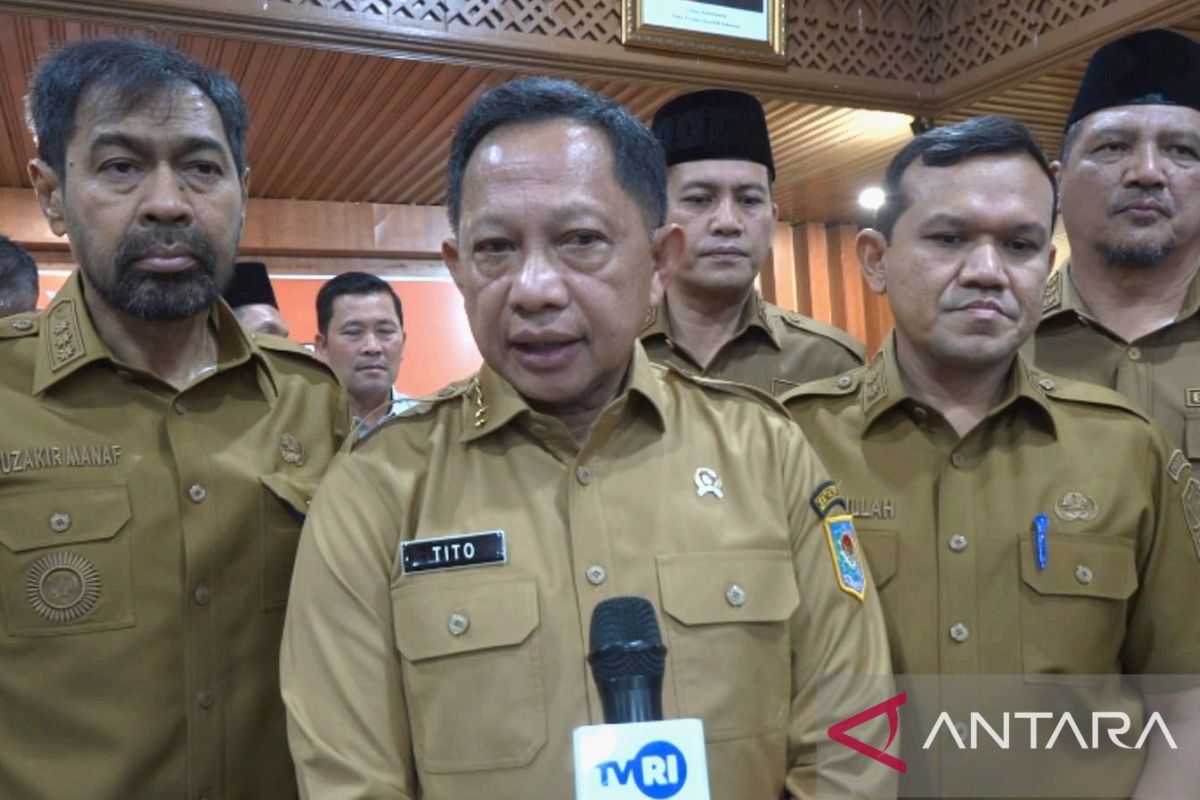
The Minister of Home Affairs and Head of the Post-Disaster Rehabilitation and Reconstruction (PRR) Task Force for Sumatra, Muhammad Tito Karnavian, stated that the post-disaster recovery process in Aceh Province continues to show positive developments.
Tito explained that, based on government evaluations, conditions in various affected areas are currently much better than when the disasters occurred. Various basic services that were previously disrupted have now resumed, allowing community activities to gradually recover.
“We conducted an evaluation today regarding what has been achieved during the emergency response and transition periods. Essentially, we have returned to normal. However, it is not yet permanent; it is functional normalcy,” Tito said in a statement in Jakarta on Wednesday.
He made these remarks during a Coordination and Evaluation Meeting on the Achievements of Handling and Accelerating Post-Disaster Recovery for Hydrometeorological Disasters in Aceh Province at the Aceh Governor’s Office on Tuesday (9/6).
Tito noted that this recovery is evident across various indicators, ranging from the government, health, education, and infrastructure sectors to the economy and basic public services.
In the government sector, most government facilities have returned to functioning, allowing public services to proceed as intended. Meanwhile, healthcare facilities in the affected areas have also resumed operations to serve the needs of the community.
In the field of education, teaching and learning activities in the majority of affected schools have resumed. Nevertheless, Tito acknowledged that a number of schools still require further attention due to building damage or locations that remain disaster-prone. The government continues to strive to accelerate the rehabilitation of educational facilities to ensure the learning process can run optimally.
“However, once again, not everything is ideal. For example, schools; some are still in tents, some are in emergency shelters, and some are temporarily using other schools, even though the majority have returned to their original premises,” he said.
Progress in recovery is also visible in the infrastructure sector. Most road and bridge access has been restored, allowing for normal community mobility and goods distribution.
Nonetheless, the government is still working on repairing several road sections and bridges that suffered heavy damage due to the disasters.
In the economic sector, trading activities in markets, stalls, shops, and other community businesses are also showing a positive recovery trend. Various affected markets have resumed operations, allowing the local economy to move again.
Furthermore, basic services such as fuel supply, electricity, and telecommunications have also returned to functionality. Tito assessed that these achievements are important indicators that life in the affected areas is increasingly recovering and returning to normal.
“This means the movement of people and goods is running well, electricity is okay, petrol stations are operational, and the internet is working. Additionally, logistics are not lacking,” he explained.
Despite this, the Minister of Home Affairs emphasised that the government will not stop at the achievements reached so far. Follow-up work, particularly regarding infrastructure rehabilitation, the management of rivers and flood-prone areas, and the construction of housing for affected communities, will continue to be accelerated. This step is being taken through synergy between the central government, local governments, and all relevant stakeholders.
“Regardless of the fact that we have been able to restore normal functions to community life, many issues remain unresolved. Issues regarding housing, education, schools, madrasahs, roads, bridges, rice fields, and fish ponds, among others. What we need to fix, rehabilitate, and reconstruct—if necessary, make even better,” he concluded.