
Post-Crisis Clean-Up: Ex-Deputy Minister Sentenced to 16 Years in Prison
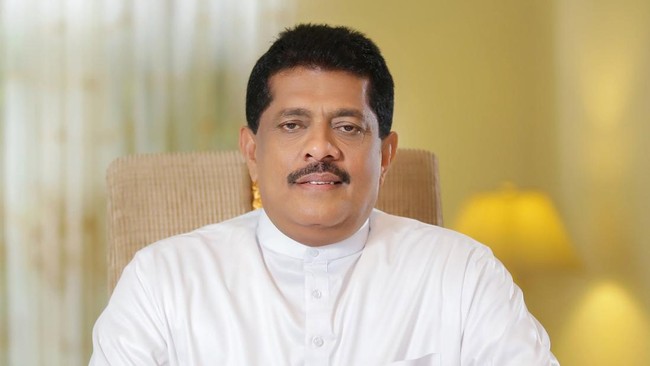
The Sri Lankan government is becoming increasingly aggressive in hunting down and punishing political figures involved in corruption following the major economic crisis that shook the country in 2022. Most recently, a former deputy minister was sentenced to 16 years in prison for a corruption case dating back nearly two decades.
Former Sri Lankan Deputy Minister Sarana Gunawardena was sentenced to 16 years in prison on Tuesday after being found guilty in several corruption cases related to the misuse of public funds. The verdict is part of an increasingly intensive anti-corruption campaign targeting political figures affiliated with the Rajapaksa family, the political dynasty that dominated Sri Lanka for many years.
Gunawardena was a junior minister serving under former President Mahinda Rajapaksa. He becomes the latest figure from the Rajapaksa administration to end up behind bars in the anti-corruption purge being carried out by the current government.
A court official stated that Gunawardena was found guilty on four separate charges. For each charge, he was sentenced to four years in prison, to be served consecutively. In addition to the prison sentence, the court also imposed a fine of 1.8 million Sri Lankan rupees on Gunawardena.
The case against Gunawardena stemmed from alleged financial irregularities during his tenure nearly two decades ago. Prosecutors accused him of receiving illegal commissions from several vendors after making overpayments on vehicle and building rental contracts. According to the indictment, the state suffered a loss of 11.5 million Sri Lankan rupees, which at the time was equivalent to approximately US$115,000.
The Sri Lankan High Court rejected an appeal for leniency submitted by Gunawardena’s legal team. In its deliberation, the judge deemed a prison sentence necessary to deter corrupt practices in the public sector. The court stated that imprisonment is a necessary step to prevent corruption among state officials.
The sentence against Gunawardena adds to the long list of former Rajapaksa-era officials imprisoned over the past year. Previously, two former ministers, Mahindananda Aluthgamage and Nalin Fernando, were also handed lengthy prison sentences, each ranging from 20 to 25 years.
The current Sri Lankan government is undertaking a large-scale campaign against corruption, targeting political figures, especially those close to the Rajapaksa family. The Rajapaksa family was once a dominant force in Sri Lankan politics for years, but their power crumbled after massive protests in 2022, triggered by the worst economic crisis in the nation’s modern history. Thousands of citizens took to the streets demanding the resignation of President Gotabaya Rajapaksa, accusing the government of economic mismanagement and allowing rampant corruption to trigger national economic collapse.
Following the financial crisis that crippled the country, the left-leaning administration of President Anura Kumara Dissanayake has taken steps to strengthen the authority of the Commission to Investigate Allegations of Bribery or Corruption. The government views governance reforms and corruption eradication as essential conditions for restoring public trust and improving the country’s economic condition. Many community groups that have long opposed the Rajapaksas also blame the corruption deeply rooted in state institutions as one of the primary causes of the 2022 economic crisis.
The drive to strengthen corruption eradication has also come from the international community. The US$2.9 billion bailout programme from the International Monetary Fund (IMF) requires governance reforms and stricter action against financial violations.
Beyond corruption cases, Sri Lankan authorities are also increasing investigations into several major criminal cases allegedly involving the country’s former political leaders. Last week, a court imposed an overseas travel ban on former President Gotabaya Rajapaksa related to his alleged involvement in the 2019 Easter Sunday bombings that killed 279 people. In a separate development, Gotabaya Rajapaksa’s former intelligence chief, Suresh Sallay, has also been detained. He is accused of being the mastermind of the attack, with the alleged goal of creating chaos that could pave the way for Gotabaya Rajapaksa’s return to power. Sallay denies the accusation.