
Poso Hydropower Plant Supplies Energy to Four Provinces on Sulawesi Island
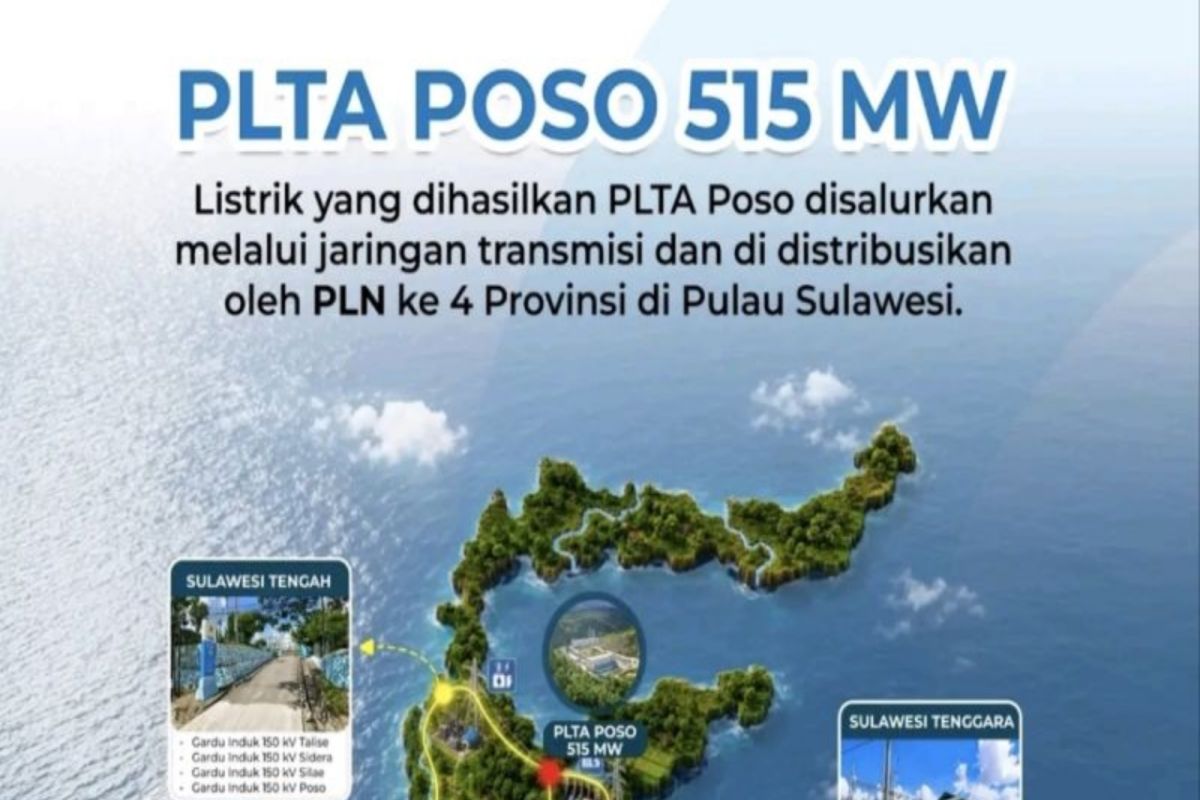
The Poso Hydroelectric Power Plant (PLTA Poso) in Central Sulawesi plays a vital role in strengthening supply security to meet the electricity needs of four provinces on Sulawesi Island. “With an installed capacity of 515 megawatts (MW), the electricity generated by PLTA Poso is channelled and distributed by PLN to serve the needs of communities and the industrial sector in Central Sulawesi, South Sulawesi, West Sulawesi, and Southeast Sulawesi,” said Head of Public Relations at Poso Energy, M Syafri, in a written statement received in Palu on Tuesday. He stated that the existence of PLTA Poso is an important pillar in strengthening Sulawesi’s electricity system, as a plant that utilises renewable energy sources from water flow. According to him, the plant contributes to maintaining the reliability of the electricity supply, whilst supporting efforts to reduce carbon emissions through the provision of environmentally friendly energy. He explained that the availability of reliable electricity is an important factor in supporting community activities, the business world, and various other strategic sectors. “This is our commitment to assist the government in enhancing national energy resilience through clean and sustainable energy,” said Syafri. He added that besides providing reliable electrical energy, PLTA Poso is also part of the energy transition effort towards the utilisation of more environmentally friendly resources. “In addition to maintaining supply consistency, we also keep the plant’s operations optimal so that it can provide a sustainable contribution to Sulawesi’s electricity system,” he stated. He noted that the stability of the electricity supply is inseparable from the collaboration built so far with PLN and other stakeholders, with the hope that the presence of PLTA Poso can consistently support regional economic growth. “Including helping to improve community welfare through reliable electricity support, as well as through community empowerment using social responsibility funds,” he added.