
Poso Energy adjusts hydroelectric power allocation during El Niño
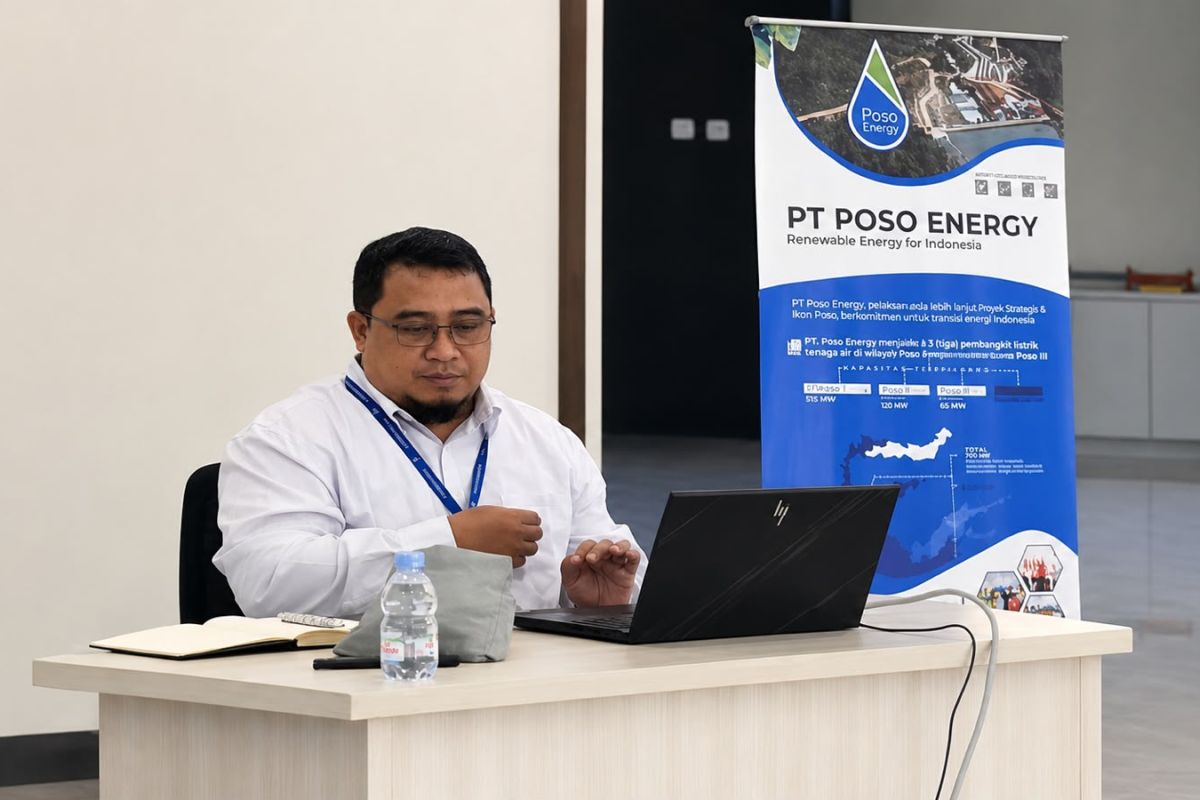
PT Poso Energy is currently adjusting the allocation of electricity from the hydroelectric power plant (PLTA) in Poso Regency, Central Sulawesi, supplied to PLN in order to maintain supply stability during the El Nino phenomenon.
“We supply electricity from the Poso hydroelectric plant to four provinces in Sulawesi, so allocation adjustments are needed as a strategy to maintain the reliability of electricity supply,” said PT Poso Energy Manager Asmaruddin when contacted from Palu on Friday.
He explained that the El Nino phenomenon during the dry season in the second half of 2026 has caused reduced rainfall in the Lake Poso area, which serves as the plant’s water source, leaving the lake’s elevation lower than in previous dry seasons.
According to Asmaruddin, this condition has affected the reservoir’s operating pattern. However, the company remains fully committed to ensuring electricity production is met according to plan, with projections assuming the rainy season begins from late October to December 2026 with above-normal rainfall intensity.
“If the rainy season arrives from late October to December with above-normal intensity, energy production can still be met according to plan. However, if rainfall intensity is below normal, electricity supply could potentially be reduced,” he said.
He noted that the company has prepared a number of mitigation measures to anticipate the impact of reduced rainfall and maintain the continuity of energy production during the dry period.
The mitigation measures include adjusting the energy production allocation in the second half of the year, with a larger share during the rainy season. The production allocation for the rainy season has been set at 55 percent, while production during the dry season is set at 45 percent.
Based on Poso Energy data, the installed electricity capacity of 515 megawatts (MW) generated by the Poso hydroelectric plant is transmitted and distributed by PLN to serve the needs of communities and the industrial sector in Central Sulawesi, South Sulawesi, West Sulawesi, and Southeast Sulawesi.
“The energy allocation adjustment takes into account actual conditions on the ground with various technical considerations and calculations,” said Asmaruddin.
He said that in addition to adjusting the energy allocation, another mitigation measure previously undertaken was Weather Modification Operations (OMC) during the rainy season in May 2026 as an effort to increase inflow into Lake Poso.
Furthermore, the company has also shifted part of its energy production from the peak dry season period in September-October to November-December. This shift was carried out with PLN’s approval, taking into account water availability conditions in Lake Poso.
“To date, we continue to monitor the elevation of Lake Poso and rainfall developments in the catchment area to adjust the plant’s operating pattern to actual conditions,” he said.