
Positive Market Response Signals Finance Minister Transition
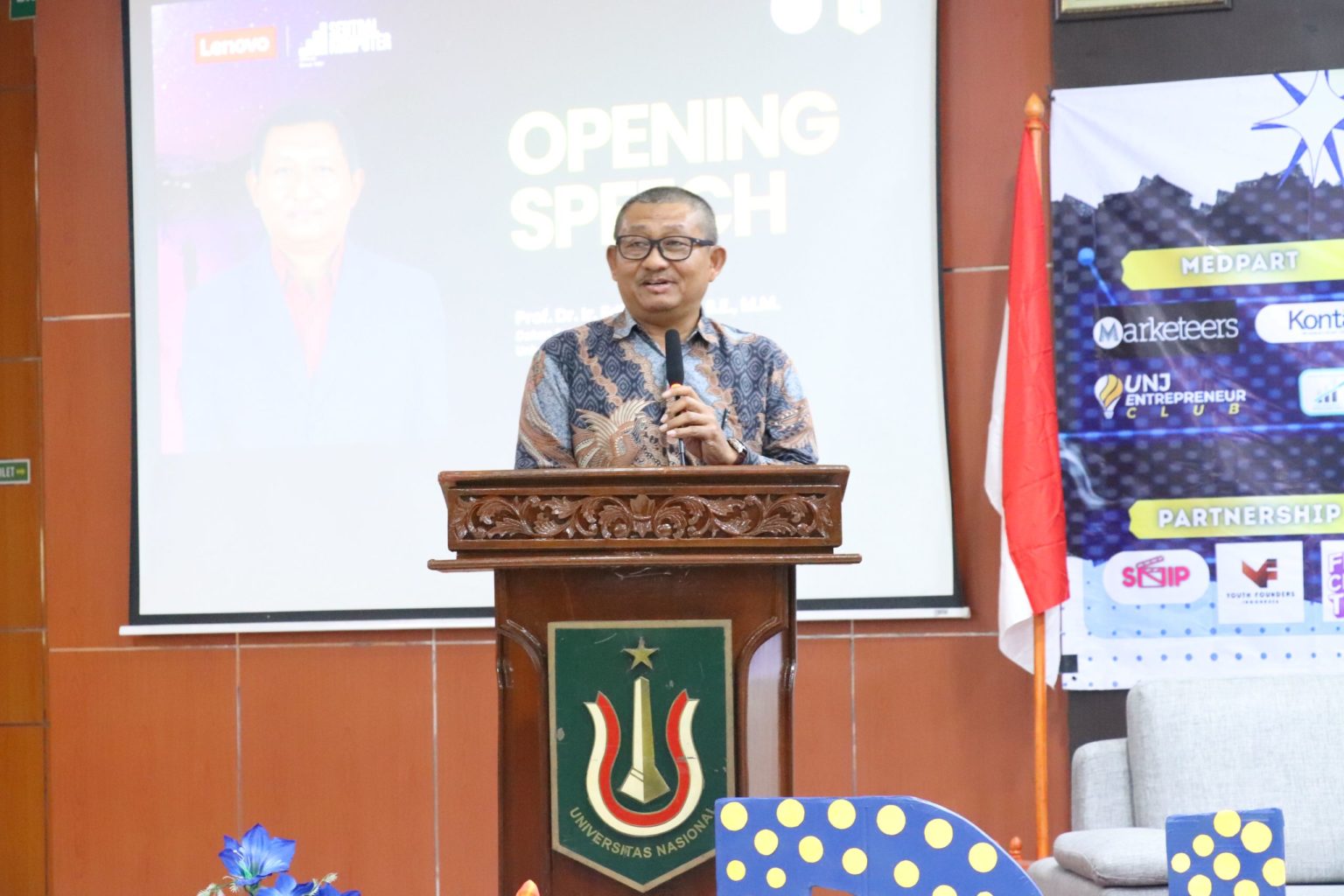
Professor Edi Sugiono, from the Faculty of Economics and Business at Universitas Nasional (UNAS), views the change in Finance Minister amidst global economic dynamics positively. He believes that the market’s positive response to this transition serves as an indicator that the cabinet reshuffle aligns with the expectations of market players.
“If a change is responded to positively, it means the market is responding well. This is what is expected. However, if a change results in a negative market response, that becomes a significant risk,” Edi Sugiono stated in Jakarta on Tuesday (15/09).
Previously, President Prabowo Subianto officially inaugurated Suahasil Nazara as Finance Minister at the State Palace, Jakarta, on Monday (14/09). Suahasil replaces Purbaya Yudhi Sadewa, who served as Finance Minister for approximately one year.
Market Response
The Dean of FEB UNAS noted that market response is a crucial factor in assessing the effectiveness of official changes in the economic sector. He believes that the persona and quality of a minister must go hand-in-hand with the ability to build market confidence.
“No matter how good Mr Purbaya is, if the market does not desire it and the response is not good, then the only option is a change and a refresh with someone new,” he said.
Edi also viewed the transition positively, noting that a public official, especially the Finance Minister, needs to maintain communication and inter-institutional relations to avoid controversy in the public sphere.
“I view it positively. The market does not want statements from an official, especially the Finance Minister, that are controversial with fellow officials and shown to the public,” he explained.
According to him, even if an official has a valid argument, delivery that has the potential to cause polemics can affect market perception. Therefore, stable inter-government communication is a vital part of maintaining the confidence of economic actors.
Appreciation of Presidential Policy
On the other hand, Edi appreciated several of President Prabowo Subianto’s policy directions, which he believes are beginning to drive a paradigm shift in economic development.
He noted that the government is starting to ensure that economic growth is not only measured by macro figures but also has a stronger correlation with the improvement of public welfare. “Mr Prabowo wants to change how high economic growth correlates with the welfare of the people,” he said.
According to Edi, Indonesia’s economic growth has not yet fully provided an even impact. He noted that the contribution of the lower-income group to economic growth remains relatively small compared to the middle and upper classes.
“The contribution from the bottom is only below 5%, so no matter how good the economic growth is, it does not correlate with people’s welfare,” he said.
Therefore, he sees development policies that start from the lower layers of society or “from the periphery” as a positive direction. Strengthening cooperatives, he believes, could be one of the instruments to realise this paradigm.
“Development must come from the periphery. If implemented through cooperatives, that is the direction. Economic growth from the periphery must be truly felt by the lower class, then moving to the middle, and towards the centre,” he explained.
He also assessed that the Free Nutritious Meal (MBG) programme possesses a spirit aligned with community empowerment at the grassroots level, including farmers and rural communities. However, the implementation of this programme still needs to be refined to ensure its initial objectives are achieved optimally.
“Initially, the MBG programme was intended to empower rural communities, farmers, and others. In practice, there are still aspects that need refinement,” he said.
Edi described this approach as an effort to correct the limitations of the trickle-down effect theory, which is the expectation that economic growth will automatically flow down and improve the welfare of all layers of society.
The Greatest Challenge
Furthermore, Edi warned that the greatest challenge for the new Finance Minister is maintaining fiscal health while seeking more diverse sources of development funding. “The heavy burden that the new Minister must carry now is the fiscal burden,” he said.
He believes the government needs to find alternative funding sources so that state financing does not rely too heavily on fiscal revenue. Regarding revenue, tax optimisation must also be carried out selectively and proportionally. “Taxes that can be boosted must be sorted out. The people who are already burdened should not be burdened with more taxes,” he asserted.
In addition to tax revenue, debt management is also a concern. In his view, national debt can still be used as long as it is directed towards productive activities and provides long-term economic benefits.
“Debt is permissible, but the percentage should be increasingly small to plug the deficit in the State Budget (APBN). Funding sources from debt must be productive, so they truly become an investment for the future, not a burden for future generations,” he said.
Fulfilling the Mandate
Edi hopes that the new Finance Minister will be able to fulfil their mandate by strengthening economic growth while gradually reducing the debt ratio.
He also requested that taxation policies continue to consider the capacity of the community, especially low-income groups. “Our hope for the new Finance Minister is that they can carry out their mandate as well as possible, boosting economic growth and reducing the debt percentage,” he said.
Additionally, he reminded the importance of maintaining budget allocations mandated by the constitution, particularly the education budget of 20 per cent of the State Budget.
“Budget allocations that have been mandated by law must not be violated.”
Source: jawawa.id (https://jawawa.id/newsitem/positive-market-response-signals-finance-minister-transition-1789664105)
Originally published by Media Indonesia (https://mediaindonesia.com/ekonomi/934709/respons-positif-pasar-jadi-sinyal-pergantian-menkeu-), translated from Indonesian