
Portugal's Defence Industry Surges Rapidly, Here's the Secret
The defence sector generated around €2.1 billion (approximately Rp38–40 trillion) in revenue last year, according to Jose Neves from AED Cluster Portugal, which involves more than 160 Portuguese organisations in the fields of aeronautics, space, and defence.
“And this trend continues to rise,” he said.
Portugal is also actively purchasing equipment from abroad to meet NATO targets, namely defence spending of 5% of gross domestic product. Lisbon is buying frigates or medium-sized warships from Italy, tanks from Germany, and new fighter aircraft. For the latter, the country has yet to decide whether to choose from the US or Europe.
In 2025, Portugal’s Defence Minister, Nuno Melo, questioned the purchase of F-35 fighter jets made by Lockheed Martin from the United States, a deal that was nearly final at the time.
Melo expressed doubts about the United States’ (US) commitment to the NATO alliance under President Donald Trump and argued that European solutions should also be considered. Portugal’s oldest F-16 aircraft out of a total of 28 units is over 30 years old, so a decision must be made soon.
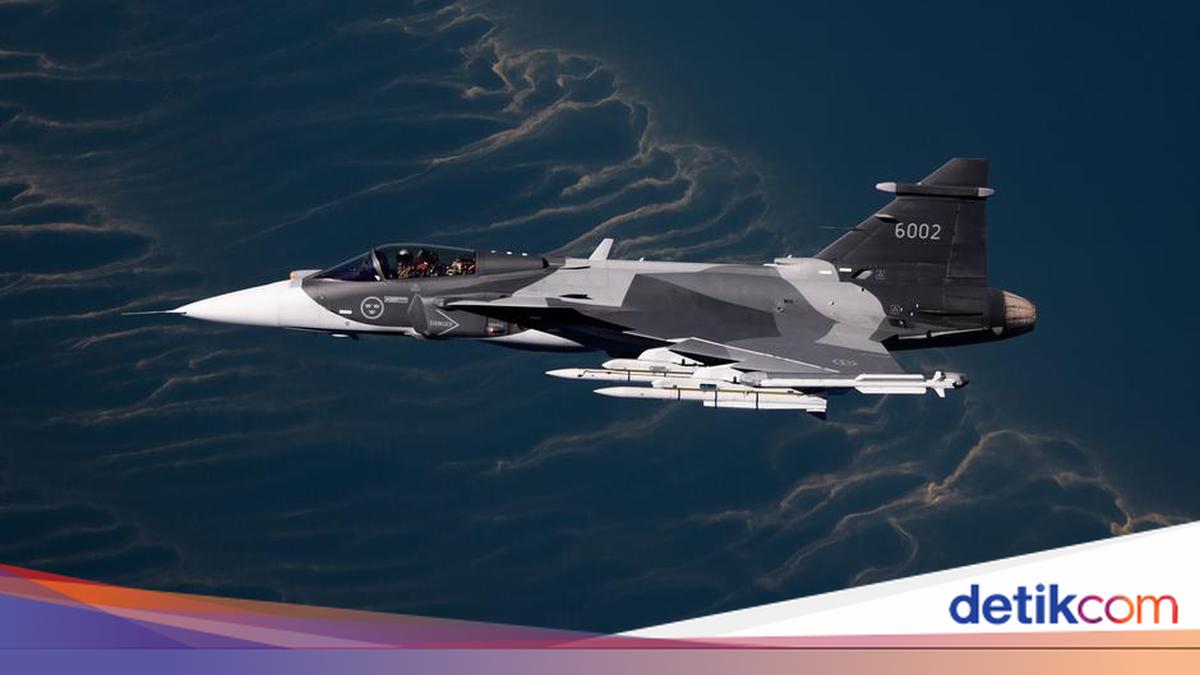
This is where the Swedish defence company, Saab, comes in. The company wants to sell the Gripen-E series, described as a “new fighter aircraft system”, to Portugal.
“The Gripen-E will be a truly European solution,” wrote Daniel Boestad, vice president of the Gripen programme at Saab, in response to DW. “The Gripen-E will strengthen Portugal’s and Europe’s strategic defence capabilities through long-term industrial partnerships and technological sovereignty.”
Unlike the Americans, Saab wants to involve Portugal’s defence industry in the Gripen project. The Portuguese aerospace company, OGMA, could produce aircraft parts, as it already does for the Brazilian company Embraer.
In return, Portugal buys military transport aircraft from Embraer. “In addition, we are also reviewing potential further cooperation in the areas of production and MRO (maintenance and repair),” said Boestad.
European Cooperation
The Swedish side is also relying on Portugal in other areas. The Portuguese company, Critical Software, is developing a flight simulator for the Gripen-E.
“We are working with Saab because it is an interesting challenge and we feel aligned with this project,” said Joo Carreira, CEO of Critical Software. The company started with just three employees in 1998 and has now grown into an international company with around 5,000 employees.
Initially, the company made software for Portuguese navy frigates. Now, Critical Software has joint ventures with companies like BMW and collaborates with German defence companies such as Diehl and Rheinmetall.
“We develop software for military satellites, drones, and missile systems,” said Carreira. “We work with Airbus, both its military and civilian divisions.”
Defence Cluster Expands
Other Portuguese companies produce drones or components for major international defence corporations.
“A lot has changed in the last five years,” said Neves from AED Cluster Portugal. “We have become a serious player with around 20,000 jobs.”
Companies like drone manufacturer Tekever or Critical Software have become trusted partners in the international defence sector, he added.
Portugal is now involved in almost all sectors of European defence, both as a supplier and, increasingly often, as a producer of finished products. “Portuguese drones and communication systems are also used in Ukraine,” said Neves.
Saab agrees. The flight simulator developed by Critical Software is not yet complete. “Our goal is to develop an AI-based co-pilot for the Gripen-E,” explained Carreira. “It is designed to support the pilot and make the jet better.”
Boestad added that “Saab is ready to support Portugal in replacing its ageing fighter fleet,” although the Portuguese air force appears to want the much more expensive US stealth jet F-35.
Forced to Buy from America?
Whether Portugal is truly free to choose the Swedish jet is questioned by Bruno Oliveira Martins from the Peace Research Institute Oslo.
“Portugal’s uncritical stance on the use of US air bases in the Azores during the Iran-Iraq war shows that the Portuguese government has limited autonomy and assertiveness in dealing with the US on military matters,” he said.
In simple terms, relatively small Portugal finds it difficult to displease its main partner, the US, by buying non-American aircraft.
“However, one prerequisite for building a forward-looking European defence industry is, even now, procuring equipment that, although not always the most cutting-edge, is still good enough,” said Oliveira Martins.
For many defence tasks, he added, the most advanced technology or the most state-of-the-art equipment is not always necessary.