
Portugal Aims to Dominate Outer Space
At least, part of that dream is already starting to become reality in Portugal. The small western European country is ambitious to become a new power in space. Its capital is skilled engineers, European cooperation, and a small island in the middle of the Atlantic.
“In the last 20 years Portugal has undergone major modernization. Our universities produce excellent engineers. We now have a strong human capital to build this sector,” said Ricardo Conde, President of the Portuguese Space Agency, established in 2019.
Currently around 2,000 specialists work in Portugal’s space sector, spread across about 80 companies. Last year the industry recorded revenue of around €200 million. This year it is expected to rise sharply. “We have one extra trump card—Azores,” Conde said.
Spaceport in the Azores
In Santa Maria—the relatively quiet island—Portugal is building a national spaceport. “This will be a major project,” said Ivo Vieira of the AED Cluster Portugal space industry organisation.
According to plans, in 2028 the European Space Agency’s Space Rider cargo aircraft is scheduled to land there. The capsule will descend with a giant parachute, right near the old runway built by the United States during World War II and now little used.
Around 2030, from the same site a rocket carrying a satellite belonging to South Korea is planned to launch. At present, a number of satellite communication antennas are already operating in Santa Maria.
Does this mean Portugal is building its own spaceport? “The scale is certainly much smaller and more of a complement to the European spaceport in Kourou, French Guiana,” said Bruno Carvalho of ASC, the spaceport operator company.
According to Carvalho, the facility is designed as a low-cost launch site for small satellites. Its location in the middle of the Atlantic makes Santa Maria ideal for space traffic.
If the project is completed, around 35 people will work at the facility. The relatively light infrastructure keeps operating costs lower than similar facilities in the United States. In addition, the project is expected to bring economic impact to Santa Maria.
“Who knows, we might attract back the young people who left the island,” Carvalho said.
First European landing
The first space capsule landing in Azorean waters is planned in the second half of this year.
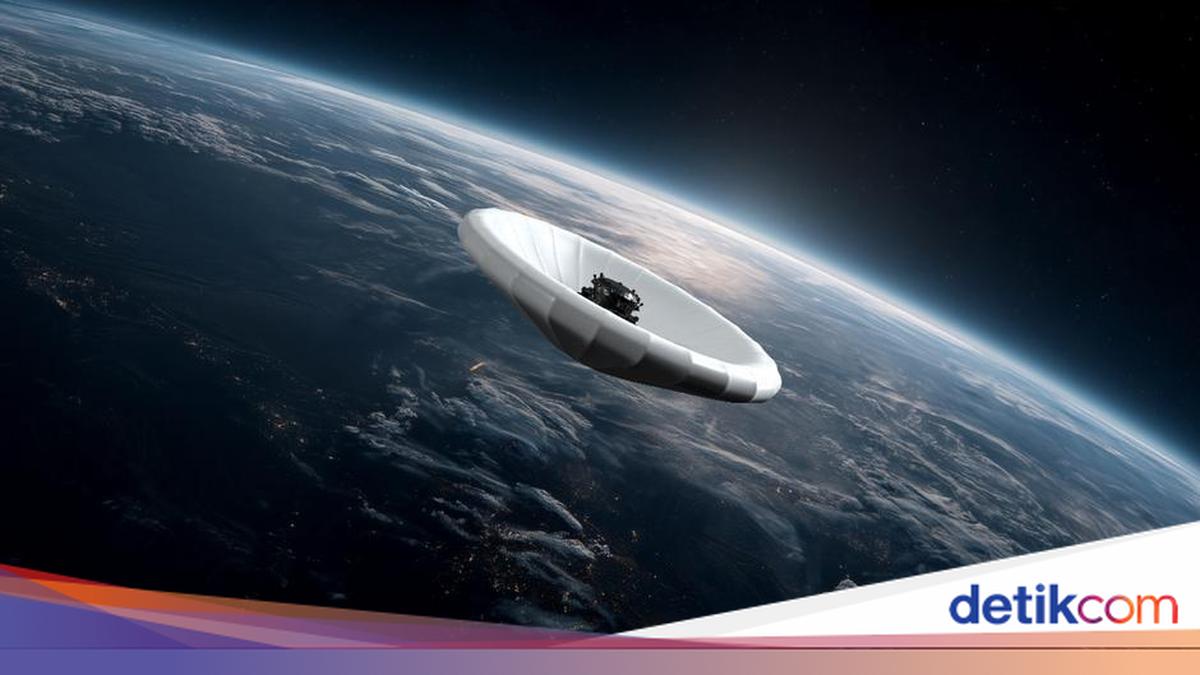
“Portuguese authorities have approved the first landing in the European Union for our transport capsule Phoenix 2.1,” said Marta Oliveira, one of the founders of German Atmos Space Cargo, which originates from Portugal.
The company develops a reusable space capsule to transport satellites at lower costs. “We want to be the FedEx of the space industry,” Oliveira said.
Currently, their capsule is still launched using SpaceX rockets, but the company is also exploring cooperation with the European space industry. After the mission, the capsule will return to Earth and land in the Atlantic near Santa Maria.
“The ASC spaceport is very helpful logistically and in coordinating with local authorities. It is ideal for us,” she said.
Satellite industry grows
Portugal is also building domestic satellite manufacturing capabilities. “There are three centres developing satellites in Portugal,” said Ricardo Conde.
The first is the CEiiA consortium in Porto. Second, the facility of multinational Open Cosmos in the university town of Coimbra. And third, a centre in Lisbon that works closely with the military.
The satellites produced are primarily small in size, for various purposes such as communications, Earth observation, and increasingly important wildfire monitoring.
Small satellites, big ambitions
The CEiiA consortium is among the most advanced players in the sector. “We entered the space industry in 2018,” said Andre Dias of CEiiA. The aim is to build a high-resolution satellite industry.
CEiiA plans to open a new production centre in northern Portugal near the city of Guimarães, in collaboration with the municipal government and the local university. With the new facility, production capacity is expected to increase four to five times.
Currently CEiiA can produce about four civil satellites per year, weighing up to 500 kilograms. But demand continues to rise.
Dias says the space industry is undergoing something of decentralisation—from large countries like Germany and France to smaller countries like Portugal. He describes it as “the democratisation of space.”
Portugal is choosing to focus on small satellites costing around €20–30 million, far cheaper than large satellites that can reach €500 million.
Nevertheless, the Portuguese government’s ambitions remain large. “By 2030 we want to have 30 satellites in orbit, some of them in collaboration with Spain,” Conde said.
Portugal also wants to attract more international companies to invest in the sector, including in the increasingly strategic defence domain. With the various projects underway, Portugal’s dream of becoming a space nation seems likely to come true sooner than many people expect.
This article first appeared in German
Adapted by Rizki Nugraha
(ita/ita)