
Port Capacity Increases, Land Logistics Ecosystem Strengthened
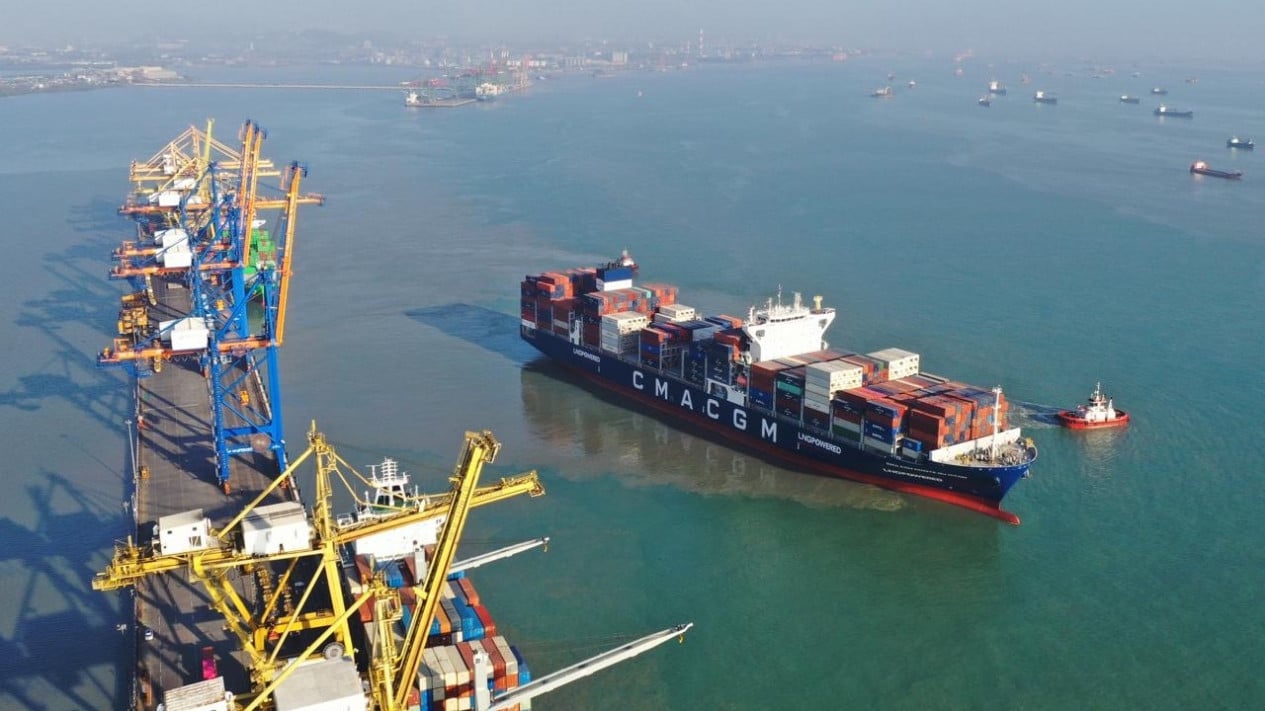
The increase in container port capacity must be followed by the strengthening of logistics nodes on the land side. This is necessary to ensure that accelerated loading and unloading processes do not simply shift bottlenecks to the next link in the distribution chain.
Professor Kuncoro Harto Widodo, a researcher at the UGM Centre for Transport and Logistics Studies, stated that the growth in container traffic needs to be balanced with the strengthening of all nodes within the logistics ecosystem. He noted that improving logistics services depends not only on physical infrastructure but also on data integration, human resource capacity, and regulatory support.
The logistics and supply chain management expert noted that national container traffic volumes have experienced positive growth over the last five/five years. This condition makes the strengthening of capacity and connectivity between nodes increasingly important. “A bottleneck at one node will impact other nodes,” he said when contacted on Friday (11/09/2026).
Consequently, Kuncoro is encouraging data integration between terminals, shipping companies, depots, trucking, industrial estates, and the government. The utilisation of the National Logistics Ecosystem (NLE) also needs to be continuously optimised so that the movement of information can keep pace with, or even precede, the movement of goods.
“The ideal scenario is that the flow of information should be available at all times and, if possible, precede the flow of goods,” he added.
In addition to information system integration, Kuncoro believes that the development of rail-based freight transport needs to be strengthened as an alternative distribution method to ports. Developing this mode could also support efforts to handle over-dimension and over-load (ODOL) vehicles on land routes.
Views regarding the importance of connectivity between nodes were also shared by Wahyono Bimarso, a port and logistics practitioner from the Trisakti Institute of Transport and Logistics (ITL). He noted that the capability of container terminals in Indonesia is fundamentally improving and meeting international standards. However, increased productivity within terminals will not yield maximum impact if not accompanied by the readiness of facilities once containers leave the port.
“Our container terminals are actually already at international standards. The main issue arises after the container leaves the port. Loading and unloading speed will not have a maximum impact if depots, warehouses, roads, and land-side distribution systems do not develop at the same speed,” Wahyono said when contacted on Wednesday (09/09/2026).