
Popular Indonesian Fish Found to Contain 1,600 Parasites: What to Do Before Eating It
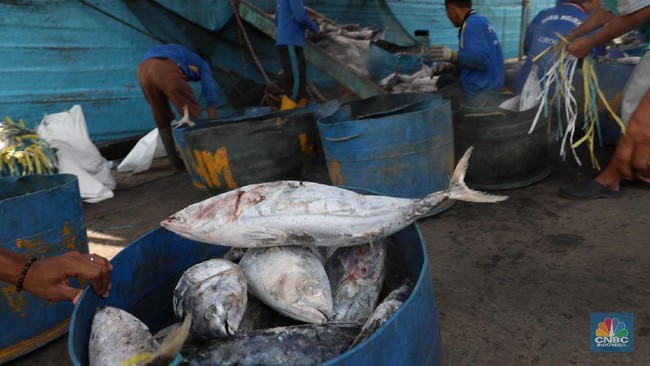
Jakarta – Tuna is a familiar fish, and consumption in Indonesia is substantial. The country also has abundant tuna stocks. According to the Ministry of Marine Affairs and Fisheries, domestic consumption of tuna, mackerel tuna and skipjack reached 1.57 million tonnes in 2023.
However, fatty tuna, often prepared as sashimi or canned fish, can contain parasites. A recent study found parasites in almost all of the tuna examined by researchers.
Researchers from the Federal University of Santa Catarina in Brazil analysed 53 tuna caught in local waters. They found that 96% of the fish were infected with parasitic worms.
The researchers identified more than 1,600 worms across all the fish samples. Their findings were published in the journal Ocean and Coastal Research.
Using microscopes, the team examined various organs. Only the kidneys and heart were consistently free of parasites.
The intestines had the highest infection rate. Parasites were next most commonly found in muscle tissue—the part of the fish generally eaten by people—followed by the stomach.
“These findings highlight the importance of sanitary inspection,” the researchers wrote, as quoted by ScienceAlert on Friday (9 October 2026).
They also stressed the importance of removing a fish’s internal organs soon after it is caught. This is necessary to prevent larvae from moving from the organs into the muscle tissue.
The tuna studied belonged to the species Katsuwonus pelamis, known as skipjack tuna, oceanic bonito or katsuo. In Indonesia, it is better known as cakalang.
The species is commercially valuable and is the most abundant type of tuna in Brazil. In 2022, skipjack was the world’s third most-caught marine species, with a total catch of 3.1 million tonnes.
The study found two groups of worms commonly infecting the fish: Trypanorhyncha and Anisakis. Parasites in fish are not a new phenomenon. Fish and parasites have coexisted in marine ecosystems over a long period of evolution.
However, the number of parasites found in the study, and their presence in several fish organs, attracted the researchers’ attention.
The study was small, involving just 53 fish collected during a single period. Its findings therefore cannot be used to conclude that 96% of tuna or skipjack worldwide are infected with parasites.
So, is it dangerous to eat the fish?
Consumers do not need to throw away the canned tuna in their cupboards. Human infection from Trypanorhyncha larvae is rare, and not all Anisakis species are known to cause illness in people.
Skipjack should be cooked thoroughly.
Most parasites are no longer dangerous once killed through cooking or canning. The greater risk arises when fish containing certain parasite species is eaten raw or insufficiently cooked.
Live parasites can attach to the walls of the human digestive tract. This can cause digestive problems including stomach pain, nausea, vomiting and diarrhoea.
The seafood industry generally inspects fish before they are sold to consumers, removing visible parasites during processing.
However, some very small parasites may escape detection. Beyond the health issue, parasites can also affect the market value of seafood products.
“Beyond their potential effects on human health, parasites can reduce the marketability and value of seafood products because of their implications for food safety and quality, eroding consumer confidence and causing economic losses for the fishing industry,” the researchers wrote.
Earlier research has also indicated a rise in Anisakis parasites in raw seafood. A 2020 study by researchers at the University of Washington found that the number of Anisakis worms had increased by about 280 times since the 1970s.
The average finding shifted from fewer than one worm for every 100 fish caught to more than one worm in each host fish. However, this increase does not necessarily signal a threat to people or the marine ecosystem.
Anisakis parasites have a life cycle involving various marine animals, including fish, squid, whales and dolphins. Humans are not their primary host.
A sign of a healthy ecosystem
Chelsea Wood, a parasitologist at the University of Washington, has said that the presence of certain parasites can be an indicator of a healthy marine ecosystem.
“Everyone assumes that worms in salmon are a sign that something is wrong,” Wood said.
“But the anisakid life cycle involves many components of the food chain. I see their presence as a signal that the fish on your plate came from a healthy ecosystem,” she added.
Scientists have yet to determine whether the number of parasites found in the Brazilian skipjack is normal. Research on parasites in this fish remains relatively limited, despite the species’ importance to the global fishing industry. For consumers, the simplest way to reduce the risk is still to cook fish thoroughly.
“To be honest, there are worms in everything you eat,” Wood said.
“But cooking kills the various parasites we find in food. It is only when we eat raw or undercooked food that we may encounter live, infectious parasites,” she said.
Source: jawawa.id (https://jawawa.id/newsitem/popular-indonesian-fish-found-to-contain-1-600-parasites-what-to-do-before-eating-it-1792151496)
Originally published by CNBC Indonesia (https://www.cnbcindonesia.com/tech/20261016135449-37-776872/ikan-favorit-ri-mengandung-1600-parasit-lakukan-ini-sebelum-makan), translated from Indonesian