
POPSI Calls for Improved Governance in Palm Oil Mill Development, Rejects Moratorium
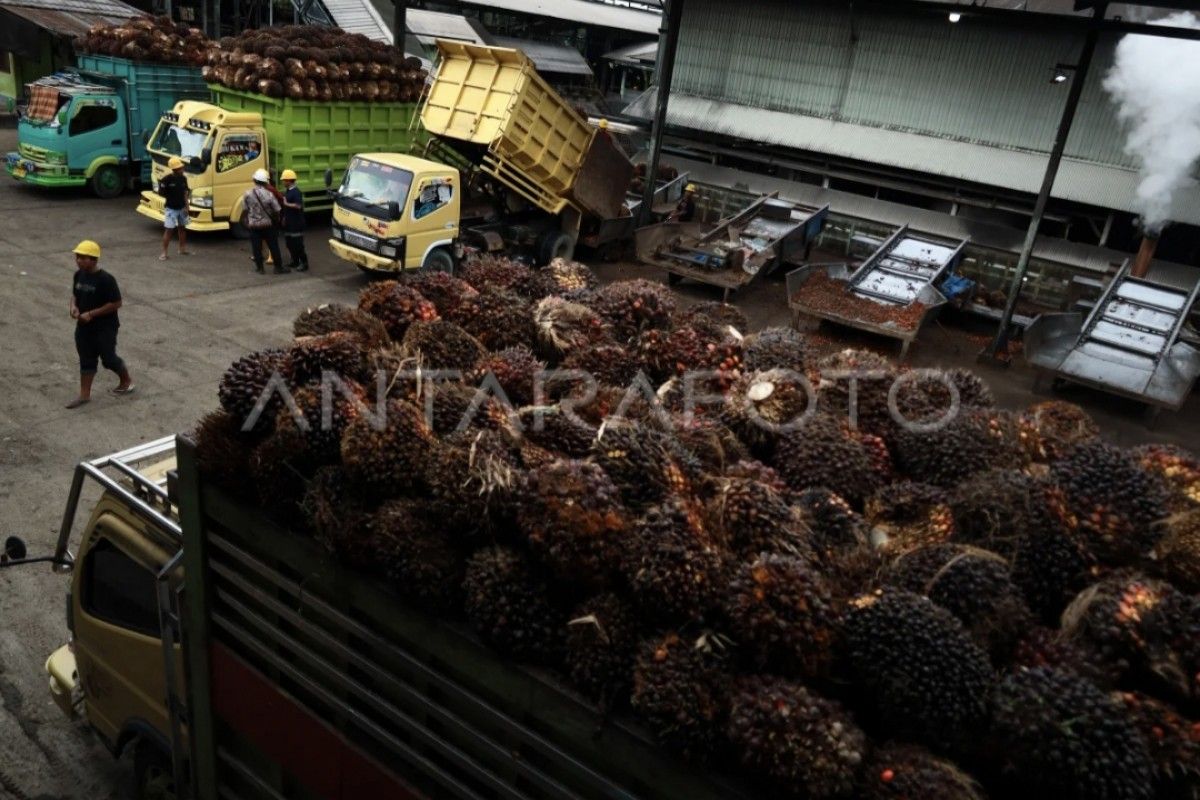
The Indonesian Palm Oil Farmers Organisation (POPSI) believes that the governance of new palm oil mill (PKS) construction needs to be improved and strengthened.
POPSI Chairman Mansuetus Darto, in a statement in Jakarta on Sunday, said the government needs to collect data on installed PKS capacity in each zone so that it does not exceed twice the available supply of fresh fruit bunches (TBS) in the region.
According to him, such a condition could trigger unhealthy business competition between mills.
“What is needed is not a moratorium, but better planning. The government must map smallholder plantation zones and calculate the required PKS capacity in each region. That way, mill construction is truly aligned with the available TBS supply potential,” said Darto.
Furthermore, he also reminded the government not to issue permits for PKS construction to companies that do not own their own plantations, especially if the location is near or even in the middle of plasma plantation areas.
He argued that such conditions could disrupt TBS trading arrangements and damage the partnership patterns that have been running so far.
Meanwhile, for regions that still lack PKS capacity so that farmers have to send TBS to distant mills, Darto asked the government to instead simplify the licensing process for new PKS construction or improve road infrastructure so that farmers’ distribution costs can be reduced.
“What we are asking for is better governance. Mill construction permits must be based on data on the distribution of smallholder plantations so as not to disrupt partnerships that are still running under the credit scheme system,” he explained.
This suggestion follows the Jambi Provincial Government’s plan to impose a moratorium on new PKS construction.
Darto assessed that a moratorium is not the right solution to improve palm oil industry governance, but instead has the potential to harm smallholder oil palm farmers because the fewer PKS there are, the farther farmers must travel to sell their TBS.
In addition to impacting farmers, Darto believes a moratorium could also hamper the palm oil downstream agenda being developed by the Jambi Provincial Government.
“If Jambi wants to build a downstream palm oil industry, then the CPO supply from the upstream sector must actually be strengthened, not restricted. A moratorium could make investors choose to build PKS in neighbouring provinces such as Riau, South Sumatra, or West Sumatra. As a result, Jambi loses investment and added value, while TBS from plantations in border areas will continue to flow out of the province,” Darto explained.