
Pope’s Five Messages on AI to Technology Experts from Around the World
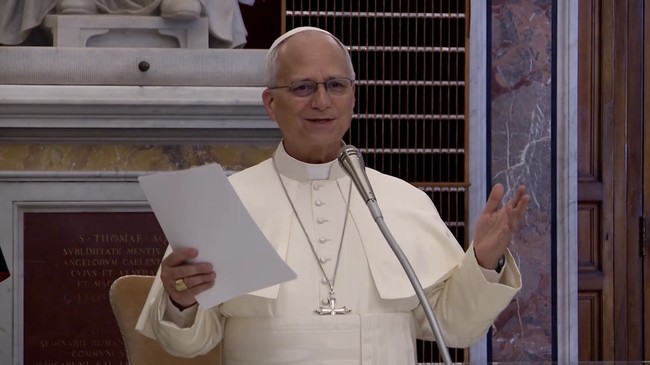
Jakarta, CNBC Indonesia — At the Vatican’s Paul VI Audience Hall on Friday, 30 October 2026, Pope Leo XIV delivered a landmark address to scientists, researchers and technology thinkers from around the world. The meeting, entitled “The Future of Artificial Intelligence: A Dialogue between the Vatican and the Scientific World”, was jointly organised by the Pontifical Academy for Life and the Future of Life Institute.
Just 17 days after undergoing surgery for lung cancer, he stood before the participants and presented five guiding principles for humanity amid rapid technological development, CNBC Indonesia reported on Monday (2 November 2026).
- AI’s future has not been decided
The Pope began by stressing that the direction of AI development is neither predetermined nor an unalterable destiny.
“The future of artificial intelligence is not predetermined,” he said. As the technology is created by humans, its direction depends entirely on the choices we make. The question should not simply be “what can AI do?” but “for what purpose should AI be developed?”
The Pope warned that those who see this only as a race to be won will forget those left behind.
- Machines are tools, not people
“Machines are tools, not people,” Pope Leo XIV said.
He cautioned that AI systems have no experience, feel neither joy nor pain, do not grow through relationships, and do not understand the meaning of love, work, friendship or responsibility.
If such systems were granted legal personhood, people harmed by them would face a faceless entity that could not be held accountable. Responsibility must remain in human hands.
- Certain decisions must not be handed over to machines
There are limits that must not be crossed: decisions concerning human life, freedom and the use of armed force must continue to be made consciously and responsibly by people.
The Pope urged countries due to meet in Geneva in November to take concrete steps to ban lethal weapons capable of operating entirely autonomously, without human control. Technology must be “disarmed” of the ability to make decisions that determine whether a person lives or dies.
- AI should benefit everyone, not just a wealthy few
Artificial intelligence must not become an end in itself, or simply benefit those who are already wealthy and powerful. Its benefits should be shared fairly, especially with those most in need. Genuine technological progress should strengthen fraternity and solidarity, rather than widen divisions among humanity.
- Institutions are needed to protect the interests of the whole world
Good principles alone are not enough. Institutions are needed to put them into practice, particularly international bodies capable of safeguarding the common interests of all humanity.
This requires jointly agreed standards, independent oversight, and clear and fair accountability mechanisms.
The address was delivered at the Vatican’s Paul VI Audience Hall during a meeting attended by technology and science figures from various countries. Its full text has been published on the Vatican’s official website, making it one of the most in-depth teachings on artificial intelligence delivered by a leader of the Catholic Church.
The speech was widely praised by technology thinkers. Gary Marcus, a cognitive scientist at New York University, called Pope Leo XIV “the clearest-thinking world leader on AI today”.
Oren Etzioni, an artificial intelligence expert who reviewed the address, agreed with its first four points but argued that international institutions might not be able to act quickly enough to keep pace with technological change, which moves forward every few months.
Source: jawawa.id (https://jawawa.id/newsitem/popes-five-messages-on-ai-to-technology-experts-from-around-the-world-1793605853)
Originally published by CNBC Indonesia (https://www.cnbcindonesia.com/tech/20261102111434-37-781462/5-pesan-paus-soal-ai-di-depan-ahli-teknologi-di-seluruh-dunia), translated from Indonesian