
Polri at 80: Maintaining Trust in the Digital Era
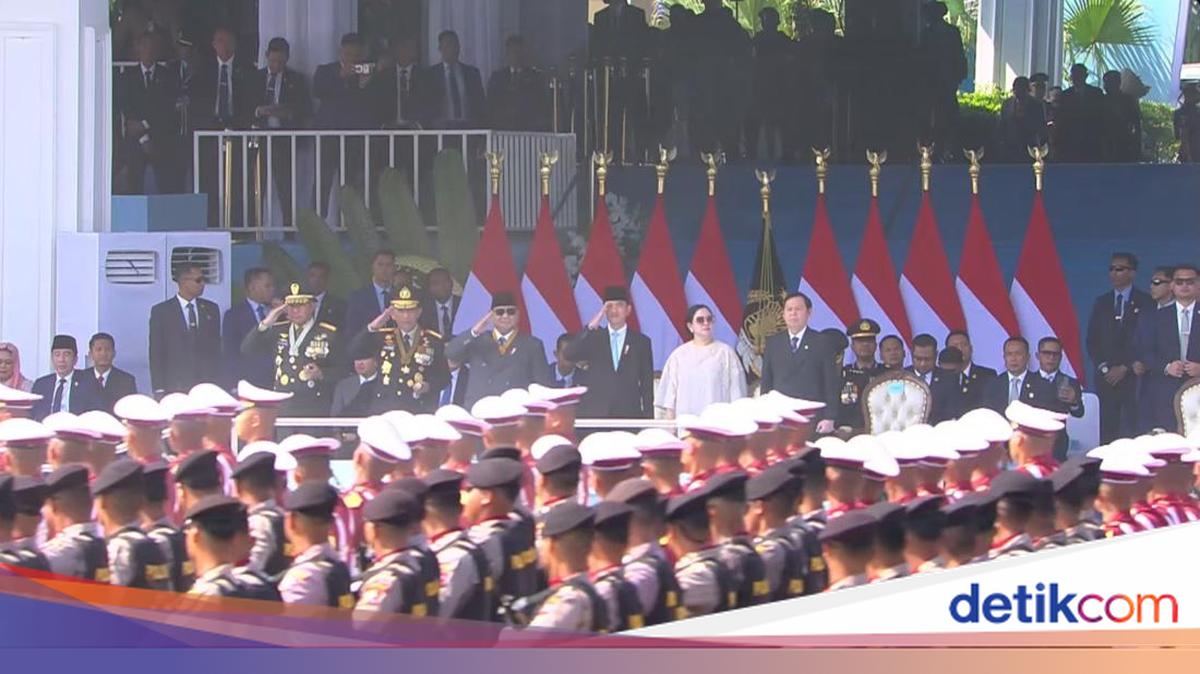
This year’s 80th Bhayangkara Day feels different. Amidst various challenges faced by law enforcement, Polri has received two pieces of good news simultaneously. The revision of the Polri Law provides more space for the institution’s service, while the Kompas Research survey shows a steadily improving level of public trust. These two developments serve as essential capital for facing increasingly complex policing challenges.
Increasing public trust is certainly not the result of overnight work. It is an accumulation of the collective efforts of all Polri ranks, from field personnel to policymakers at the central level. In this context, the direction of institutional reform cannot be separated from the leadership of the Chief of National Police, General Listyo Sigumn Sigit Prabowo, alongside the Deputy Chief, Inspector General Dedi Prasetyo.
In an organisation as large as Polri, success is never determined by a single person. However, the direction of policy and the cohesion of leadership are crucial factors in determining the rhythm of change. So far, the duo of General Listyo Sigit and Inspector General Dedi Prasetyo has demonstrated a relatively harmonious division of roles.
The Chief of Police leads the direction of institutional transformation through the ‘Presisi’ concept (Predictive, Responsibility, and Equitable Transparency), while the Deputy Chief strengthens its implementation through organisational development, human resource advancement, and the strengthening of public communication. Interestingly, the public does not perceive an impression of ‘twin suns’ or a competition for image-building; instead, what stands out is a complementary collective effort.
Under General Listyo Sigit’s leadership, reforms are directed not only towards improving the quality of public service and law enforcement but also towards strengthening internal supervision, the digitalisation of services, and the acceleration of bureaucratic reform. This agenda is bolstered by Inspector General Dedi Prasetyo, who possesses extensive experience in human resource development and public communication.
Dedi’s experience leading the Polri Public Relations Division during a period when public trust was under pressure from several major cases serves as valuable preparation. The era of social media has taught that good work alone is no longer sufficient. Every policy, action, and even mistake by officers can spread within minutes and shape public perception. Therefore, the institution’s success is now also determined by the ability to explain every step quickly, openly, and accountably.
The results of the Kompas Research survey, which show an increasing trend in public trust, serve as an indicator that the direction of these reforms is beginning to gain public recognition. However, the challenges facing Polri in the future are significantly greater.
President Prabowo Subiantes has reminded that threats to the nation continue to evolve. Narcotics, online gambling, human trafficking, cybercrime, and white-collar crime are developing alongside rapid technological advancements. Consequently, policing methods must continuously adapt.
This change concerns not only the types of crime but also the character of the community being served. Generation Z is growing up in a digital ecosystem that makes them critical, quick to react, and accustomed to verifying information from various sources. They do not easily accept authority based solely on position or symbols of power. Trust must be built through consistent, real-world actions.
In such an era, the public is no longer merely the object of service, but also the overseer. Mobile phone cameras, social media, and digital spaces ensure that almost every action by officers can be recorded, published, and judged by public opinion in a very short time.
This is where the greatest challenge lies for Polri as it enters its 80th year. It is not merely about how to expand the institution’s role through new regulations, but how to ensure that every expansion of authority is accompanied by increased professionalism, integrity, accountability, and the ability to adapt to an increasingly critical society.
The Kompas Research survey shows that this social capital is beginning to form. Public trust is moving in a positive direction. However, trust is not a trophy to be displayed once achieved. It is a mandate that must be guarded every day through fair service, professional law enforcement, and an attitude that aligns with the expectations of the people.
In the era of Generation Z, trust is the most valuable currency for any state institution. Building it requires a long time, but losing it can happen in a single event. Therefore, entering its 80th year, Polri’s greatest challenge is no longer just to be a strong institution, but to be an institution that continues to be trusted.