
Polkam Ministry Evaluates Democracy Index in Southwest Papua
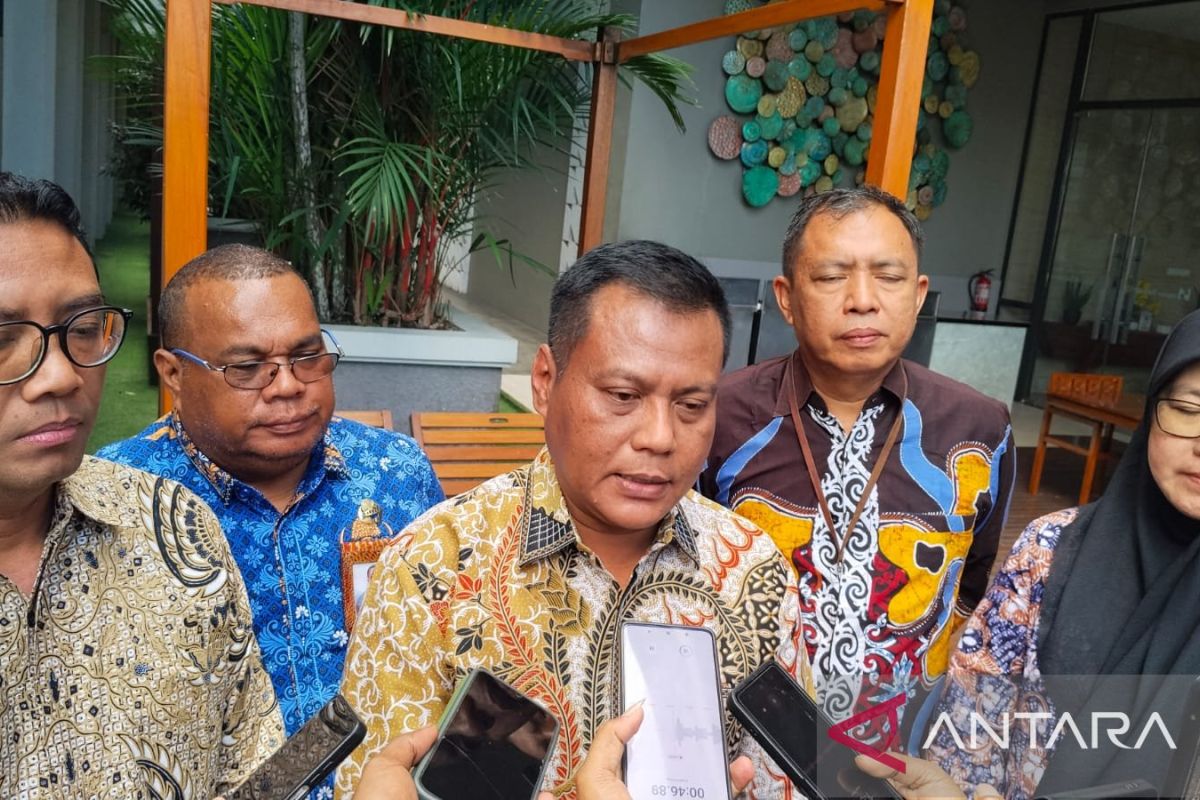
The Coordinating Ministry for Political and Security Affairs (Kemenko Polkam) is evaluating the Indonesian Democracy Index (IDI) achievement in Southwest Papua Province as part of efforts to improve the quality of democracy in the region.
Assistant Deputy for Democracy and Electoral Coordination at Kemenko Polkam, Brigadier General TNI Haryadi, stated that the evaluation was conducted with the national IDI team, comprising Kemenko Polkam, the Central Statistics Agency (BPS), the Ministry of Home Affairs, and the National Development Planning Agency (Bappenas).
“In accordance with the 2025-2029 National Medium-Term Development Plan (RPJMN), Kemenko Polkam has been appointed as the coordinator for measuring the Indonesian Democracy Index. After the 2025 measurement results were released, we evaluated various findings, especially in regions experiencing a decline in achievement,” Haryadi said in Sorong on Thursday.
He explained that Southwest Papua became a focus of attention because its IDI score had declined in the 2025 measurement. “Nevertheless, this situation is still understandable because 2025 is the first year this new autonomous region (DOB) province was included in the IDI measurement,” he added.
Haryadi said the evaluation forum aims to identify factors affecting the IDI score while formulating improvement measures so that the democracy index in Southwest Papua can increase in the 2026 measurement. According to him, the government is targeting a national IDI score in the range of 81.69 to 85.23, as stipulated in the RPJMN.
Meanwhile, Agus Pramono, a Young Expert at the BPS Directorate of Social Resilience Statistics, said the measurement results show there are still several issues affecting the quality of democracy in the Papua region, including Southwest Papua. According to him, one of the concerning issues is the existence of obstacles to freedom of expression, both from the authorities and among community members.
“For example, citizens who express certain political aspirations still face intimidation or terror from other groups. This is one of the indicators affecting the assessment of freedom of expression,” he said.
In addition, BPS also highlighted the low public service index scores in several areas due to the suboptimal submission of data and supporting evidence to the Ministry of State Apparatus Empowerment and Bureaucratic Reform (KemenPANRB). Agus explained that public services delivered by local governments cannot be scored if the required supporting evidence is not adequately available during the measurement process.
“If it cannot be measured, the score becomes zero. This score then affects the IDI achievement and can potentially impact the central government’s assessment as well as the investment climate in the region,” he said.
He also assessed that the performance of regional legislative institutions needs to be strengthened. Based on the evaluation results, the performance indicator for the Southwest Papua Provincial Legislative Council (DPRP) remains low because the realisation of the regional legislation programme has not met the set targets. “Therefore, we encourage the regional government and the DPRP to improve planning and programme target achievement so that the quality of democracy in Southwest Papua continues to increase in the next measurement period,” he said.