
Politics Is Not a Path to Wealth, Says Deputy Minister at Islamic Congress
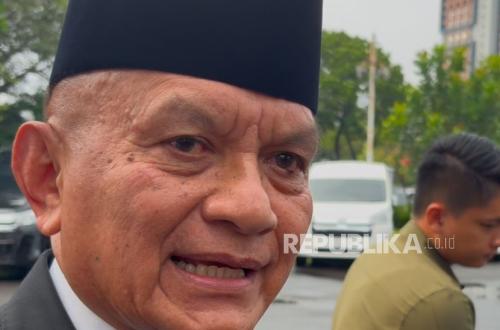
Deputy Coordinating Minister for Political and Security Affairs (Wamenko Polkam) Lodewijk F. Paulus has stated that politics is not a path to wealth or power, but rather a form of service to the nation and state. He made the remarks while speaking on the second day of the 8th Indonesian Islamic Congress (KUII) in South Jakarta on Saturday.
Lodewijk assessed that national political challenges stem not only from global geopolitical dynamics but also from the quality of domestic political practices. He argued that the development of Indonesia’s political system must begin with a correct paradigm regarding the essence of politics. “Politics is an act of worship and service, not a path to wealth or power,” he said.
He explained that service-oriented politics would produce leadership that prioritises national interests over personal or group interests. Conversely, if politics is viewed merely as a tool to gain power, transactional politics and various deviations will continue to recur.
During the session, Lodewijk also highlighted several persistent challenges facing Indonesia, including high-cost transactional politics, negative and black campaigns, oligarchy, political dynasties, and a democracy that is still considered merely procedural. He noted that these issues are a collective task to build a healthier and fairer political system.
He therefore urged all elements of the Islamic community to build a political paradigm that makes the nation’s interests an inseparable part of the community’s interests. “The awareness that the interests of the nation and state are part of the interests of the ummah,” he said.
Lodewijk also encouraged political education based on the values of Islam Wasathiyah (moderate Islam) and Rahmatan lil ’Alamin (a blessing to the universe). He stressed that the public must be encouraged to choose leaders based on integrity, capacity, and work programmes, rather than political promises or money politics.
Furthermore, he called on all components of the nation, particularly the Islamic community, to strengthen synergy between political parties, Islamic civil society organisations, community leaders, and state administrators to realise a democracy that brings benefit. Lodewijk emphasised that the vision of a Golden Indonesia 2045 can only be achieved if the national political system produces a government that is moral, transparent, just, and truly sides with the people’s interests. He reminded the audience that national improvement must begin with improving political quality and community participation in national life. “There is no political improvement without self-improvement, and there is no national improvement without the active role of the ummah,” he said.