
Political Victory vs Historical Victory: Lessons from Karbala
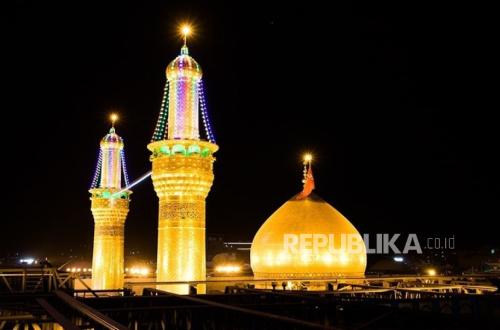
A state may possess a constitution, a bureaucracy, security apparatus, and the ability to win wars. Yet, all of this does not necessarily produce something far more difficult to obtain: moral legitimacy. More than thirteen centuries ago, the tragedy of Karbala—which saw the death of Husain bin Ali, the grandson of the Prophet Muhammad, on the 10th of Muharram in 61 Hijri (680 AD)—showed that political victory is not the same as victory in the judgement of history. The event became one of the most important examples of how the relationship between the state, power, and justice can leave a mark that extends far beyond its time.
This issue remains relevant today. In every country, the question of who has the right to rule never stops at the legal aspect alone. A government can be born through a legitimate procedure and possess all the instruments of power, yet still face a crisis if it loses the trust of the people. Conversely, there are figures who no longer hold political power but continue to be remembered because they are seen as having upheld their principles and integrity. In other words, legality does not always go hand in hand with legitimacy.
In political science, Max Weber (1978) distinguishes between power as the ability to impose one’s will and authority which gains recognition as something legitimate. Power can be enforced through law and state institutions, but legitimacy grows from the public’s belief that power is exercised fairly. Weber’s thinking helps explain why a government can still be questioned even if it is formally legal.
A dilemma of this sort once emerged in Islamic history in 680 AD. After the death of Muawiyah bin Abi Sufyan, leadership passed to his son, Yazid. For some, this decision was an effort to maintain stability. However, others viewed it as a deviation from the principles of Islamic politics, because leadership was inherited. The historian Julius Wellhausen (1927) referred to this period as a transformation towards monarchy. And this, according to Wilferd Madelung (1997), was the culmination of a succession problem that had existed since the death of the Prophet Muhammad.
Amid this situation, Husain bin Ali, while in Mecca, received numerous letters from Kufah (Iraq) urging him to come and lead. However, when he set out with his family and a small number of followers, the situation in Kufah had rapidly changed. The local government took harsh political measures, causing those who had invited Husain to withdraw their support. Husain’s group was eventually stopped at Karbala and confronted by a much larger Umayyad army.
The battle on the Day of Ashura was brief. Husain and most of his followers were killed. The threat to the government, from the ruler’s perspective, was successfully overcome and stability was maintained. However, history questioned more than just the military victory. The name of the martyred Husain evolved into a symbol of moral courage and steadfastness in upholding principles. Karbala became an event that continues to generate debate about the legitimacy of power. The historian Hugh N. Kennedy (2004) assessed Karbala as one of the turning points that shaped the political and religious development of Islam for centuries. Thus, military victory could not end the debate about justice and leadership.
A similar view can be found in the thought of the sociologist, historian, and scholar Ibn Khaldun. In the Muqaddimah (779), he explained that the survival of a state is supported not only by military strength but also by social solidarity, a sense of justice, and the people’s acceptance of their ruler. When legitimacy weakens, the foundations of a government slowly crumble, even if it appears outwardly strong.
Of course, the modern state is different from the world of the seventh century. Today, there are constitutions, elections, representative institutions, an independent judiciary, and far more developed mechanisms for the transfer of power. However, one lesson appears to remain the same: lasting stability requires not only legality but also legitimacy. A government needs the legal authority to act, but it also requires public trust for that authority to be accepted as just. That is why Karbala has never truly become the past. The Umayyad dynasty itself collapsed long ago, but the event on that barren plain continues to be remembered as a reminder that history records not only who holds power, but also how that power is exercised. A ruler can easily win a war. However, only justice and moral legitimacy can win the memory of history.