
Policy Coordination, 8 National Balance Sheets, and Economic Revival
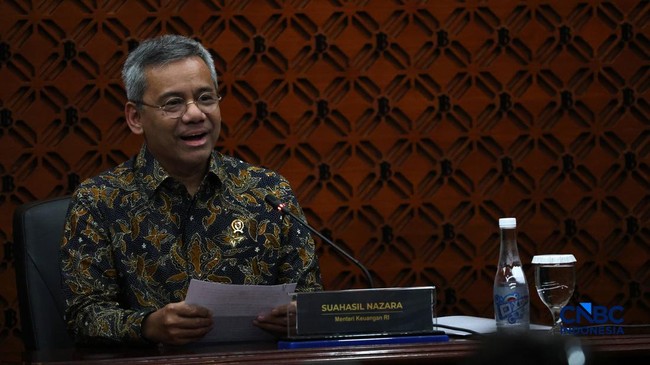
There is something interesting about the direction of Indonesia’s economic policy conversations lately. On one hand, Finance Minister Suahasil Nazara has reaffirmed the importance of fiscal discipline, including the commitment to maintaining the budget deficit below the 3 per cent threshold of GDP. On the other hand, coordination between the government and Bank Indonesia remains seen as vital, while maintaining the independence and respective mandates of each institution.
At first glance, these two things may appear contradictory. If Indonesia wants to grow faster, shouldn’t the government and the central bank move together more aggressively? This question arises because we have often imagined coordination as a uniformity of policy direction.
When fiscal policy expands, monetary policy is expected to ease. When government financing increases, attention then turns to how large the financial system is, and ultimately, how the central bank can assist in absorbing it.
However, an economy is far larger than the balance sheets of the government and the central bank. The government has a balance sheet, Bank Indonesia has a balance sheet, and so does the banking sector. The same applies to corporations, Danantara, insurance companies, pension funds, households, and foreign investors. All possess different assets, liabilities, incomes, financing needs, and risk-bearing capacities.
What makes the issue interesting is that none of these balance sheets truly stand alone. A government bond, which is a liability for the government, is an asset for the investor who purchases it. A loan that is an asset for a bank is a liability for the company or household that borrows it.
Investments made by Danantara can become capital for companies undertaking projects. Household savings become a source of funding for the banking and capital markets. Meanwhile, foreign capital allows Indonesia to finance investments that cannot be entirely met by domestic savings.
In other words, almost every economic decision will ultimately change not just one balance sheet, but the relationship between many balance sheets simultaneously. This is where coordination should be placed.
Coordination does not mean all institutions must move in the same direction. Rather, coordination is necessary because each has a different mandate. Fiscal discipline is required so that the government’s balance sheet remains credible. Monetary independence is required so that Bank Indonesia can maintain stability.
The banking sector must remain healthy to be able to create credit. Corporations must have the space to invest. Danantara must be able to mobilise capital without merely becoming an extension of the state budget (APBN). And ultimately, households must have sufficiently strong incomes and balance sheets to support both consumption and savings.
Therefore, perhaps it is time we stop viewing policy coordination solely as the relationship between the state budget and Bank Indonesia. What truly needs to be managed is much larger: the Indonesia National Balance Sheet.
The balance sheet approach in macroeconomics is not new, but it continues to evolve. In studies regarding Indonesia, El Rayess et al. (2019) mention that “public sector balance sheets provide a framework for comprehensive and deep analysis of fiscal risks and policies.”
Meanwhile, Bricco and Xu (2_019) expanded this perspective by emphasising that financial interconnectedness analysis must “go beyond pure interbank exposures,” covering the relationship between banking and corporations, households, the government, insurance companies, investment funds, and the external sector.
This development is important because it shows that the economy increasingly needs to be read not as a collection of independent macro variables, but as a network of balance sheets that hold mutual claims and liabilities and transmit risks to one another.
The National Balance Sheet used in this writing takes the next step: not only seeking where systemic risks may arise, but determining which balance sheet is most appropriate to bear the risk, how capital moves between balance sheets, and how the entire system can be utilised to expand investment capacity and growth.
In relation to this, this piece offers a discussion on the 8 Indonesian Balance Sheets to increase economic circulation to achieve prosperity.
- Fiscal Discipline and the Limits of the Government Balance Sheet
Within the National Balance Sheet framework, the first point to understand is that the government balance sheet has limits. Finance Minister Suahasil Nazara’s emphasis on fiscal discipline is therefore important.
The government remains committed to keeping the deficit below 3 per cent of GDP and maintaining the debt limit at 60 per cent of GDP. This limit is not merely a legal provision. For investors, it serves as an anchor that the government’s desire to drive growth remains within a predictable fiscal framework.
However, fiscal discipline does not mean the state must reduce its development ambitions. The issue instead becomes: how to maintain great ambitions without making all development needs end up on the government balance sheet?
As long as the government becomes the balance sheet of last resort for too many needs—ranging from infrastructure development, subsidies, social protection, and industrialisation to various mandates—every additional economic activity will ultimately result in additional revenue or financing needs.
Therefore, fiscal discipline should not only be read as an effort to limit spending. It is also a push to improve the division of labour between balance sheets. Part of the development must indeed remain…
Source: jawawa.id (https://jawawa.id/newsitem/policy-coordination-8-national-balance-sheets-and-economic-revival-1791136304)
Originally published by CNBC Indonesia (https://www.cnbcindonesia.com/opini/20261004231740-14-773189/koordinasi-kebijakan-8-neraca-nasional-dan-kebangkitan-ekonomi), translated from Indonesian