
Police Uncover Baby Lobster Smuggling from Pangandaran
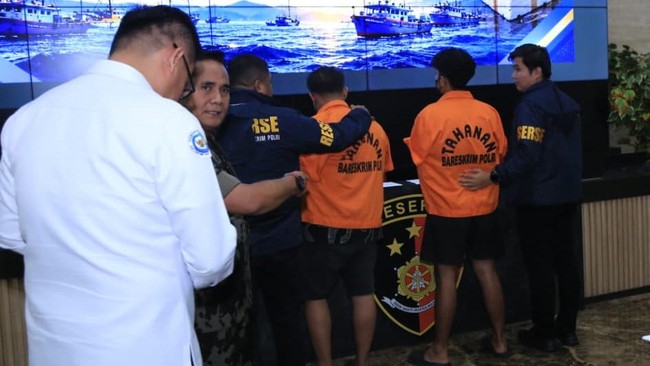
Jakarta, CNBC Indonesia — The Indonesian National Police’s Directorate of Certain Crimes (Dittipidter) has uncovered an alleged operation to smuggle lobster larvae, known as baby lobsters, from Pangandaran, West Java, for overseas distribution. Investigators seized 12 boxes of the larvae, estimated to be worth Rp5.8 billion, and arrested two suspected couriers.
Brigadier General Mohammad Irhamni, director of the National Police Criminal Investigation Agency’s Directorate of Certain Crimes, said the investigation began after members of the public reported suspicious activity involving the transport of lobster larvae. Officers followed up with several days of inquiries and surveillance, eventually finding a vehicle carrying the larvae on Jalan Raya Leuwinanggung, Leuwinanggung sub-district, Tapos district, Depok, West Java, on Monday (19 October 2026).
“Acting on information from the public, the team conducted an investigation and surveillance, eventually stopping the transport of lobster larvae suspected of being smuggled overseas,” Irhamni said at a press conference at the Awaloedin Djamin Building of the National Police Criminal Investigation Agency on Monday (19 October 2026).
Investigators seized a black Daihatsu Gran Max, registration number B 1617 SF, which was being used to transport the larvae. The 12 boxes had come from Pangandaran and were bound for Tangerang, where they were to be transferred before continuing along the distribution route.
Police arrested two suspected couriers, Raffles Valentino Jose Rijal and Ferdi Avansah, who are from Lampung. Initial questioning indicated that they had been tasked with collecting the larvae on the orders of their financier or boss. The pair reportedly did not know the people who handed over the larvae in Pangandaran.
Irhamni said investigators were still establishing the identities of the suppliers, the financier directing the shipment and the overseas buyers. Based on witness and suspect statements, the network is suspected of moving the larvae by land towards Sumatra and then Jambi, before sending them on to several countries, including Malaysia, Singapore, Cambodia and Vietnam.
“We are continuing to develop the investigation to identify all those involved and the people behind them, including the financiers and overseas buyers. There may be other suspects and a larger network,” he said.
The two suspects told investigators they had made 10 shipments of lobster larvae over the past three months. The shipment intercepted on Monday was the tenth and the only one stopped; the previous nine are suspected to have evaded enforcement.
Irhamni said each of the previous nine shipments was estimated to have comprised 40 boxes, compared with 12 in the shipment seized this time. Each box contained an average of about 6,000 larvae, which were said to fetch up to Rp80,000 each on the market.
In addition to investigating the alleged smuggling, investigators are tracing financial flows and examining possible money-laundering offences to identify and seize proceeds from earlier shipments.
“There is no place in Indonesia for criminals to enjoy the proceeds of their crimes. We will trace and pursue the proceeds from the previous nine shipments by applying money-laundering laws,” Irhamni said.
The two suspects have been charged under Article 92 of Law No. 31/2004 on Fisheries and detained pending further legal proceedings.
Dr Pung Nugroho Saksono, director-general of Marine and Fisheries Resources Surveillance at the Ministry of Marine Affairs and Fisheries, welcomed the police operation. He said enforcement would continue through coordination between ministries and agencies to prevent Indonesia’s fisheries resources from being taken out of the country illegally.
Pung said the government was strengthening its campaign against lobster-larvae smuggling through the BBL Task Force, involving the National Police, the Indonesian National Armed Forces and the Financial Transaction Reports and Analysis Centre (PPATK). The effort is intended to break up illegal distribution chains and trace the profits made by those involved.
“The state must not be defeated by those committing these crimes. We will continue working and conducting operations, and strengthen cooperation among all parties to stop the smuggling of lobster larvae,” Pung said.
The seized larvae are expected to be handed over to the Ministry of Marine Affairs and Fisheries for cultivation in Batam. The move is part of the government’s efforts to protect sustainable fisheries resources and promote the domestic use of lobster larvae.
The National Police said it would continue developing the case with relevant ministries and agencies, including by tracing the international network and financial flows suspected of being linked to the smuggling. The operation is part of broader efforts to protect Indonesia’s marine resources from illegal trade and ensure that those behind the network are brought to justice.
The police said cooperation between law-enforcement agencies, the government and the public would be strengthened to prevent the smuggling of fisheries resources and protect marine ecosystems and the national interest.
Source: jawawa.id (https://jawawa.id/newsitem/police-uncover-baby-lobster-smuggling-from-pangandaran-1792421425)
Originally published by CNBC Indonesia (https://www.cnbcindonesia.com/news/20261019203926-4-777654/polisi-ungkap-penyelundupan-baby-lobster-dari-wilayah-pangandaran), translated from Indonesian