
Police Strengthen Technology and Water Management Engineering to Tackle Forest and Land Fires in Central Kalimantan
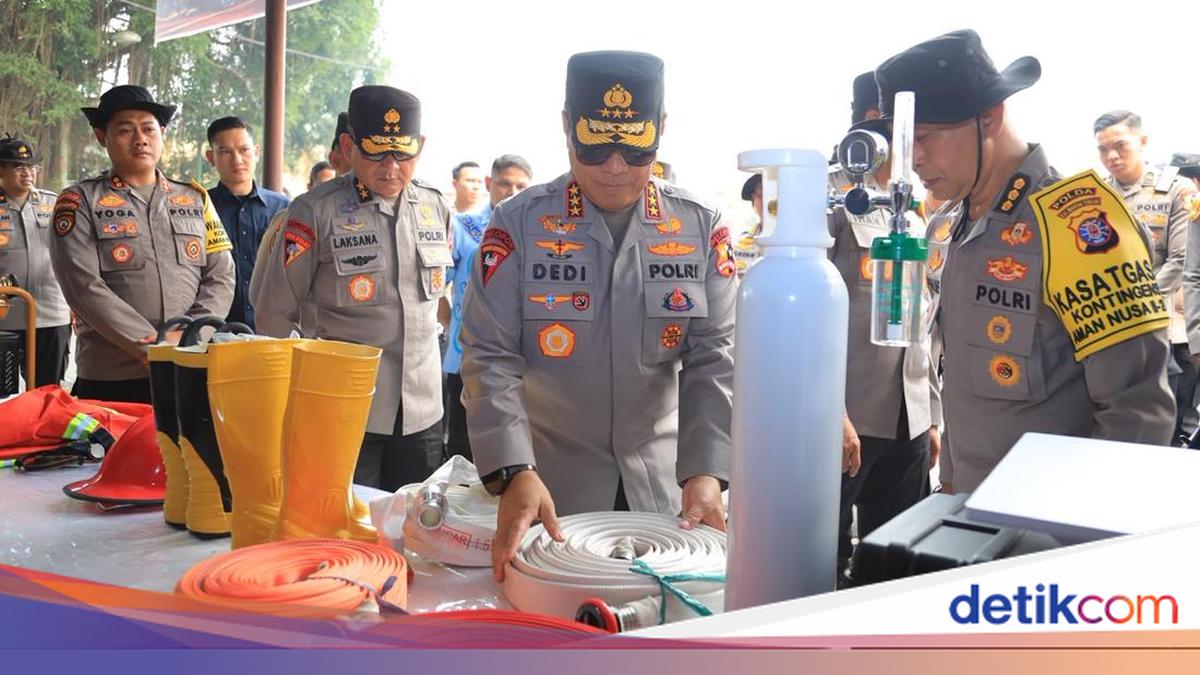
The Indonesian National Police (Polri) are maximising efforts to handle forest and land fires (karhutla) in Central Kalimantan through several key aspects, including the combined strength of personnel, the use of technology, the deployment of specialised vehicles and firefighting equipment, and peatland water management engineering methods. Deputy Chief of the National Police, Commissioner General Dedi Prasetteyo, stated that the issue of forest fires is a collective problem that requires maximum effort in its handling.
“Maximum effort must be carried out, because this is a shared responsibility,” Commissioner General Dedi emphasised in his statement on Saturday (12/9/2026).
Commissioner General Dedi personally inspected the Main Command Post for Forest and Land Fire Handling of the Central Kalimantan Regional Police in Palangka Raya on Friday (11/9). He examined various facilities and innovations used to reach inaccessible fire points and accelerate firefighting efforts.
“Based on the objective conditions, the Regional Police Chief (Central Kalimantan Regional Police Chief Iwan Setiawan) conveyed that because we have entered a very strong El Niño during these months of August and September, the level of drought is approaching extreme levels,” said Commissioner General Dedi.
On-site, Commissioner General Dedi observed the deployment of 12 double-cabin vehicles with tanks, 14 modified motorcycles, and one ATV to navigate difficult terrain. Thermal drones are also being utilised to assist in detecting heat sources, particularly when fire spots are difficult to see with the naked eye due to smoke.
To ensure the safety of personnel reaching fire points, there are also 40 heat-resistant suits, 50 pairs of heat-resistant shoes, 50 pairs of heat-resistant gloves, 200 pairs of boots, 63 6.7kg oxygen cylinders, 187 2kg oxygen cylinders, 25 sets of masks and oxygen tanks, 400 smoke masks, 50 long-range flashlights, and 150 headlamps.
Commissioner General Dedi noted that the ideal peat water level should be around 40 centimetres, whereas in several areas of Central Kalimantan, it has dropped to approximately 120 centimetres.
Therefore, he stated that strategies are being implemented through canal blocking, water refilling, boreholes, reservoirs, and opening access routes so that vulnerable areas can be managed more quickly. Currently, there are 220 boreholes and 104 water reservoirs that form part of the forest fire mitigation infrastructure.
This strategy is vital as Central Kalimantan faces high fire pressure. Recent data shows 107,309 hotspots, 2,819 fire spots, and 9,228.04 hectares of burnt land, with the highest concentration of fires located in East Kotawaringin.
Air quality is also a major concern. The Air Quality Index (AQI) in Palangka Raya has reached 3,242, placing it in the ‘Very Hazardous’ category, meaning fire management must be executed rapidly while simultaneously protecting personnel and the public from the impact of smoke.