
Police Strengthen Human Resources at Palangka Raya University Police Studies Centre
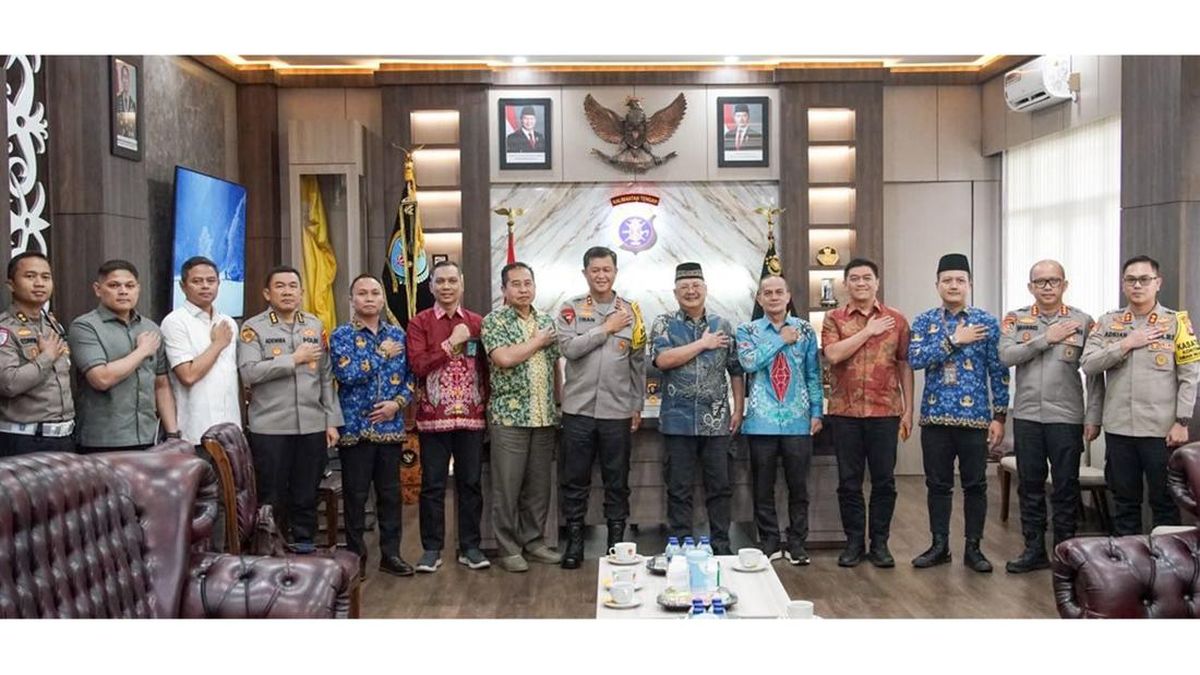
The Indonesian National Police (Polri) continues to strengthen human resource development through the Police Studies Centre at the University of Palangka Raya, which was established on 10 March 2026.
Entering its operationalisation phase, the study centre is being directed to become a collaborative space between Polri and higher education institutions to produce research, innovation, and policy recommendations that can be directly applied in the execution of police duties.
The strengthening was discussed in a strategic meeting of the Assistance Team for the Police Studies Centre of STIK-PTIK Lemdiklat Polri, comprising Commissioner General Chryshnanda Dwilaksana, Inspector General Susilo Teguh Raharjo, and Inspector General Barito Mulyo Ratmono, together with Central Kalimantan Regional Police Chief Inspector General Iwan Kurniawan, accompanied by Deputy Regional Police Chief Brigadier General Yosi Muhammartha.
The strategic meeting was also attended by representatives of the University of Palangka Raya, including Professor Bayu Rama as Dean of the Faculty of Social and Political Sciences, Herry as Head of the Institute for Research and Community Service (LPPM), Fransisco as Chair of the Police Studies Centre at the University of Palangka Raya, and Andika Wijaya as Deputy Dean II for General Affairs and Finance of the Faculty of Law.
The forum marked a new stage in the development of the Police Studies Centre at the University of Palangka Raya. The focus of discussion shifted from institutional establishment towards programme implementation through the preparation of a research roadmap, the development of Police Science, the strengthening of police education, scientific publications, and the formulation of policy recommendations based on evidence-based policing.
The research agenda is also directed at strategic issues such as digital transformation of the police, cyber security, Green Policing, food security, disaster management, and improvement of public service quality.
Deputy Chief of the Indonesian National Police (Wakapolri) Commissioner General Dedi Prasetyo affirmed that strengthening the Police Studies Centre network is Polri’s strategy in building a learning organisation capable of answering future security challenges.
“Polri needs the presence of universities, just as universities need a space for implementing their research results. The Police Studies Centre is the meeting point of the two. This is where knowledge meets field experience to produce solutions that have a real impact on society,” said the Deputy Police Chief in an official statement on Thursday (6/8).
According to the Deputy Police Chief, policing challenges are developing far more rapidly than before. Technological developments, artificial intelligence, cyber crime, climate change, and social dynamics demand that Polri possess human resources who are not only strong in the field but also capable of critical thinking, analysis, and innovation.
“The Police Studies Centre is a space for building intelligent police officers. Research results must not stop at being academic works, but must become the basis for policy formulation, the development of policing models, and innovation in public services. Polri reform must be built on the foundation of knowledge,” said the Deputy Police Chief.
The strengthening of the Police Studies Centre at the University of Palangka Raya is part of the development of a national network that Polri continues to expand. As of August 2026, Polri has entered into 79 Memoranda of Understanding (MoU) with higher education institutions across Indonesia.
Of that number, 38 collaborations have been followed up through Cooperation Agreements (PKS) and have produced 54 Police Studies Centres, including the Police Studies Centre of STIK-PTIK Lemdiklat Polri.
The network is being built as a national Police Science ecosystem connecting academics, researchers, students, local governments, and police practitioners.
Each Police Studies Centre is encouraged to develop excellence according to regional characteristics, then share research results, innovations, and best practices so that they can be applied more widely in supporting police duties.
For Polri, strengthening the Police Studies Centre network is not merely about expanding cooperation with universities, but about building an ecosystem that connects knowledge with police practice.
Through this network, Polri wants to ensure that every research result can be translated into innovation, policing models, and policy recommendations that answer real challenges in the field.
The Police Studies Centre also serves as an instrument for developing Police Science that brings together academics, researchers, students, and Polri personnel in a single collaborative space. From this space, new ideas are expected to emerge to strengthen the digital transformation of the police, cyber security, Green Policing, food security, public services, and the development of Polri’s human resources.
Through the strengthening of a network that now encompasses 79 Memoranda of Understanding (MoU), 38 Cooperation Agreements (PKS), and 54 Police Studies Centres, Polri affirms that institutional reform is built not only through regulation and technology but also through a culture of research, innovation, and continuous learning.
The goal is to produce Polri personnel who are not only professional in their duties but also capable of critical thinking, producing solutions, and making knowledge-based decisions to provide increasingly effective services to the public.