
Police Reveal Whip Pink Sales Scheme Using Fictitious B2B Transactions to Circumvent BPOM Oversight
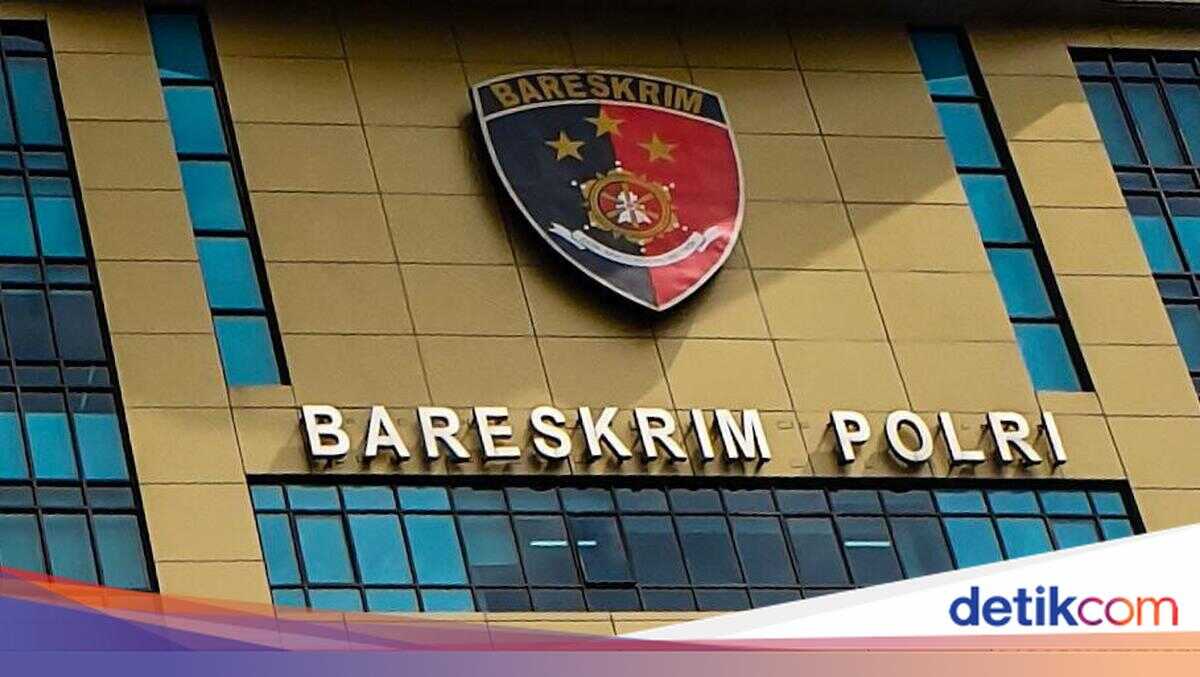
Indonesia’s Criminal Investigation Agency (Bareskrim Polri) has uncovered the distribution methods behind nitrous oxide (N2O) gas, commercially known as “Whip Pink.” Police said the product had previously been sold openly on social media platforms.
“Besides direct distribution, they also traded Whip Pink through several accounts. As of today, those accounts have been shut down, as they were closed by Komdigi,” said Kombes Zulkarnain Harahap, Head of Sub-Directorate III at Bareskrim’s Narcotics Directorate, at the National Narcotics Agency (BNN) headquarters in East Jakarta on Wednesday (18 February 2026).
Zulkarnain said that the circulation of Whip Pink continues, with distributors having altered their operational patterns. Sellers are now employing fictitious business-to-business (B2B) transaction schemes.
“They’ve changed their approach. Every buyer who contacts their call centre is given a form requesting their name, location, business entity details, and so on,” Zulkarnain revealed.
He explained that the use of business entity forms is deliberately designed to circumvent regulations set by the Food and Drug Supervisory Agency (BPOM). BPOM strictly regulates the retail sale of propellant gas for whipped cream, classified as a food additive.
However, when transactions are conducted under an inter-company or B2B framework, a regulatory gap opens up because the product is treated as an industrial raw material or bulk-use item rather than a retail product.
“Under this arrangement, it is no longer regulated by BPOM. This means no distribution licence is required because it is treated as a business-to-business transaction. It appears as though large quantities are being sold to restaurants, to be dispensed in small amounts as toppings. This is the challenge we face,” he said.
According to Zulkarnain, Whip Pink packages are priced between Rp 1.2 million and Rp 1.5 million. He stated that the misuse of Whip Pink has been widespread since the previous year.
He noted that one of Indonesia’s largest music festivals, the Djakarta Warehouse Project (DWP), had previously used Whip Pink as a promotional tool.
“Whip Pink was already prevalent last year, and even several years ago. It was even used as an added promotional item at DWP, which was held in Bali last year,” Zulkarnain said.
He elaborated that the DWP promotion in question offered a free Whip Pink canister with the purchase of five canisters. “Buy five canisters, get one free. That is how widespread the use of Whip Pink has become,” he said.
Beyond DWP, Zulkarnain also referenced YouTubers who have used Whip Pink and uploaded content featuring it on social media, though he declined to name specific individuals.
“There is now a trend among YouTubers using Whip Pink. They even play padel whilst carrying Whip Pink — it has become a lifestyle,” he said.
According to Zulkarnain, the widespread use of Whip Pink has been driven by misconceptions among users. Distributors spread the narrative that the gas is safe because it is used in medical settings.
“They know N2O is used in medicine. But in medical applications, its use is mixed with oxygen under controlled conditions. This is the anecdotal claim they spread so that users feel safe and unworried.”
However, law enforcement action against Whip Pink misuse cannot yet be taken due to the absence of a robust legal framework to address violations in the field.
As a result, the National Police have recommended two strategic measures. In the short term, police are urging BPOM to include N2O in the sixth edition of the Indonesian Pharmacopoeia as a pharmaceutical preparation, following the precedent set by pharmacopoeias in other countries such as the United States.
“Once it is listed in the Pharmacopoeia, we can take enforcement action under the Health Law,” he said.
The other recommendation is to elevate the regulatory status of N2O by including it in the schedules appended to the Narcotics Law.
“Our recommendation is that this be elevated to the Narcotics Law’s schedules. This way, oversight, usage controls, and enforcement can be carried out in a coordinated manner,” he concluded.