
Police Rebut Febrie's Claim That Searches Require Attorney General's Permission
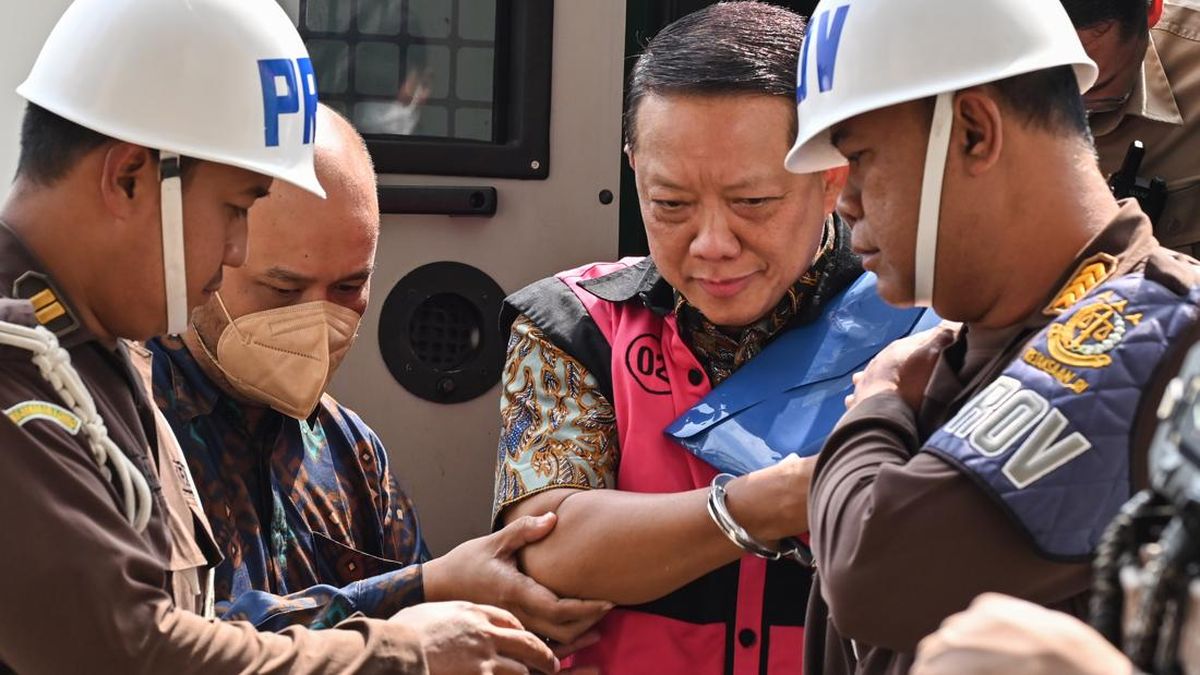
The Indonesian National Police have rebutted the argument in a pre-trial motion filed by former Junior Attorney General for Special Crimes Febrie Adriansyah, who claimed that search and seizure activities must have permission from the Attorney General. This was conveyed during a pre-trial hearing at the South Jakarta District Court on Wednesday (19/8). In this case, Polda Metro Jaya is Respondent I, the Police Corruption Crimes Directorate is Respondent II, and the Attorney General’s Office is a co-respondent.
Police consider there to be an error in Febrie’s interpretation of Constitutional Court Decision Number 15/PUU-XXIII/2025 concerning procedural protection for prosecutors. In their response, police stated that the Constitutional Court ruling regarding the obligation to first obtain permission from the Attorney General only applies under certain conditions.
‘The validity of that norm can no longer be read solely based on the textual formulation prior to Constitutional Court Decision Number 15/PUU-XXIII/2025,’ said a representative of the police legal team.
In the Constitutional Court ruling, the police legal team noted that Article 8 paragraph (5) of the Prosecution Service Law is conditionally unconstitutional insofar as it does not contain exceptions. The exception applies if a prosecutor, based on sufficient preliminary evidence, is involved in a special crime.
‘With that interpretation, the Attorney General’s permission is not an absolute requirement for every criminal procedural action against a prosecutor,’ they explained.
The police legal team asserted that investigators had already found alleged criminal acts of corruption and money laundering committed by Febrie before he was named a suspect. The alleged corruption findings relate to the handling of the PT ASABRI and PT Jiwasraya cases by Febrie. In addition, money laundering offences are also believed to have been committed with the aim of disguising and concealing the origin of assets obtained by Febrie.
The police legal team stressed that Febrie was involved in alleged corruption and money laundering. Both offences are regulated under special laws, and therefore fall into the category of special crimes.
Furthermore, Febrie’s argument that the exception can only apply after a prosecutor has been named a suspect was also rejected. Under the Constitutional Court ruling, the parameter used is sufficient preliminary evidence, not a requirement that suspect status be established first.
‘The phrase “is alleged to have committed” must be distinguished from the formal understanding of “has been named a suspect”,’ said the police legal team.
In addition, the Constitutional Court ruling has also affirmed that protection for prosecutors must not become immunity from ongoing legal processes. ‘The Court considers that the protection in Article 8 paragraph (5) must not lead to immunity,’ they explained.
Previously, former Junior Attorney General for Special Crimes Febrie Adriansyah asked the sole judge at the South Jakarta District Court to annul the determination of his suspect status and the search of his house in Sentul. Febrie conveyed this in the petition of the pre-trial motion filed with the South Jakarta District Court. Febrie also asked the judge to declare invalid all legal actions, including the issuance of investigation warrants, seizures and travel bans.
Source: jawawa.id (https://jawawa.id/newsitem/police-rebut-febries-claim-that-searches-require-attorney-generals-permission-1787161900)
Originally published by CNN Indonesia (https://www.cnnindonesia.com/nasional/20260819122819-12-1393931/polri-bantah-febrie-soal-penggeledahan-harus-izin-jaksa-agung), translated from Indonesian