
Police Prepare Mitigation and Deploy Personnel to Anticipate El Niño and Forest Fires
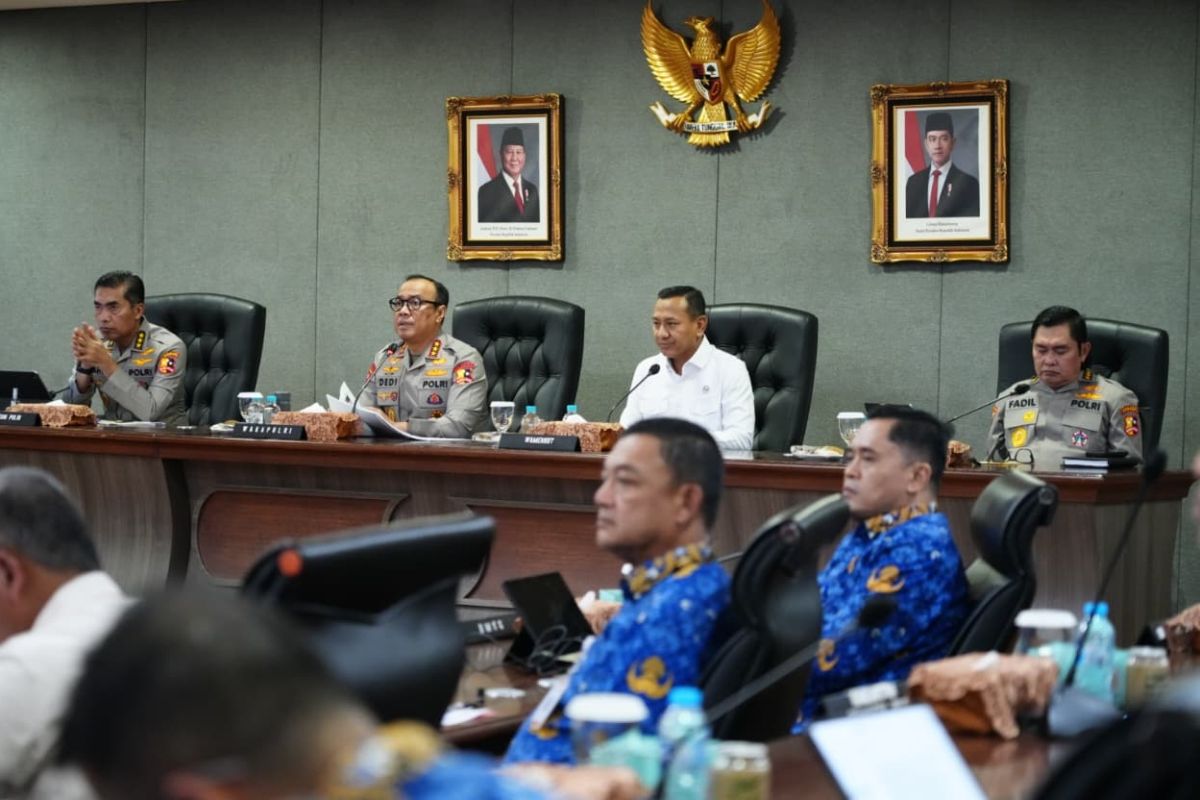
The Indonesian National Police (Polri) have prepared mitigation measures and placed thousands of personnel on standby to anticipate the El Niño phenomenon, extreme weather, and forest and land fires (karhutla) during the peak of the dry season, which is expected to last from July to September 2026. The steps were outlined during a Forest and Land Fire Prevention and Handling Meeting led by Deputy Chief of Police Commissioner General Dedi Prasetyo and Deputy Minister of Forestry Rohmat Marzuki at the National Police Headquarters in Jakarta on Thursday. In a confirmed statement, Head of the Public Relations Division of the National Police, Inspector General Johnny Eddizon Isir, stated that this consolidation meeting was a rapid response to President Prabowo Subianto’s directive to strengthen early mitigation to prevent forest and land fires while reducing the impact of El Niño on the community. “All ranks have moved through integrated patrols, strengthening early detection, personnel readiness, utilisation of technology, and collaboration with ministries, agencies, regional governments, the Indonesian National Armed Forces (TNI), and all stakeholders,” he said. As a follow-up to the President’s directive, Johnny stated that the Police have strengthened mitigation measures from the pre-disaster stage through a data-based prevention approach, cross-sector collaboration, and personnel readiness. This mitigation includes updating the mapping of fire-prone areas, verifying hotspots in the field, strengthening the early warning system, and optimising integrated patrols with the TNI, Manggala Agni fire brigades, regional governments, and the community. The Police have also instructed Bhayangkara Community Security and Order Supervisors (Bhabinkamtibmas) together with Village Supervisory Non-Commissioned Officers (Babinsa) to directly assess the conditions of communities in vulnerable areas, including the availability of water sources, potential drought, agricultural land conditions, and the need for adaptive social assistance should the impact of El Niño increase. These efforts are reinforced by the use of a command centre integrated with relevant ministries and agencies to monitor hotspots in real time. The use of drones, CCTV at monitoring posts, and fire information systems forms part of the enhanced early detection, ensuring that every potential fire can be immediately verified and handled before it spreads. On the ground, Johnny explained that the Police have readied 48,368 General Patrol (Sabhara) personnel and 23,360 Mobile Brigade (Brimob) personnel to support forest and land fire handling operations, accompanied by the implementation of a regionalisation system between district and provincial police forces so that personnel and equipment support can be mobilised quickly according to the developing situation. In terms of law enforcement, the Police continue to increase supervision of land burning practices. As of June 2026, 118 investigations, 30 inquiries, and 115 suspects have been processed. This law enforcement targets not only field perpetrators but also parties who order, finance, or profit from forest and land burning, including corporations proven to have violated regulations.