
Police plant garlic in 14 West Java regions including Cianjur
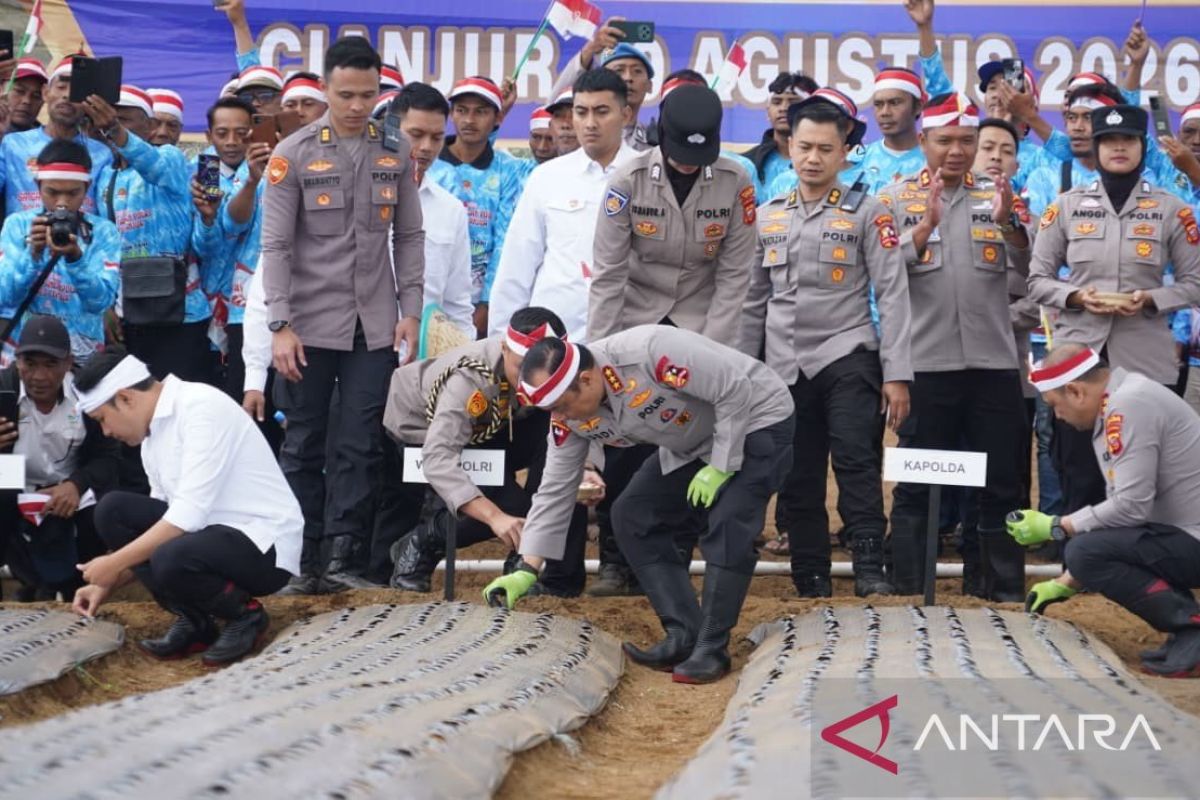
The Indonesian National Police have carried out simultaneous garlic planting in 14 areas of West Java, including Cianjur Regency, as part of the Asta Cita programme, which places food security as one of the main pillars of national self-reliance.
Deputy Chief of Police Commissioner General Dedi Prasetyo said in Cianjur on Wednesday that the police continue to take concrete steps to support the directive of President Prabowo Subianto in realising national food security and self-sufficiency.
Garlic development efforts began in 2025 through cooperation with farmer groups, and by 2026 this cooperation has reached a total land area of 948 hectares with a wet harvest yield of 9,480 tonnes, including in Ciherang Village, Pacet District and Cugenang District, Cianjur, covering 6 hectares.
“A total of 14 regional police commands with 59 district police commands have actively participated in the garlic planting programme, with a total planted area of 279.53 hectares and an estimated harvest of 2,795.4 tonnes,” he said.
As President Prabowo Subianto has repeatedly stated, food security is the key to national self-reliance, and self-sufficiency not only meets the people’s needs but also strengthens Indonesia’s dignity.
The police are therefore moving to support the success of the Asta Cita self-sufficiency programme, including through the garlic commodity, with planting carried out by utilising agricultural land potential in various regions including Cianjur Regency.
The Deputy Chief of Police explained that farmers in the northern Cianjur area are being involved in the programme as an effort to encourage increased garlic production while strengthening national food security.
“The programme is part of a series of garlic planting activities, a mass harvest, as well as the groundbreaking of the Police Food Security Warehouse,” he said.
Nationally, he added, garlic demand reaches more than 600,000 tonnes each year, while around 95 per cent of that demand still depends on imports.
West Java Police Chief Inspector General Pipit Rismanto said that in implementing garlic cultivation there are a number of aspects that need attention, including limited human resources, seed availability, and water availability.
To address the human resource limitations, the police have prepared 25 people in a collaborative research team involving agricultural specialists, police personnel, farmer groups, students, and agricultural experts.
“This team will study seeds, land characteristics, and cultivation patterns, the results of which will be transferred to farmer groups and partners in West Java, including in Cianjur,” he said.