
Police name 72 suspects in forest and land fire cases across nine regional police forces
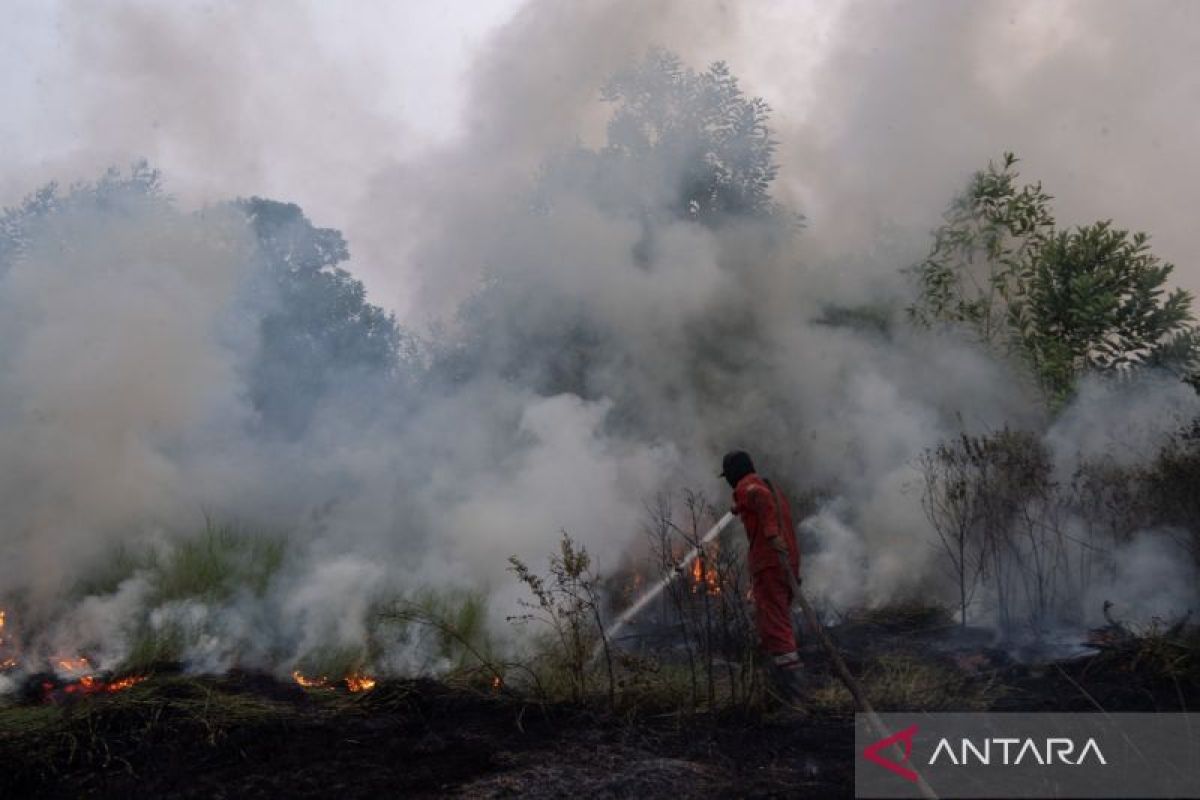
The Directorate of Special Economic Crimes (Tipidter) of the Indonesian National Police Criminal Investigation Department (Bareskrim) has named 72 people as suspects in alleged forest and land fire (karhutla) cases handled by nine regional police forces (Polda).
Director of Tipidter Bareskrim Polri Brigadier General Mohammad Irhamni said the naming of suspects was the result of handling 89 police reports spread across nine regional police forces.
“These nine regional police forces have carried out investigations and inquiries, with the number of suspects that have been named being approximately 72 individual suspects,” Irhamni said during a press conference in Jakarta on Sunday.
He explained that most of the cases handled began with hotspot monitoring which was then verified by officers in the field.
If a fire spot or burnt land was found, officers first carried out extinguishing and cooling to ensure personnel safety.
After conditions were declared safe, investigators processed the crime scene and collected evidence to determine whether criminal elements were present.
According to him, the modus operandi found in a number of these cases was dominated by land clearing by means of deliberate burning. This method was chosen because it was considered cheaper and more economical compared to using other land-clearing methods.
“Most of the modus operandi used by the suspects is clearing land by deliberately burning it so that the operational costs of farming activities become cheap or economical,” Irhamni revealed.
In practice, land that had previously been felled was then burned to clear remaining vegetation.
Apart from being cheaper, burning was also considered to provide benefits for the perpetrators because the ash from the burning could be used as an element that fertilises the soil before the land was used for plantation activities.
Irhamni stressed that economic reasons cannot justify burning, especially in conditions of prolonged drought and El Niño which make fires spread more easily and difficult to control.
During the investigation process, the police also seized various pieces of evidence that strengthened the suspicion of deliberate burning activity.
The evidence included 35 lighters, a number of bottles and jerry cans containing fuel, 21 machetes, two axes, hoes, two chainsaw units, burnt soil samples, oil palm seedlings and burnt wood logs.
Irhamni stressed that a suspect’s confession was not the only basis for naming someone a suspect. Investigators continued to prioritise evidence obtained through crime scene processing, witness statements, clues, physical evidence and tracing of financial transactions.
For this reason, Bareskrim Polri is not only investigating perpetrators in the field, but also tracing the possibility of other parties who ordered, funded, or profited from the burning activity.
Investigators will examine the flow of financial transactions to determine whether the burning was carried out for personal interests or whether other parties were involved, including the possible involvement of corporations.
“Both corporations and individuals will be pursued and subjected to firm law enforcement,” he said.
Irhamni stated that law enforcement is part of the police’s efforts to provide a deterrent effect while preventing repeated burning during the dry season.
He assured that the law enforcement process would continue to be developed professionally based on evidence. The police will not only pursue perpetrators of burning in the field, but also parties who ordered the act and parties who profited from the crime.
“We will continue to pursue all perpetrators or people who ordered the act and all parties who profited from the crime of forest and land burning,” he said.
Against the perpetrators, investigators applied a number of criminal provisions, including the Forestry Law, the Plantation Law, the Environmental Protection and Management Law and provisions in the Criminal Code.