
Police Name 72 Suspects in Forest and Land Fire Cases
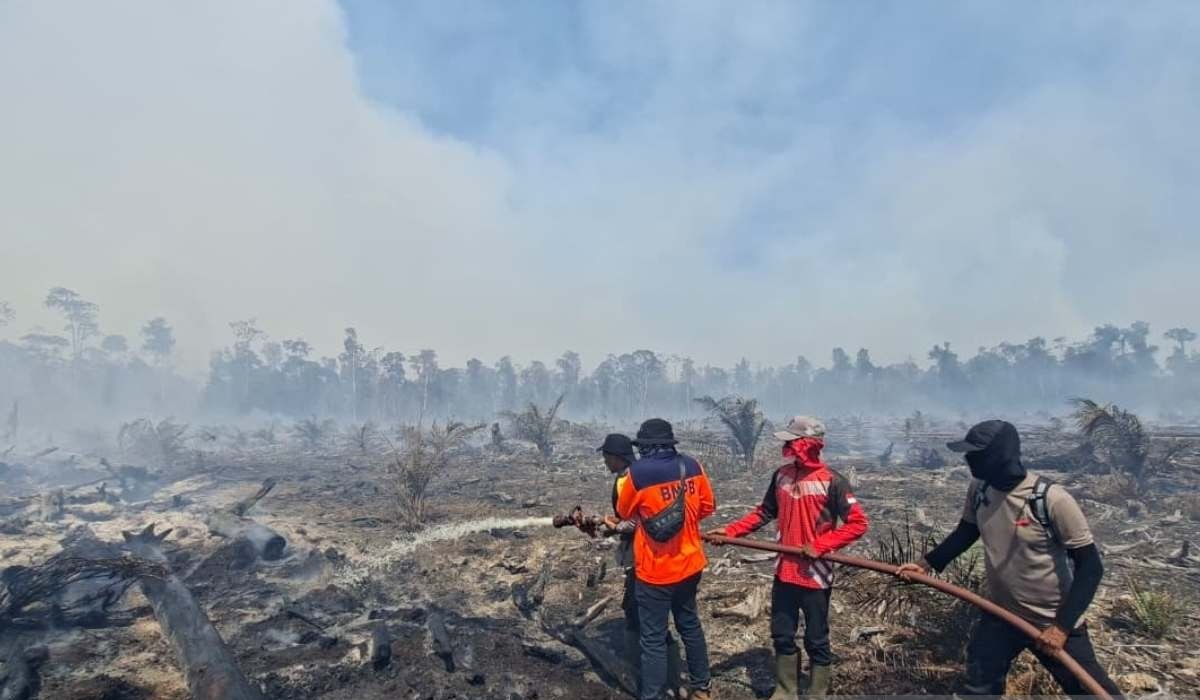
The Indonesian National Police have named 72 individual suspects in forest and land fire (karhutla) cases handled across nine regional police jurisdictions. The law enforcement action is part of efforts to uncover the practice of land clearing by burning, which is deemed highly detrimental to the wider public. Director of Specific Crimes (Dirtipidter) at the National Police Criminal Investigation Agency (Bareskrim Polri) Brigadier General Pol. Moh Irhamni said that to date his office has issued around 89 police reports (LP) spread across nine regional police forces. Investigations were conducted into hotspots which, after verification, were found to contain suspected deliberate burning.
“We have issued approximately 89 police reports spread across 9 regional police forces, all of which we are carrying out. We provide assistance to ensure that the investigation and inquiry process proceeds professionally, of course,” said Irhamni at a press conference at National Police Headquarters on Sunday (23/8).
The nine regional police forces handling the cases are Riau, West Kalimantan, South Sumatra, Jambi, Central Kalimantan, South Kalimantan, East Kalimantan, Aceh, and North Kalimantan. From the overall handling of these cases, police traced hotspots detected through monitoring. After officers conducted direct checks and confirmed the presence of fires, the locations were then investigated to determine the possibility of intentional elements.
Riau Regional Police has the highest number of suspects. From 1,201 detected hotspots, police issued 32 police reports and named 35 people as suspects. Of the 32 cases, two remain in the inquiry stage, while 30 others have been elevated to the investigation stage after suspected criminal acts were found.
Irhamni said the handling process in Riau does not stop at the number of cases already established. Assistance teams continue to be deployed to strengthen inquiries and investigations. If necessary, Bareskrim Polri can take over certain cases.
In West Kalimantan, police issued 18 police reports from 2,282 hotspots. According to Irhamni, land burning in the region was carried out, among other methods, by repeatedly clearing land of approximately two hectares.
“And colleagues know that yesterday the President and the National Police Chief as well as the TNI Commander directly went to the field to the fire crime scene. And indeed there the modus operandi is very much two hectares, two hectares burned by the community. And this burning is certainly very detrimental to other communities,” he said.
Meanwhile, South Sumatra Regional Police handled 15 police reports from 618 hotspots with 17 suspects. Jambi Regional Police issued 17 police reports from 64 hotspots and named eight suspects.
In Central Kalimantan, there are eight police reports from 203 hotspots with 11 suspects. South Kalimantan Regional Police then handled three police reports from 318 hotspots and named two suspects.
East Kalimantan Regional Police issued two police reports from 243 hotspots with one suspect. Aceh Regional Police handled two police reports from 71 hotspots, while North Kalimantan Regional Police issued two police reports from 12 hotspots and is still conducting inquiries.
During investigations, police also seized a number of items suspected to be related to burning activities. The evidence includes 35 lighters, two plastic bottles containing used oil, two plastic bottles containing diesel fuel, two 10-litre jerry cans containing diesel fuel, two bottles of Pertalite, and one bottle of kerosene.
In addition, investigators seized 21 machetes, two axes, one hoe, 39 pieces of burnt wood, five plastic bags of burnt soil samples, two chainsaw units, 13 used polybag plastics, six oil palm seedlings, and one pair of boots.
According to Irhamni, the presence of this evidence strengthens the suspicion that the burning was carried out to clear land. The practice was chosen because it is considered able to reduce plantation operational costs.
“On average, the modus operandi in the 9 regional police forces, as I mentioned earlier, is mostly used by the suspects to clear land by deliberately burning so that the operational costs of farming activities become cheap or economical,” said Irhamni.
He assessed that such actions are not merely ordinary violations because their impact can be felt by other communities, especially through smoke and various consequences of the fires.
Police first monitor detected hotspots. Officers from the sector police level, district police level, up to the criminal investigation ranks then conduct verification to ensure whether the point is truly a fire location.
If burnt land is found, officers first carry out extinguishing and cooling. After conditions are declared safe, the crime scene processing is carried out to search for evidence and uncover the possibility of criminal acts.
“In any case, the safety of officers is important, therefore we ensure it is safe before we carry out crime scene processing for investigation,” he said.
If the inquiry finds criminal elements, the case is elevated to the investigation stage. The subsequent process includes examining witnesses, seizing evidence, and naming suspects.
Police apply a number of legal provisions against the suspects, including the Forestry Law, the Plantation Law, the Environmental Protection and Management Law, as well as the Criminal Code relating to forest and land fires.
Irhamni stressed that criminal handling of forest and land fires is not only directed at perpetrators who are directly at the burning location. Police will also trace parties who ordered the activity as well as those who benefited from it.
He said the law enforcement measures are also intended as a prevention effort so that perpetrators do not repeat their actions, especially during the dry season when fires are more likely to occur.