
Police Leadership School Sharpens Future Generals with Digital Leadership and Social Empathy
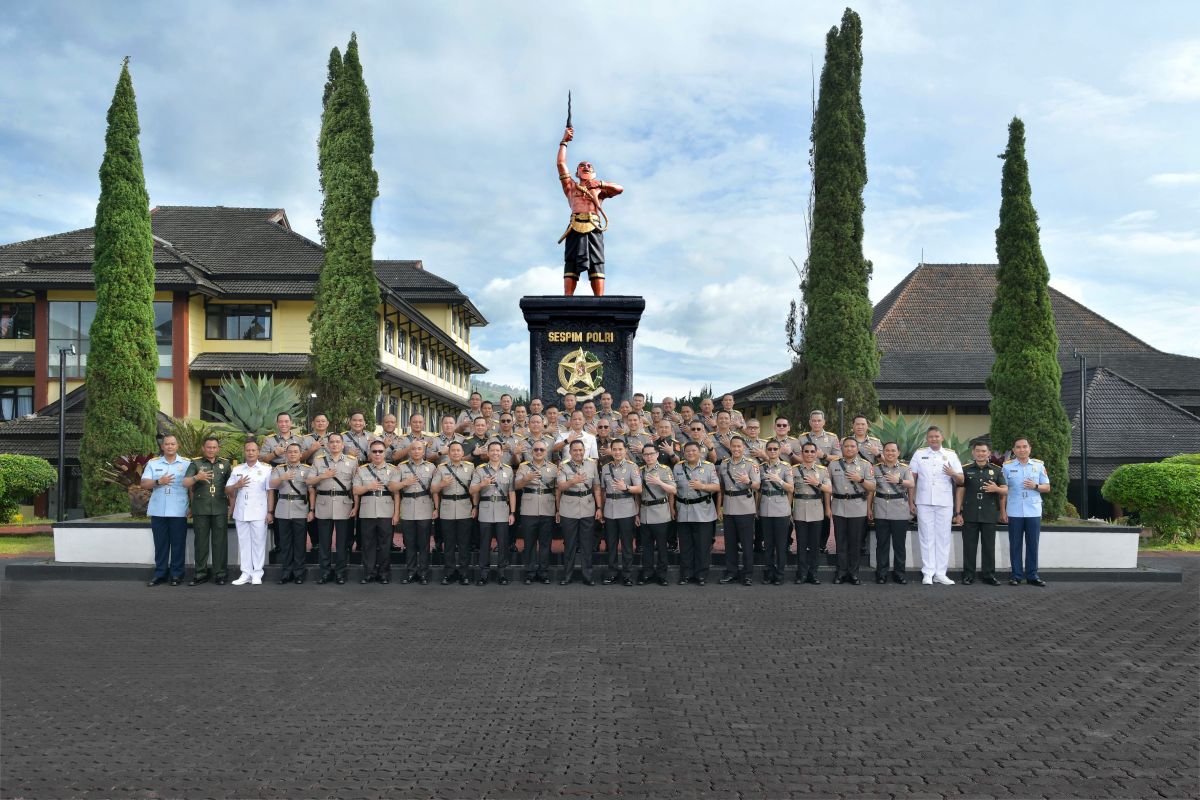
The High Command and Leadership School (Sespimti) of the Indonesian National Police is intensively training its 35th cohort of senior officers to become future leaders adept in digital leadership and social awareness. The programme involves 57 participants, comprising police personnel, military officers, a representative from the Attorney General’s Office, and a representative from the Ministry of Immigration and Corrections. A key focus of the curriculum is data-driven digital leadership, designed to prepare future generals who are adaptive to technological advancements. Beyond high-level leadership theory, the participants are required to sharpen their social empathy through direct field action. In Lembang, West Bandung Regency, the officers initiated a house renovation programme for residents in Kampung Sukamaju Barat. They also demonstrated rapid humanitarian response by distributing urgent logistical aid—including rice, milk, instant noodles, folding mattresses, and blankets—to evacuation posts following a landslide disaster in Pasirlangu Village, Cisarua, in January 2026. To enhance their digital expertise, the school also conducted an Overseas Work Practice (PKLN) programme in Shanghai, China. The delegation visited the Indonesian Consulate General to study the implementation of smart city concepts and smart policing, examining one of the world’s most advanced technology-based public security management models. The officers visited the Shanghai Police College and the Yangpu Branch Public Security Bureau to learn about the utilisation of artificial intelligence, big data, and cloud computing in integrated command systems. The comparative study concluded that successful technology-based public security must be supported by a strong digital work culture and robust data integration. The programme culminated in a ‘Leader Expo’ held by the Police Education and Training Institute, where participants showcased and openly debated their transformational policy ideas, models, and concepts before examiners and mentors, demonstrating their readiness to serve as responsive, accountable, and transformational future leaders.