
Police Law Challenged in Constitutional Court Over Alleged Flawed Legislative Process
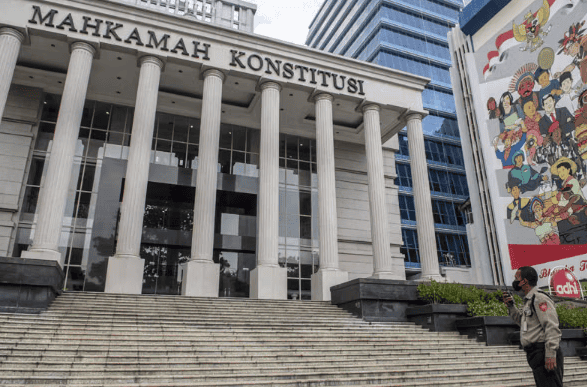
Law Number 5 of 2026 regarding the National Police has been challenged in the Constitutional Court (MK). The petitioners argue that the formation of the Police Law is formally flawed because its drafting process allegedly ignored the legislative stages that should be conducted within the House of Representatives (DPR), including harmonisation by the Legislation Body (Baleg) and meaningful public participation.
The legal counsel for the petitioners, Hijri Ruzbihan Baqli, explained that the formal review application was submitted within the timeframe regulated by the Constitutional Court. According to him, the application was registered on 26 June 2026, nine days after the Police Law was promulgated on 17 June 2026.
“Based on the applicable provisions, a formal review of a law can be filed at most 45 days after the law is promulgated. This application was submitted within the permitted timeframe,” Hijri stated during the initial hearing for the formal review of the Police Law at the Constitutional Court Building on Tuesday (7/7).
Application Number 251/PUU-XXIV/2026 was filed by Zulfikar Putra Utama and Muhammad Ezra Suhaeri. Both individuals are requesting the Constitutional Court to annul the Police Law, as they deem it contrary to the 1945 Constitution and the regulations governing the formation of legislation.
In their petition, the applicants argue that the formation process of the Police Law failed to meet the fundamental principles of good law-making, such as transparency, utility, and meaningful public participation.
“Based on factual findings, the Police Bill did not undergo harmonisation, consolidation, or conceptual stabilisation through the Legislation Body before the Bill was established as a DPR initiative during the plenary session on 20 May 2026,” said Zulfikar, representing the petitioners.
They also highlighted the alleged failure to conduct the harmonisation, consolidation, and conceptual stabilisation of the Police Bill within the DPR’s Legislation Body before it was brought to the plenary session as a parliamentary initiative.
“The drafting of the Police Bill did not involve the Legislation Body at all to perform the harmonisation function as mandated by law,” he added.
On this basis, the petitioners are asking the Constitutional Court to declare that the formation of the Police Law does not meet the provisions for law-making under the 1945 Constitution, and therefore lacks binding legal force. They are also requesting that the previous regulations—the version of the Police Law prior to the recent amendments—be reinstated.
During the hearing, Constitutional Judge M. Guntur Hamzah requested a more detailed explanation regarding the position of the first petitioner as a researcher at the Indonesian Parliamentary Centre (IPC), specifically whether the application was filed in a personal capacity or representing the institution.
“If it is on behalf of the IPC, then it must be explained what kind of institution the IPC is, its articles of association and bylaws, and who is authorised to represent it both inside and outside of court,” Guntur stated.
Meanwhile, Constitutional Judge Daniel Yusmic P. Foekh requested that the petitioners clarify the argument regarding the non-involvement of the Police Reform Acceleration Commission (KPRP) in the formation of the Police Law. According to Daniel, the petitioners need to explain whether the commission still exists and whether its lack of involvement truly renders the law-making process flawed.
“Does this commission still exist, or has its task concluded? If they were not involved, does that automatically make the formation of the law flawed?” Daniel asked.