
Police Design New 2027 Education Curriculum: AI, Big Data, and Human Rights-Based
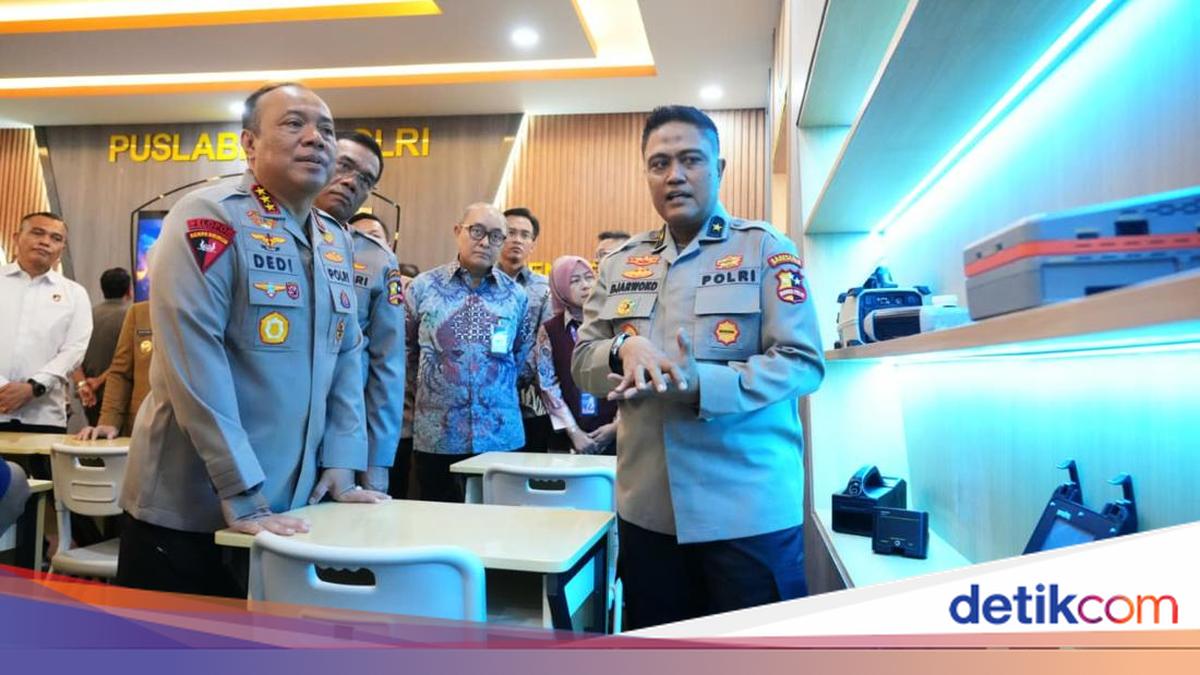
The Indonesian National Police (Polri) are carrying out a massive transformation of their education system. Deputy Chief of Police Commissioner General Dedi Prasetyo revealed that Polri is redesigning its education curriculum for implementation in 2027. Commissioner General Dedi made the statement after attending the Analysis and Evaluation (Anev) of Education and Training for the First Semester of 2026, the inauguration of the Police Academy (Akpol) Thematic Class, and the inauguration of the Police Social Science Laboratory at the Police Academy in Semarang. It was noted that the new curriculum will be more modern, based on human rights (HAM), artificial intelligence (AI), and big data. Dedi explained that this First Semester Anev serves as the starting point for drafting the new design of the Polri education system. This step is being taken to produce human resources that are professional, adaptive, and have integrity in accordance with the mandate of the law. “The entire Polri education curriculum is being redesigned to align with the mandate of Law Number 5 of 2026 and the recommendations for police reform. Future Polri education must be increasingly based on human rights, strengthen competence and professionalism, and answer the challenges of the times,” Dedi said in a statement on Monday (6/7/2026). He explained that this curriculum reform does not only target prospective officers but also covers all levels, from Non-Commissioned Officers (Bintara Polri), SPKT NCOs, the Mobile Brigade (Brimob), Water Police (Polair), to intelligence. In addition to the curriculum, Polri launched a Thematic Class at the Police Academy which will later be developed across all Regional Police (Polda) by utilising local wisdom and big data technology. Dedi stated that this innovation is important because the majority of current Polri students are from Generation Z and Generation Alpha, who are very close to the digital world. “We are preparing cadets as first-line supervisors and future leaders of Polri. Because the majority are from Generation Z and Generation Alpha, the learning process must be close to digitalisation, data-based decision-making, artificial intelligence (AI)-based analysis, and comprehensive and holistic thinking skills,” he explained. On the same occasion, the three-star general also inaugurated the Police Social Science Laboratory. This laboratory is said to be one of the most modern in the Asian region because it integrates digital technology and AI to support police research. The existence of this laboratory is expected to strengthen the culture of evidence-based policing. The transformation does not stop at the Police Academy; it also extends to leadership education at the Police Staff and Command School (Sespim) with plans to build a Digital Leadership Laboratory. Dedi emphasised that this entire series of educational and organisational culture reforms is being carried out to meet public expectations of the Polri institution. “This is Polri’s commitment to continue building superior human resources through educational reform, organisational culture reform, and strengthening personnel competence. All of this is done to answer the hopes of the community while facing the dynamics of global, regional, and national challenges,” he concluded.