
Police Brief 282 Cadets on State Efforts to Address Geopolitical Dynamics and Impacts
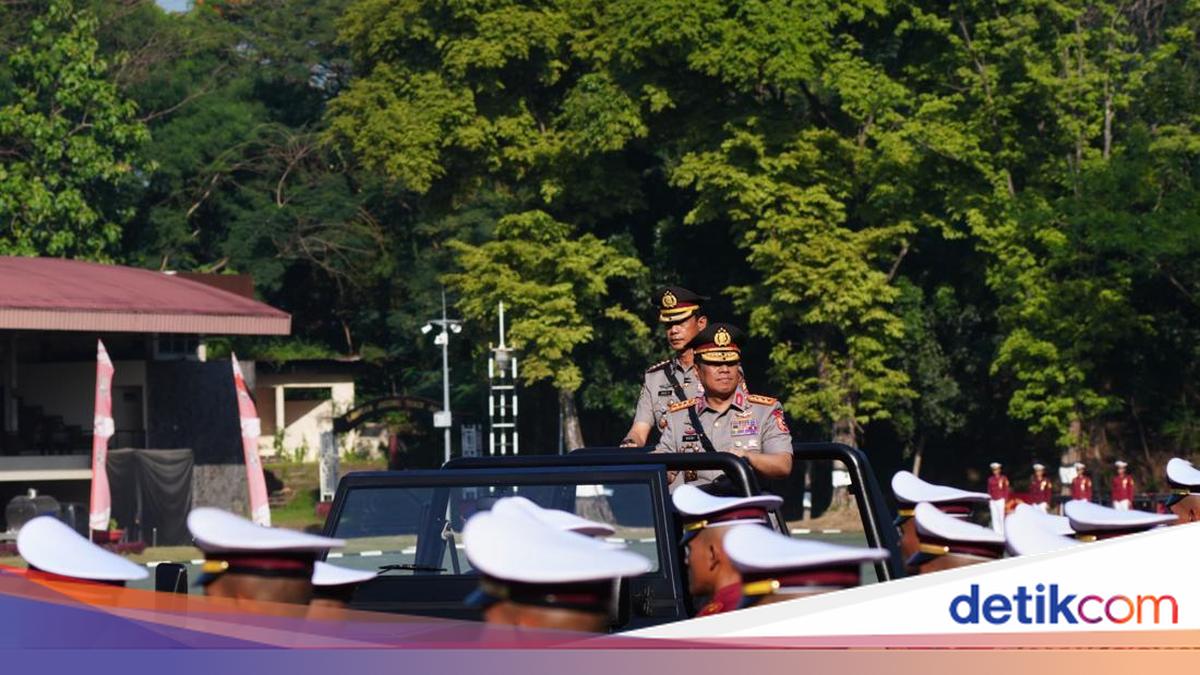
The Indonesian National Police leadership has provided 282 prospective junior officers, graduates of the Police Academy’s 58th cohort, with an understanding of the government’s efforts to address dynamic geopolitical conditions and their impacts. The briefing took place during the closing ceremony at the Bhayangkara Field, Police Academy Complex, Semarang, Central Java, on Friday morning.
Deputy Chief of Police Commissioner General Dedi Prasetyo stated that the current global geopolitical situation is fraught with uncertainty. He noted that conflicts such as the US-Israel tensions with Iran, the Russia-Ukraine war, and the hegemonic rivalry between the United States and China have impacted global security stability, supply chains, food and energy security.
‘Based on the World Bank’s Food Security report in June 2026, global food and nutrition security remains fragile due to a 35 percent increase in global fertiliser prices,’ Commissioner General Dedi explained. ‘The impact of these global geopolitical dynamics is also felt by Indonesia, reflected in the weakening of the rupiah exchange rate and the decline in the Composite Stock Price Index. On 8 June 2026, the rupiah exchange rate weakened to Rp18,171 per US dollar, while the IHSG fell to 5,594.’
He continued by stating that the government immediately took measures to maintain economic stability, protect public purchasing power, and preserve market confidence through measured fiscal and monetary policies. The government is also strengthening economic resilience through various strategic programmes, including food and energy self-sufficiency, downstream processing in priority sectors, investment strengthening, and optimising the governance of leading commodity exports through Danantara Sumberdaya Indonesia to prevent transfer pricing and under-invoicing practices, as well as increasing the use of domestic products to achieve national independence and create jobs.
As a result, Indonesia’s economy remains robust, with national economic growth reaching 5.61 percent in the first quarter of 2026, the second highest among G20 countries. The state budget deficit was controlled at 0.76 percent of GDP, and inflation was maintained at 3.34 percent. Commissioner General Dedi also noted that a 2026 JP Morgan analysis ranked Indonesia second among countries most resilient to global energy shocks.
He further elaborated on the police force’s role in supporting these government efforts, emphasising that programmes must have a tangible impact on the community. These initiatives include land utilisation for corn planting, the construction of Police Food Security Warehouses, the implementation of Free Nutritious Meals, Free Health Services, and the construction of the Precision Red and White Bridge. The police are also safeguarding national energy resilience through law enforcement in the oil and gas, mining, and electricity sectors, as well as securing vital national objects and energy distribution. Other efforts include strengthening the protection of workers’ rights through the Police Employment Desk and establishing the Kemala Taruna Bhayangkara Senior High School.
Commissioner General Dedi stated that these contributions have had a positive impact on the public, citing a Litbang Kompas survey released in June 2026. The survey recorded an increase in public trust in the police from 76.2 percent to 80.6 percent, with 82.4 percent of respondents expressing confidence that the police’s performance would improve in the future.
Source: jawawa.id (https://jawawa.id/newsitem/police-brief-282-cadets-on-state-efforts-to-address-geopolitical-dynamics-and-impacts-1783659226)
Originally published by detikcom (https://news.detik.com/berita/d-8567869/polri-bekali-282-capaja-pemahaman-upaya-negara-atasi-dinamika-dampak-geopolitik), translated from Indonesian