
Police assert inter-agency collaboration is key to ensnaring environmental mafia
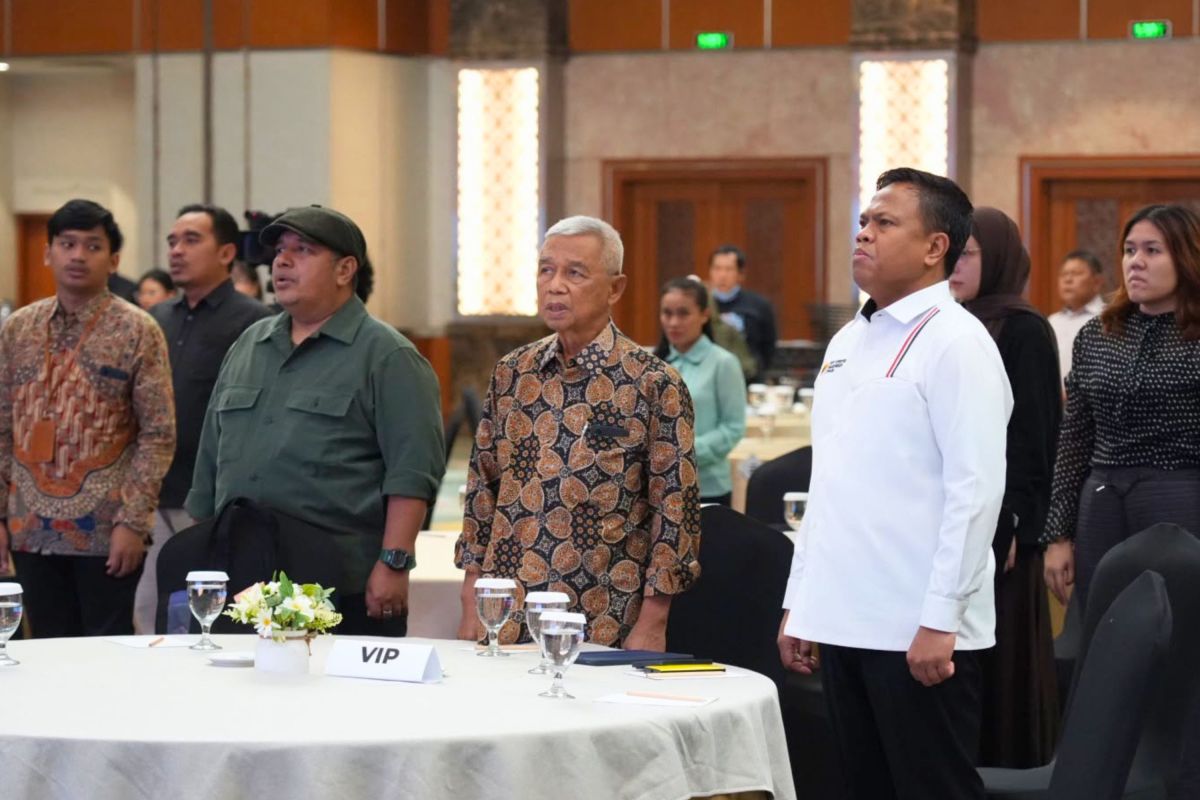
The Indonesian National Police (Polri) has affirmed that collaboration among law enforcement agencies (APH) is the key to ensnaring environmental mafia networks. Speaking at the National Symposium on the 2026-2030 Natural Resources Crime Outlook in Jakarta, the Director of Specific Crimes (Dirtipidter) at the Police Criminal Investigation Agency, Brigadier General Mohammad Irhamni, opined that sectoral ego has often been the biggest stumbling block in resolving cases of environmental destruction. “This multi-sectoral collaboration is the key to dismantling structured environmental mafia networks,” said Brig. Gen. Irhamni, as quoted from a statement received in Jakarta on Saturday. To that end, Irhamni believes it is time for the Police, the Attorney General’s Office, the Corruption Eradication Commission (KPK), and relevant ministries to dissolve bureaucratic boundaries in order to build a single integrated database system. He thus stressed the importance of strengthening enforcement strategies and synergy among law enforcement agencies to eradicate crime in the Natural Resources and Environment (SDA-LH) sector. On the other hand, the Dirtipidter assessed that SDA-LH crimes have become increasingly modern, sophisticated, and organised, exploiting regulatory loopholes and utilising complex corporate instruments. Therefore, he asserted that the law must not be a step behind. Law enforcement officers, Irhamni said, are required to possess analytical sharpness equal to that of researchers and academics in mapping these new modus operandi. “Environmental crime in the modern era can no longer be faced with conventional, reactive methods,” he stated. Furthermore, he highlighted that the criminal law approach must not stop merely at punishing field perpetrators or low-level intellectual actors. According to him, the future focus of law enforcement must shift to a ‘follow the money’ approach to pursue corporations that destroy the environment and confiscate the assets resulting from their crimes. He also emphasised the importance of integrating academic research into case investigation files. Testimonies from environmental experts and study results from university law faculties, he said, should become primary instruments to strengthen evidence in court. By treating science and scientific data as the main pillars of investigation, he stated that the gaps for criminals to escape the legal net can be significantly narrowed. It was said that SDA-LH crimes are essentially not just criminal acts against the environment, but crimes that threaten state sovereignty, food security, energy security, and public welfare. “Practices of illegal logging, illegal mining, trade in protected wildlife, and environmental pollution often involve cross-regional and even cross-border networks with enormous fund flows,” he said. Therefore, he reminded that their handling must be positioned as serious organised crime requiring a swift, integrated, and intelligence-based legal response. He also cautioned that the 2026-2030 period will be a crucial time for Indonesia’s ecological resilience, so if law enforcement officers do not tighten their ranks and improve their technical competence from now, the environmental damage that occurs will be irreversible. “A firm, transparent legal commitment that sides with environmental sustainability is the only legacy that must be fought for the sake of future generations,” Irhamni concluded.