
Police Arrest Suspect in 500-Hectare Forest Fire in Pelalawan, Riau
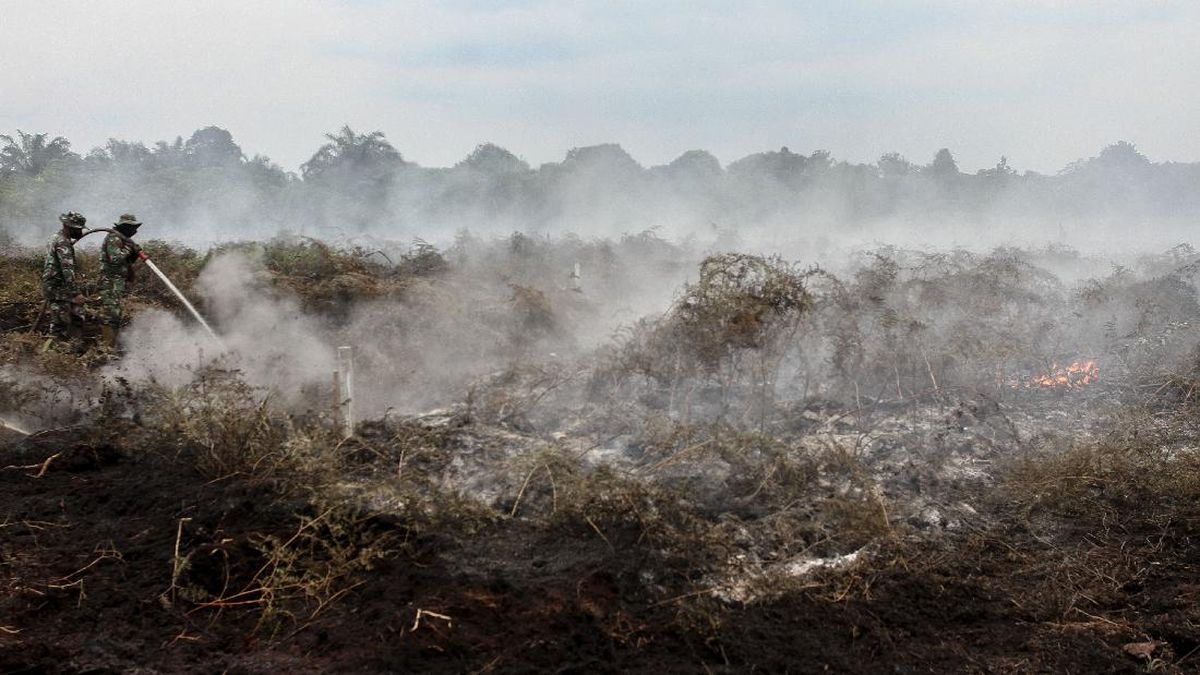
Pelalawan Police Resort in Riau has arrested a man with the initials ES suspected of involvement in forest and land fires (karhutla) in Teluk Meranti subdistrict, covering an area of around 500 hectares. Pelalawan Police Chief AKBP John Louis Letedara stated that the case’s revelation began with the detection of hotspots in February 2026 in Dusun III, Gambut Mutiara Village, which was then followed up by police authorities. A team from the Pelalawan Police Resort’s Criminal Investigation Unit immediately went to the location to conduct further investigations. “From the results of field investigations and witness statements, we managed to secure one suspect,” he said on Monday (6/4). From the investigation results, ES is suspected of clearing land by burning it for plantation interests. He used a method of gathering branches, grass, and palm fronds, then burning them gradually over the period from January to March 2026. The fire, initially from several points, spread to scorch hundreds of hectares of peatland. This condition worsened environmental damage and increased the potential for haze in the area. “Initially, the suspect did not admit to his actions, but after in-depth examination supported by witness statements and field evidence, he finally admitted to repeatedly burning the land,” he explained. The police are charging the suspect under Article 56 Paragraph (1) in conjunction with Article 108 of Law Number 39 of 2014 on Plantations as amended by Law Number 6 of 2023 on Job Creation, as well as Article 98 of Law Number 32 of 2009 on Environmental Protection and Management. In this case, officers also seized several pieces of evidence in the form of one machete and palm fronds used in the burning activities. The Police Chief urged the public not to clear land by burning because the impacts are highly detrimental and dangerous. “We remind the public, never clear land by burning. Besides being dangerous and damaging to the environment, it also has firm legal consequences,” he said.