
Polemics over TNI handling street crime and accusations of encroaching on civilian domain: Brigadier General Muhammad Nas's firm reply
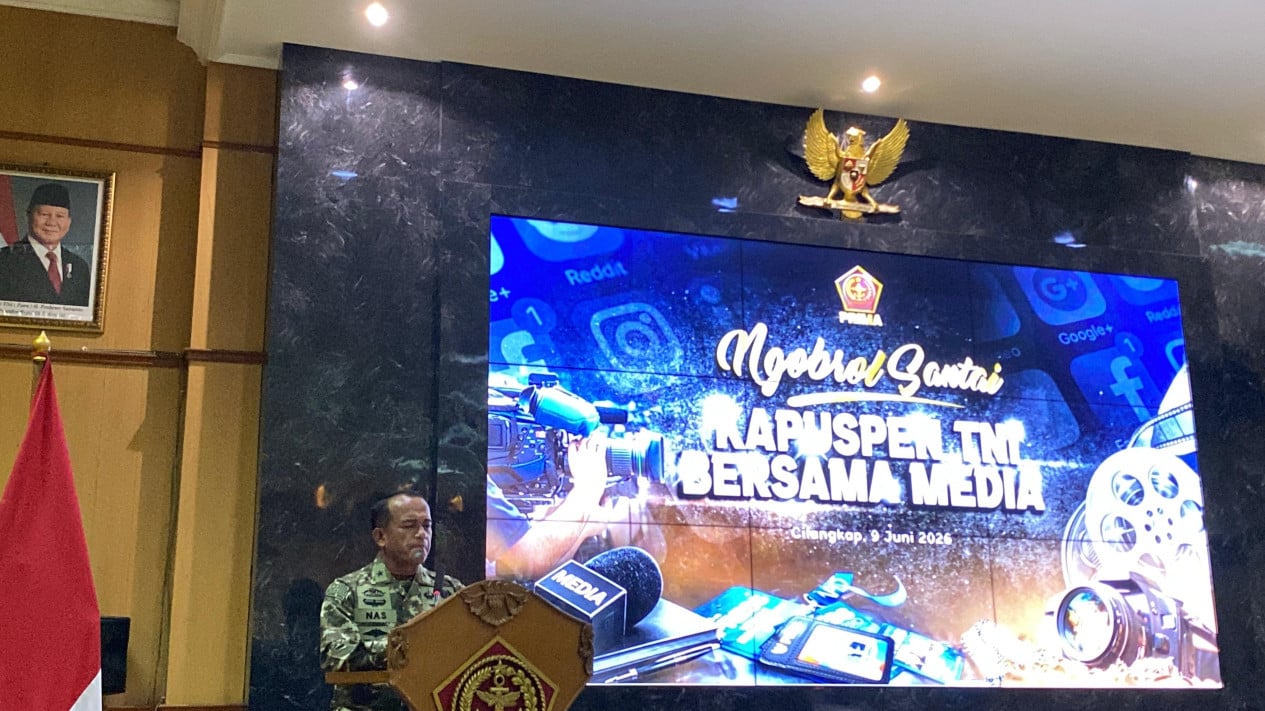
The involvement of the Indonesian National Armed Forces (TNI) in various affairs long identified as the civilian domain has once again sparked debate. From food security programmes and forest area regulation to assisting in the handling of street robberies, all have raised the same question: is the TNI returning to its dual-function era? Responding to the polemic, Chief of the TNI Information Centre Brigadier General Muhammad Nas asserted that the presence of soldiers across these sectors is not a form of militarisation of civilian life. According to him, all TNI involvement has a clear legal basis and is carried out to answer the needs of society. “What people are worried about is the TNI entering the civilian domain. Is that true? I assure you it is not,” he said at TNI Headquarters on Tuesday. The issue has continued to surface as the public increasingly witnesses the involvement of soldiers in various government programmes. However, he stressed the TNI never moves without a legal foundation or a request from the relevant agencies. Therefore, he considers the accusations labelling the TNI’s involvement as a threat to democracy or a revival of the Armed Forces’ dual function to be inaccurate. “As long as it is in accordance with the law, as long as there is a basis for it, we will carry it out. The narrative mentions creating a militaristic democracy or a dual function of ABRI, a dual function of the TNI, and is considered a threat. I myself have never felt threatening. We, the TNI, have never threatened that,” he said. He then cited the example of the food security programme that is often under scrutiny. According to Nas, the presence of village supervisory non-commissioned officers (Babinsa) in the field is merely to assist and provide support, not to take over the duties of the ministry. “So, it is not that we are taking over the Ministry of Agriculture, no. There is a Memorandum of Understanding for it,” he said. Nas also touched upon the TNI’s involvement in various disaster response efforts. In such situations, according to him, the public needs rapid assistance more than debates about the boundaries of authority. “What is needed is not an ideological debate with the public. What do they need? They need help, they need medicine, they need handling, and so on,” he said. On the other hand, Nas also responded to a polemic that has recently been widely discussed by the public, namely the involvement of soldiers in helping to handle street crime. According to him, it is difficult to imagine a TNI member simply standing by silently upon witnessing a criminal act taking place before their eyes.