
Pokemon Go Player Data Allegedly Used to Train US Military Drones
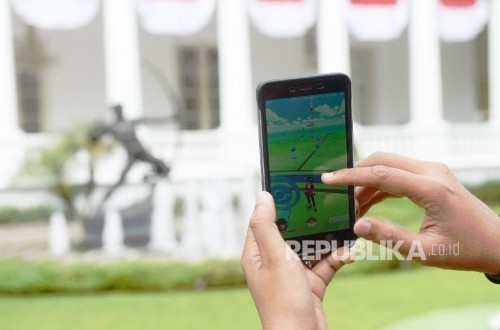
Data collected from millions of Pokemon Go players is suspected of being used to train artificial intelligence (AI) for United States military drones. The technology is considered potentially capable of helping drones determine navigation in war zones, particularly when GPS signals are unavailable or disrupted.
Pokemon Go, an augmented reality (AR) game released in 2016 by Niantic in collaboration with Nintendo, allows players to find and capture Pokemon in the real world using their phone cameras. The game achieved global popularity and by 2018 was reported to have been downloaded more than 800 million times worldwide.
In 2021, Pokemon Go introduced a location scanning feature via PokeStops. This feature allowed players to earn in-game rewards by scanning buildings or locations using their phone cameras. From this activity, Niantic reportedly collected more than 30 billion images and location scans from users. This data was then used to develop a Visual Positioning System (VPS) that helps AI understand and map physical spaces in the real world.
The technology subsequently became part of the development of Niantic Spatial, a subsidiary of Niantic focused on spatial mapping and AI systems for robots, agents, and autonomous systems that require an understanding of the physical world based on geometry and physics. According to a report by DroneXL, the camera-based navigation model was ultimately used by United States defence contractors for military drones and other robots.
“From mobile game to battlefield. Initially, players scanned the physical world through a mobile game, then Niantic Spatial processed the scans into 3D maps enabling machines to determine location via sight when satellite signals are unavailable. And in December 2025, Niantic Spatial announced a partnership with a defence company called Vantor,” the DroneXL report stated, as quoted by NME.
The partnership between Niantic Spatial and Vantor aims to enable drones to navigate and coordinate precisely in areas without GPS signals. An official statement said the partnership also targets key weaknesses in modern operations, such as GPS unavailability, signal spoofing, and jamming.
A Niantic Spatial spokesperson argued they did not use illegal methods. According to the spokesperson, all AR scans collected through Pokemon Go were submitted voluntarily by users who chose to use the feature. “The data collection complied with the Terms of Service and privacy policy applicable at the time,” the Niantic Spatial spokesperson said.
The use of civilian data for military purposes has sparked concerns from various parties. Digital Rights Watch Head of Policy Tom Sulston assessed the practice as worrying because most users do not read lengthy terms and conditions documents when downloading and playing games. “Even if it is in their terms and conditions, we know that most people don’t read long legal documents when they want to play a game,” Sulston said, as quoted by The Guardian.
Sulston stated that regulators need to implement standards focused on the best interests of users or a “fair and reasonable” principle to prevent data exploitation. He also reminded that seemingly free software services often treat users not as customers, but as products to be monetised.