
POJK 16/2026: New Framework for Mineral Commodities Exchange
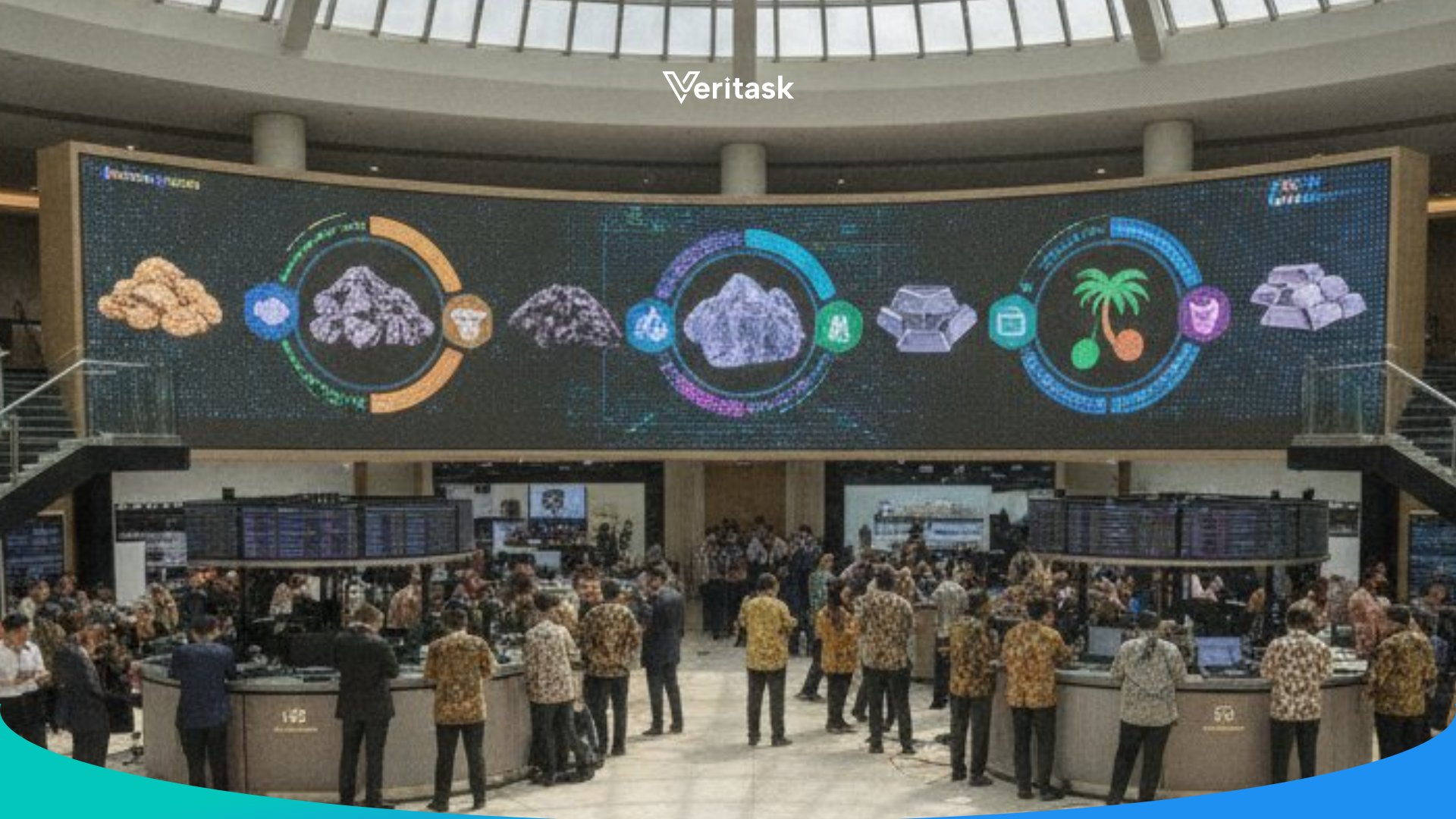
POJK 16/2026 Regulates a New Framework for the Operation of the Mineral and Strategic Commodities Exchange
Introduction
On 17 September 2026, the Financial Services Authority issued Financial Services Authority Regulation Number 16 of 2026 on the Operation of the Mineral and Strategic Commodities Exchange (“POJK 16/2026”), which took effect on 1 January 2027. POJK 16/2026 constitutes an implementing regulation of Article 132A paragraph (3) of Law Number 4 of 2023 concerning the Development and Strengthening of the Financial Sector, as amended by Law Number 4 of 2026 (“P2SK Law”), and regulates the framework for the operation of the Mineral and Strategic Commodities Exchange (“BMKS”) as an organized and integrated market system for trading Indonesian minerals and strategic commodities, including their derivative products. In addition, POJK 16/2026 regulates the funding ecosystem, digital-based financial instruments, price and quality formation mechanisms, transaction settlement, and risk management in the operation of the BMKS.
POJK 16/2026 is also intended to establish an Indonesian Reference Price for minerals and strategic commodities, support national downstreaming and industrialization, enhance national economic competitiveness and resilience, maintain market integrity, and optimize the added value of Indonesia’s natural resources. POJK 16/2026 provides the basis for establishing a transparent and supervised Indonesian Reference Price, while also strengthening Indonesia’s position in the trading of minerals and strategic commodities. These provisions focus on transactions and market infrastructure through the BMKS without diminishing the authority of other ministries or institutions, including in relation to mining licensing and export-import matters.
Key Provisions
- Structure of BMKS Operators and BMKS Phasing
Article 2 provides that the operation of the BMKS involves the Exchange, Clearing Institution (LK), Electronic Custodian Institution (LKE), Exchange Members, Warehouse Operators, Conformity Assessment Institutions (LPK), and supporting professions. Exchange Members consist of Service Users, Trading Intermediaries, and other parties in accordance with the provisions of laws and regulations. The Exchange, LK, LKE, and Trading Intermediaries are supervised by the OJK, while Service Users, Warehouse Operators, and LPKs are supervised by the Exchange. Supporting professions must be registered with the OJK in order to provide services in the BMKS sector. The operation of the BMKS also integrates the functions of trading, clearing, transaction guarantee and settlement, custody and management of Electronic Proof of Ownership, risk management, price and quality mechanisms, Digital-Based Financial Instruments, the funding ecosystem, and other supporting infrastructure.
Furthermore, Article 4 provides that the operation of the BMKS shall be conducted in stages by taking into account the readiness of institutions, market infrastructure, information technology systems, and market participants. Such stages comprise the establishment and preparation for the operation of the BMKS, the operation of trading activities, the development of BMKS products and services, and the development of the BMKS ecosystem.
Capital and Institutional Requirements for the Exchange, LK, and LKE
Functions and Obligations of the Exchange
Article 5 provides that the Exchange shall have the following functions:
conducting the trading of Strategic Minerals and Strategic Commodities;
operating the BMKS trading system;
establishing Exchange Regulations;
supervising trading, ensuring the availability of physical and warehousing data and information; and
carrying out other functions stipulated by the OJK.
The Exchange is also required to implement governance and risk management, and to have compliance, internal audit, and market surveillance functions, reliable and secure systems, a business continuity plan, and mechanisms for the protection of Service Users. The market surveillance function must be independent and supported by adequate information technology systems to monitor trading, detect unusual transactions, and continuously analyze trading activities.
- Electronic Proof of Ownership and the Process of Becoming “Tradable”
Strategic Minerals and Strategic Commodities may only be traded through the BMKS after obtaining tradable status from an LPK, as stipulated in Article 50. Such status is granted based on quality inspection, quantity verification, storage in a Warehouse approved by the Exchange, fulfillment of administrative requirements, and other requirements under the Exchange Regulations. Once these requirements have been fulfilled, Article 51 provides that the LKE shall issue Electronic Proof of Ownership.
- Establishment of the Indonesian Reference Price
Articles 53 through 57 provide that BMKS transaction prices shall be established based on orderly, fair, transparent, and efficient market mechanisms and may be used as the Indonesian Reference Price. The Exchange is required to prepare a methodology for establishing the Indonesian Reference Price based on fair, transparent, and high-integrity transactions, subject to the OJK’s approval, and to conduct periodic evaluations. The Indonesian Reference Price must be published transparently, and the OJK may order adjustments to the methodology where necessary to maintain market integrity. In addition, Article 58 requires each trading product to have clear contract specifications, covering at least the underlying, quality, trading unit, settlement mechanism, and physical delivery, where applicable.
- Transaction Settlement and Market Supervision
BMKS transaction settlement shall be conducted through the LK based on the principles of legal certainty, security, and efficiency. The LK must ensure that transactions are settled in a timely, secure, and efficient manner and must have mechanisms for handling settlement failures as stipulated in Articles